
Battery, Alternator, and Starter: How Your Car's Electrical Starting System Works

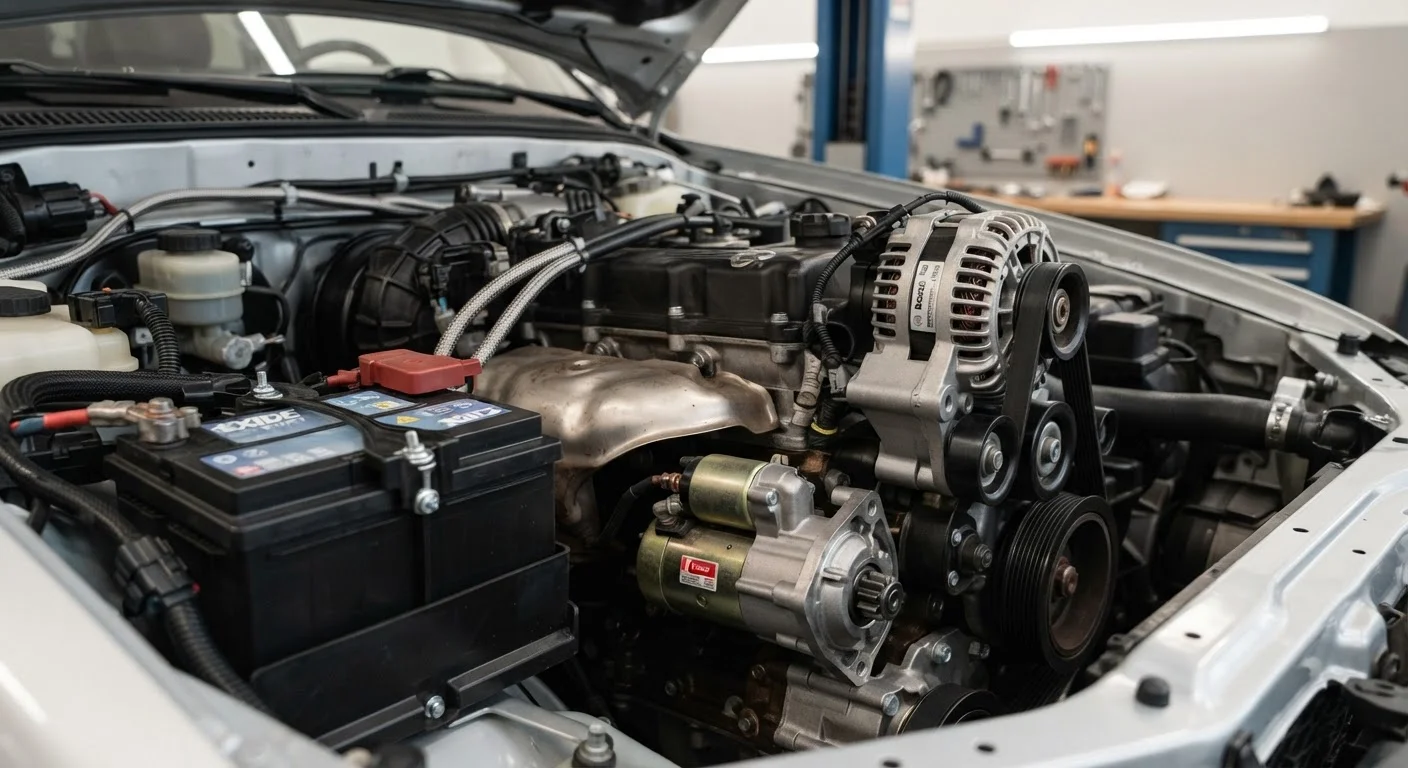
Key Takeaways
- The battery, alternator, and starter each play a distinct role - a problem with one mimics symptoms of another.
- A dead battery is the most common starting failure, but a failing alternator is often the root cause.
- Clicking sounds usually point to the starter or battery; dim lights while driving suggest alternator trouble.
- Most batteries last 3-5 years; alternators and starters can last much longer with proper maintenance.
- A basic multimeter test can help you narrow down which component is failing before paying for a shop diagnosis.
Car Electrical Starting System
Your car's electrical starting system is the trio of components - battery, alternator, and starter - that work together to crank the engine and keep it running. The battery provides the initial burst of electricity, the starter uses that electricity to turn the engine over, and the alternator recharges the battery while the engine runs. When any one of these fails, your car may not start or could die while driving.
The starter motor draws very high current (often 100-200+ amps) for a brief moment during cranking, which is why a weak or corroded battery connection can prevent starting even when the battery shows a reasonable voltage at rest.
The Battery: Your Car's Power Reserve
The battery is the starting point of the entire system. When you turn the ignition key or press the start button, the battery delivers a large surge of electrical current to activate the starter motor. It also powers your car's lights, radio, and electronics when the engine isn't running.
Car batteries are rated in cold cranking amps (CCA) - a measure of how much current they can deliver in cold temperatures. A battery that tests fine on a warm day may struggle when temperatures drop below freezing, which is why cold-weather starting problems are so common.
Signs of a weakening battery include slow engine cranking, a clicking sound when you turn the key, and interior lights that dim noticeably when starting. Corrosion on the battery terminals - that whitish or bluish buildup on the cable connections - can also mimic a dead battery by restricting current flow. Cleaning terminals with a wire brush is a simple, no-cost first step before assuming the battery itself needs replacing.
Test Before You Replace
Many auto parts retailers offer free battery and charging system tests. Before buying a new battery based on symptoms alone, get a load test done - it measures actual performance under starting conditions, not just resting voltage. This 10-minute step can save you from replacing the wrong component.
The Alternator: Your Car's On-Board Charger
Once the engine is running, the alternator takes over. It converts mechanical energy from the engine into electrical energy, which simultaneously powers your car's electrical systems and recharges the battery. Without a working alternator, the battery would deplete within minutes of driving.
The alternator is driven by a serpentine belt (or drive belt) connected to the engine. If that belt breaks or slips, the alternator stops generating power - which is why a worn belt can contribute to charging system failures even when the alternator itself is fine.
3-5 years
Typical car battery lifespan
Industry guidance from automotive maintenance organizations suggests most lead-acid car batteries require replacement within this window, with climate being a major variable.
~50%
Of no-start calls linked to battery failure
Roadside assistance data consistently identifies battery-related issues as the single leading cause of vehicle breakdowns and no-start calls in the US.
13.5-14.5V
Healthy alternator output range
A functioning alternator should produce this voltage range at the battery terminals with the engine running - a reading outside this range warrants further inspection.
A failing alternator may cause your battery warning light to illuminate, headlights to flicker or dim at idle, or electronics to behave erratically. In some cases, a car with a failing alternator will start normally but stall after a few miles once the battery is sufficiently drained. This is a scenario where confusing the symptom (dead battery) with the actual problem (bad alternator) leads to unnecessary battery replacements.
The Starter: The Mechanical Link Between Battery and Engine
The starter is an electric motor that physically cranks the engine. When you turn the key, the battery sends current to a small relay called the solenoid, which engages a gear on the starter that meshes with the engine's flywheel - giving the engine the rotational push it needs to fire up on its own.
Starters are generally durable, but they wear down over time and with frequent short trips. Common failure symptoms include a single loud click with no cranking, a grinding or whirring noise during startup, or intermittent starting where the car works fine one time and refuses to start the next.
Starter Problems Are Often Intermittent at First
Unlike a battery that goes fully dead, a failing starter may work fine for days or weeks before failing completely. This makes it easy to dismiss early warning signs. If you experience even one unexplained no-start event where the car eventually started on a second try, mention it to your mechanic - it's a useful diagnostic clue.
One important distinction: if jumping the car gets it started smoothly and the battery and alternator both test well, the starter is worth investigating. A mechanic can perform a current draw test on the starter to assess its condition without necessarily removing it first.
How the Three Components Work Together - and How Failures Overlap
Understanding each component individually helps, but the real diagnostic challenge is that their failure symptoms overlap significantly. A dead battery, a failing alternator, and a bad starter can all present as a car that simply won't start.
Here's a practical framework for narrowing it down:
- Car won't start, you hear rapid clicking: Usually a battery issue - not enough current to engage the starter fully.
- Car won't start, you hear one loud click or nothing: Could be the starter, a dead battery, or a faulty solenoid.
- Car starts but dies shortly after, or battery keeps draining: Points toward the alternator not recharging the battery.
- Battery warning light on while driving: A strong signal of an alternator or belt problem.
Before paying for a full shop diagnosis, a free battery and alternator test at many auto parts stores can help you rule out the most common culprits. Bring your vehicle in rather than just the battery - testing the alternator requires the engine to be running.
This article is for general informational purposes only. For diagnosis and repair of your specific vehicle, consult a qualified mechanic.