

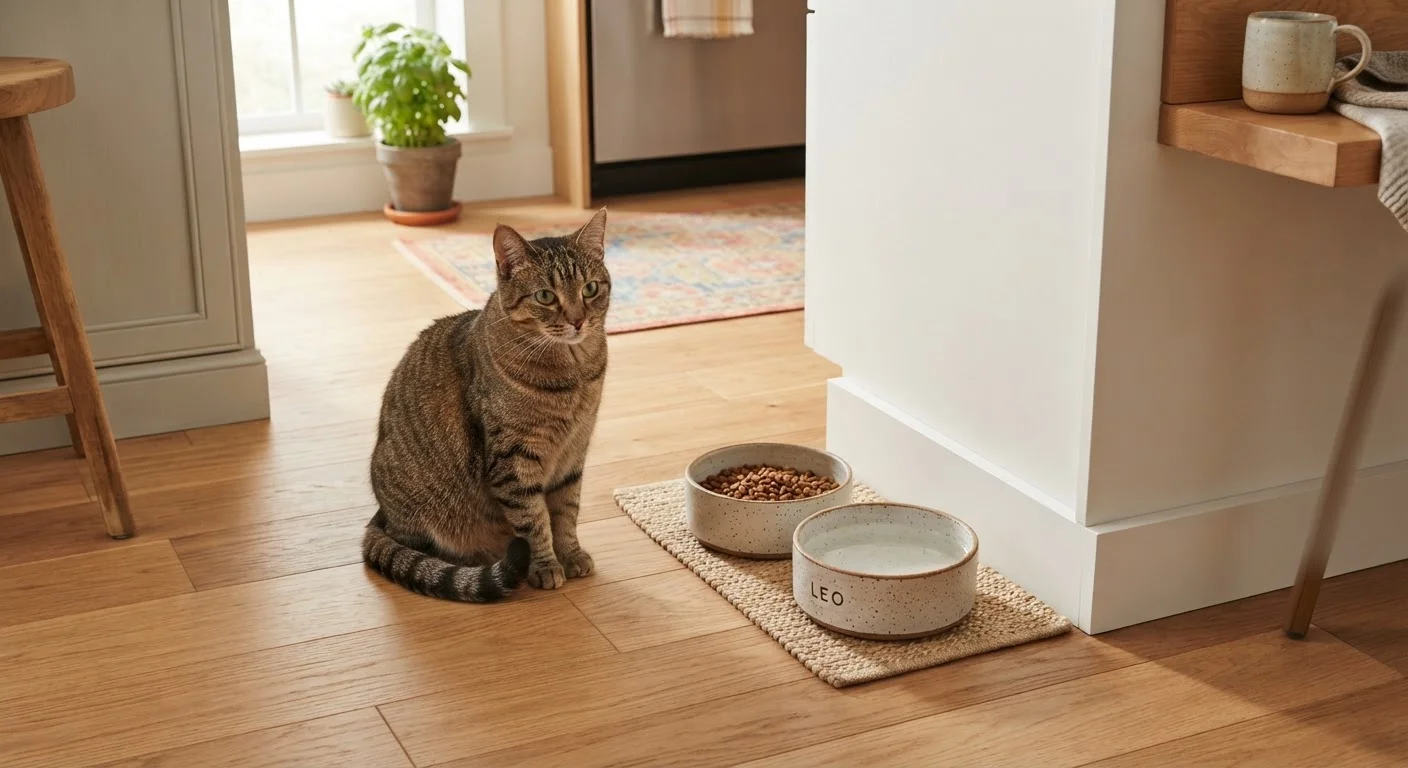
Key Takeaways
- Scheduled feeding gives owners more control over portion sizes and helps prevent overeating in cats prone to weight gain.
- Free feeding works best with dry kibble and may suit cats who naturally self-regulate their intake.
- Most veterinary nutrition guidance leans toward measured mealtimes, especially for cats with health concerns.
- Neither approach is universally right - your cat's age, health status, and personality all matter.
- Puzzle feeders and timed dispensers can bridge the gap between the two methods.
Our Verdict
Both scheduled feeding and free feeding can be appropriate depending on the individual cat. However, measured mealtimes generally offer more control over caloric intake and are widely preferred by veterinary nutritionists for cats that tend to overeat. Free feeding remains a reasonable option for cats who naturally pace themselves, provided dry food is kept fresh and portions are monitored.
| Best for | Recommended |
|---|---|
| Cats prone to weight gain or obesity | Scheduled feeding |
| Multi-cat households needing individual monitoring | Scheduled feeding |
| Cats who graze naturally and maintain a healthy weight | Free feeding |
| Busy owners seeking a middle ground | Timed automatic feeder with measured portions |
The Core Question: Two Very Different Feeding Philosophies
If you've ever wondered whether to leave your cat's bowl topped up all day or serve meals at set times, you're not alone - it's one of the most common questions cat owners ask their vets. Both approaches have genuine merit, and the research doesn't deliver a single clean answer. What it does offer is a clearer picture of trade-offs that can help you decide what works for your household.
Scheduled feeding means offering measured portions at consistent times - typically two meals per day for adult cats. Free feeding (also called ad libitum feeding) means keeping food available around the clock so the cat can eat whenever it wants. A third option, sometimes called portion-controlled free feeding, sets a daily allotment in the bowl but doesn't restrict access times - a middle ground many owners land on in practice.
For a broader look at how feeding routines can be structured into daily life, see our practical guide to pet care routines - many of the same scheduling principles translate well to cats.
| Scheduled Feeding | Free Feeding | Portion-Controlled Free Feeding | |
|---|---|---|---|
| Calorie control | High - owner sets each meal | Low - cat self-regulates | Moderate - daily cap set |
| Suitable food types | Dry or wet food | Dry kibble only | Dry kibble only |
| Ease for busy owners | Moderate - requires timing | Very easy | Easy |
| Weight management | Best option | Riskier for prone cats | Better than free feeding |
| Multi-cat households | Easiest to monitor | Difficult to track | Challenging |
| Appetite monitoring | Clear - changes noticed quickly | Harder to detect | Somewhat manageable |
What Research Generally Suggests
Studies in feline nutrition consistently show that a significant portion of domestic cats are overweight - estimates from veterinary organizations frequently place the figure above 50% of the pet cat population. Excess weight is linked to diabetes, joint disease, urinary issues, and shortened lifespan, which is why feeding method matters beyond mere convenience.
Research published in veterinary nutrition journals suggests that cats fed on a schedule tend to consume fewer calories overall compared with those given unrestricted access to dry kibble, though individual variation is considerable. Cats are obligate carnivores with metabolisms shaped by small, frequent prey meals - not a constant grazing buffet. That said, some cats do self-regulate effectively, eating only what they need even when food is always available.
~59%
Estimated overweight or obese cats in the US
The Association for Pet Obesity Prevention has repeatedly reported that the majority of US cats are classified as overweight or obese in annual surveys.
2-3x
Increased diabetes risk with obesity in cats
Veterinary literature broadly associates obesity in cats with a significantly elevated risk of developing type 2 diabetes mellitus compared to lean cats.
One important nuance: wet food should almost never be left out freely, as it spoils within a few hours at room temperature. Free feeding is practically limited to dry kibble, which itself carries its own nutritional considerations. If you're weighing dry versus wet options, our article on dry and wet cat food differences breaks down the key nutritional distinctions.
Advantages and Drawbacks of Each Method
Scheduled Feeding
- Portion control: You know exactly how much your cat eats daily, making it easier to catch appetite changes early - a key health signal in cats.
- Weight management: Easier to adjust calories if your vet recommends weight loss or gain.
- Multi-cat households: Allows you to monitor whether each cat is eating its share, which matters when cats have different health needs.
- Routine: Mealtimes can reduce anxiety in some cats who thrive on predictability.
Free Feeding
- Convenience: Practical for owners who are away for extended periods.
- Stress reduction: Cats who feel competition over resources may be calmer knowing food is always available.
- Suits self-regulators: Some cats genuinely eat only what they need without prompting.
- Not ideal for wet food: Perishability limits free feeding to dry diets only.
Use Mealtimes as a Health Check
One underrated benefit of scheduled feeding is that it gives you a daily window to observe your cat's appetite directly. A sudden disinterest in food that normally disappears quickly is one of the earliest signs that something may be off. If your cat skips two or more consecutive meals, a call to your vet is worthwhile.
Understanding your cat's individual tendencies is the real starting point. A young, active cat at a healthy weight behaves very differently from a sedentary middle-aged cat with a history of weight gain.
Practical Guidance for Everyday Owners
If you're unsure which method suits your cat, a vet or veterinary nutritionist is the best first stop - especially if your cat has any existing health conditions such as diabetes, kidney disease, or hyperthyroidism, all of which can be directly affected by feeding patterns. This article is general information, not a substitute for professional veterinary guidance tailored to your pet.
For most average adult cats, two measured meals per day is a reasonable default that aligns with mainstream veterinary guidance. Kittens generally need more frequent feeding - three to four times daily - while senior cats may benefit from smaller, more frequent meals depending on their health status.
If your schedule makes twice-daily feeding difficult, automatic timed feeders with portion control are a practical option worth exploring. They combine the consistency of scheduled feeding with some of the hands-off convenience of free feeding. Similarly, puzzle feeders slow down fast eaters and provide mental enrichment at the same time.
For dog owners in the household curious about how these principles carry over, our Dog Nutrition 101 guide covers comparable feeding fundamentals across species.
This article is for general informational purposes only and does not constitute veterinary advice. Always consult a qualified veterinarian for guidance specific to your pet's health and nutritional needs.