

Key Takeaways
- Mental stimulation is just as important as physical exercise for a well-behaved, calmer dog.
- Most effective enrichment activities cost little to nothing and use items you already own.
- Short, frequent activity sessions throughout the day are often more beneficial than one long outing.
- Sniff-based activities and puzzle feeding tap into your dog's natural instincts powerfully.
- Rotating simple activities prevents boredom and keeps engagement high over time.
Why Stimulation Matters More Than Expensive Toys
A bored dog isn't just an unhappy dog - it's often a destructive one. Chewed furniture, persistent barking, and restless pacing are classic signs that a dog's physical and mental needs aren't being met. If you've noticed any of these, our article on recognizing boredom-related behavior is worth a read.
Here's the reassuring part: dogs don't need expensive puzzle toys or professional training sessions to stay engaged. Their brains and bodies respond beautifully to low-cost activities rooted in natural instincts - sniffing, exploring, problem-solving, and social connection. The ideas below are designed for real families working with real budgets, and most require nothing more than time, a little creativity, and items you probably already have at home.
Every Dog Is a Little Different
Breed, age, and individual temperament all influence how much stimulation a dog needs and which activities they enjoy most. Herding breeds and working dogs typically need more mental challenge than lap breeds; seniors may prefer gentler nose-work over physical agility. Observe your dog's response to each activity and adjust accordingly. When in doubt about exercise limits - particularly for older dogs or those with health conditions - check in with your veterinarian.
Budget-Friendly Ways to Stimulate Your Dog Every Day
Turn Mealtime Into a Sniff Hunt
Instead of dropping kibble into a bowl, scatter it across a patch of grass or hide small portions in a muffin tin covered with tennis balls. This transforms a 30-second feeding into a 10-15 minute nose-work session. Dogs have an extraordinary sense of smell, and using it purposefully tires them out mentally in a way that a simple walk simply can't replicate. No special equipment needed - just your dog's regular food.
Scattering kibble in grass turns every meal into a stimulating, instinct-driven activity.
Use a Frozen Towel or DIY Lick Mat
Wet an old hand towel, spread a thin layer of plain peanut butter or mashed banana on it, twist or roll it up, and freeze it. Once solid, let your dog work at it for a sustained, calming chew session. Alternatively, smear the same fillings across the bottom of a plate or baking sheet and freeze that. Both options keep a dog occupied for a surprisingly long time and are especially useful when you need focused quiet - during a work call, for example.
A frozen, food-filled towel gives your dog a long, satisfying mental challenge for almost no cost.
Practice Short Training Bursts
Five minutes of basic obedience training - sit, stay, come, leave it - is mentally exhausting for a dog in the best possible way. You don't need to work on anything new; simply reviewing known commands in different rooms or outdoors introduces enough novelty to challenge your dog's focus. Use small pieces of their regular kibble as rewards to keep costs at zero. Even dogs that already know the basics benefit from regular practice, and it reinforces the human-dog bond too.
Five minutes of training drills can mentally tire a dog as effectively as a much longer walk.
Try a Sniff Walk Instead of a Brisk Walk
A standard brisk walk prioritizes distance and speed. A sniff walk does the opposite - you let your dog lead the pace and stop freely to investigate every interesting smell. Research in canine behavior suggests that dogs find these exploratory walks more satisfying than structured exercise, and many owners report calmer behavior afterward. The same 20-minute outing delivers far more enrichment when you allow your dog to process the world through their nose.
Letting your dog sniff freely on a walk delivers more satisfaction than covering more ground faster.
Set Up a Backyard or Indoor Obstacle Course
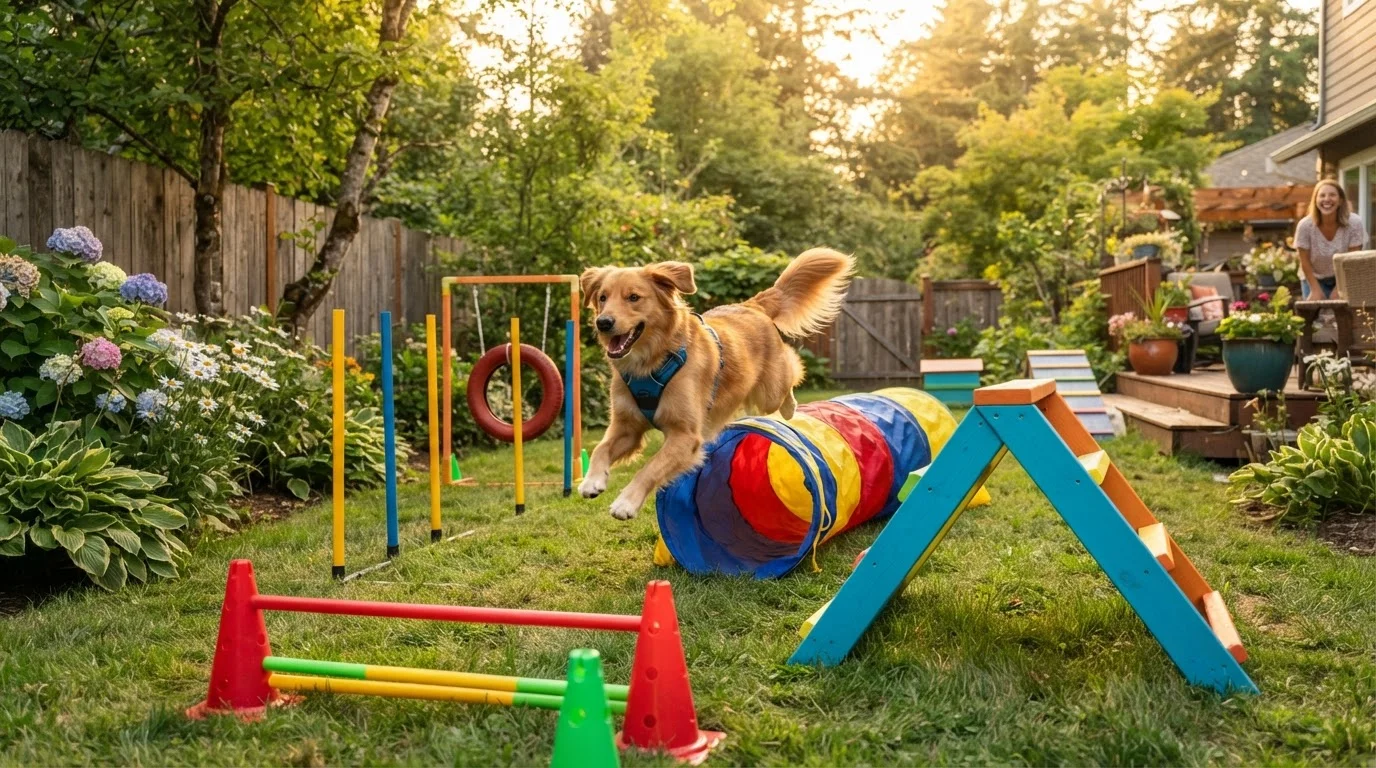
Cushions, cardboard boxes, broomstick poles balanced across chairs, garden stakes, or low lawn furniture can form a simple agility-style course at no cost. Guide your dog through it with a treat lure or hand signals. This combines physical movement with problem-solving and builds body awareness. Keep sessions short - five to ten minutes - so it stays fun rather than frustrating. Rearrange the layout every few sessions to maintain novelty.
A rearranged cushion-and-box obstacle course keeps your dog guessing - and engaged - every time.
Play Hide-and-Seek With Family Members
This is one of the simplest, most effective games families can play with a dog. One person holds the dog while another hides somewhere in the house or yard, then calls the dog's name. When the dog finds the hider, they get enthusiastic praise and a small treat. The game exercises scent tracking, recall, and social engagement all at once - and kids especially love participating. It requires no gear and can be played in any weather.
Hide-and-seek with family members builds recall skills, scent tracking, and social joy simultaneously.
Rotate Toys to Restore Interest
If your dog seems bored with their existing toys, resist the impulse to buy new ones. Instead, put most toys away in a bin and rotate a few back in every few days. Dogs respond to novelty, so a toy they haven't seen in two weeks registers as interesting again. This simple habit can extend the useful life of toys you already own by months and costs absolutely nothing. Pairing a familiar toy with a new smell - rubbing it with herbs like rosemary or a pinch of spice - adds extra curiosity.
Rotating stored toys restores your dog's curiosity - making old items feel new again for free.
Mix It Up to Sustain Engagement
Repeating the same activity every day reduces its stimulating effect over time. Try alternating between nose-work feeding, training sessions, and outdoor sniff walks across the week. Even small variations - a different room, a new scent on a toy, a changed obstacle layout - signal novelty to your dog's brain and keep engagement levels higher. A little rotation goes a long way.
Building It Into Your Routine
Consistency matters more than any single activity. Even fifteen minutes of intentional engagement woven into morning and evening routines can measurably reduce restless behavior over time. If you're juggling work, kids, and everything else, our guide on building a dog care routine for busy families offers a practical day-by-day framework that fits these activities in naturally.
Keep in mind that a dog's ideal activity level shifts with age. Puppies and senior dogs have very different stamina and stimulation needs - the dog care guide across life stages can help you calibrate. And if you're thinking about whether your dog's living arrangement - primarily indoors or outdoors - affects what activities work best, our look at indoor vs. outdoor dogs covers the relevant care considerations. A little planning goes a long way toward a calmer, happier pup - without stretching the family budget.