

Key Takeaways
- Wet food has significantly higher moisture content, which can support hydration - especially in dogs that drink little water.
- Dry kibble typically costs less per serving and stays fresh longer once opened, making it practical for families on a budget.
- Neither format is universally superior - your dog's age, health status, and preferences all matter.
- Both wet and dry foods can meet AAFCO nutritional standards; check the label before buying.
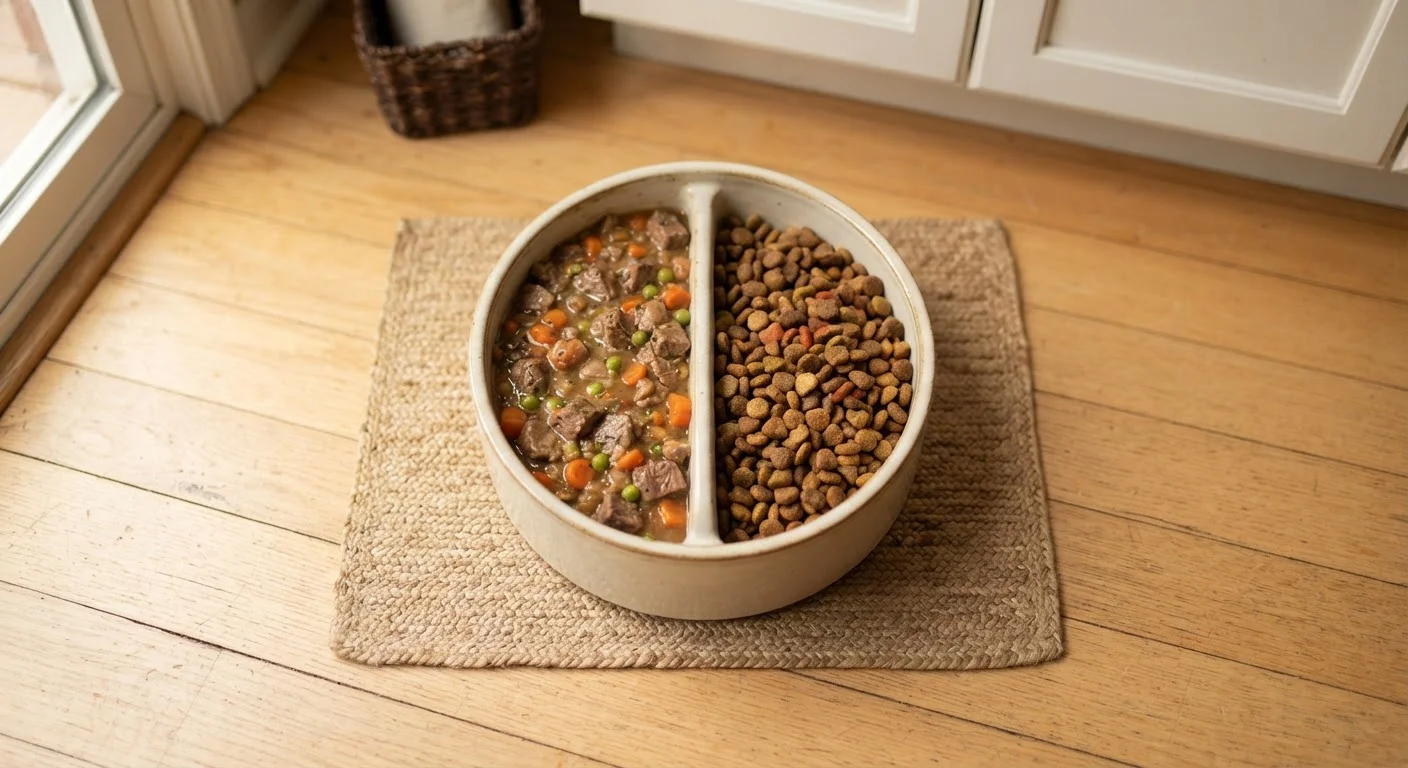
- Mixing formats is a valid middle-ground approach used by many pet owners.
Option A
Wet Dog Food
The moisture-rich, palatable option for picky or aging dogs.
Best for: Dogs with dental issues, low thirst drive, or difficulty chewing who benefit from high moisture content.
Option B
Dry Kibble
The convenient, budget-friendly everyday staple.
Best for: Active adult dogs in households seeking easy storage, cost savings, and longer shelf life.
If your dog is a picky eater or has lost interest in food
Wet Dog Food
Wet food tends to have stronger aromas and richer flavors, which often tempts reluctant eaters more effectively than dry kibble.
If you're feeding a large dog on a tight household budget
Dry Kibble
Kibble generally costs less per calorie and per serving, and a large bag keeps well in an airtight container for weeks.
If your senior dog has dental pain or difficulty chewing
Wet Dog Food
The soft texture is easier on sore gums and missing teeth, reducing mealtime discomfort for older dogs.
If you want a simple, low-waste daily feeding routine
Dry Kibble
Kibble requires no refrigeration after opening, produces minimal mess, and is straightforward to measure accurately.
If your dog needs extra hydration due to a health condition
Wet Dog Food
With roughly 70-80% water content, wet food meaningfully increases daily fluid intake, which can benefit dogs prone to urinary issues - always discuss specifics with your vet.
What Actually Differs Between Wet and Dry Dog Food
At its simplest, the difference is water. Wet food (canned or pouched) is typically 70-80% moisture, while dry kibble clocks in at around 10%. Everything else - protein, fat, carbohydrates, vitamins, minerals - flows from that central fact.
Because kibble has so much water removed during processing, it packs more calories per gram. That means smaller measured portions, which some families find easier to track. Wet food, by contrast, adds fluid to your dog's diet automatically, which can matter if your dog is a reluctant water drinker. This is especially relevant as dogs age - see our guide on dog care across every life stage for more on shifting nutritional needs.
Both formats can be nutritionally complete. The key signal to look for on any bag or can is the AAFCO statement - the Association of American Feed Control Officials certification that the food meets established nutrient profiles for your dog's life stage. Without it, a food is a treat or supplement, not a diet.
| Criterion | Wet Food | Dry Kibble |
|---|---|---|
| Moisture content | 70-80% | ~10% |
| Typical cost per serving | Higher | Lower |
| Shelf life after opening | 2-3 days (refrigerated) | Weeks (airtight container) |
| Ease of portioning | Moderate | Easy |
| Palatability for picky eaters | Generally higher | Generally lower |
| Suitable for dogs with chewing difficulty | Yes | Less so |
| Calorie density per gram | Lower | Higher |
| AAFCO-complete options available | Yes | Yes |
Cost, Storage, and Everyday Practicality
For most US families, dry kibble wins on pure economics. A pound of kibble generally delivers more calories - and therefore more servings - than an equivalent dollar spent on wet food. A large-breed dog eating wet food exclusively can cost two to four times more per month than one eating kibble, though this varies widely by product and region.
Storage is another practical gap. An opened bag of kibble stays fresh for weeks in an airtight container at room temperature. An opened can of wet food must be refrigerated and used within two to three days. For families juggling work, kids, and a busy schedule, that difference in shelf life can feel significant.
70-80%
Moisture content in typical wet dog food
Compared to roughly 10% in dry kibble - a meaningful difference in daily fluid intake for dogs.
2-4×
Estimated extra monthly cost of wet-only feeding
General industry estimates suggest wet-food-only diets can cost significantly more per month than kibble for medium to large dogs.
~90%
US dogs with dental disease by age 3
According to the American Veterinary Medical Association, dental disease is one of the most common conditions seen in adult dogs - underscoring that food format alone is not a dental solution.
That said, portioning wet food into a reusable container is a quick habit to build. And buying kibble in bulk requires proper storage - humidity and heat degrade fats and vitamins over time, so a cool, dry spot matters more than most people realize.
Dental Health, Palatability, and Special Needs
A commonly repeated claim is that kibble cleans teeth by scrubbing them as a dog chews. Veterinary dentists generally describe this benefit as modest at best - kibble does not replace brushing or professional dental cleanings. If dental health is a priority, talk to your vet about the Veterinary Oral Health Council (VOHC) seal, which indicates a product has been tested for plaque or tartar reduction.
Where wet food has a clearer advantage is in dogs that struggle to chew - seniors with tooth loss, dogs recovering from oral surgery, or small breeds with crowded teeth. Its soft texture removes the mechanical barrier that can make mealtime uncomfortable.
Palatability - how much your dog actually wants to eat the food - tends to favor wet food. The higher fat and moisture content produces stronger aromas, which is particularly helpful for dogs who are ill, underweight, or simply fussy. Some owners mix a spoonful of wet food into kibble to encourage eating without a full switch.
For families interested in how feeding routines connect to broader care decisions, our indoor vs. outdoor dog care guide covers how environment intersects with health habits.
Mixing Wet and Dry Is a Valid Option
Many veterinarians and pet nutritionists consider combination feeding - a base of kibble topped with a small amount of wet food - a practical compromise. It can improve palatability, add moisture, and keep costs manageable. If you try this approach, adjust total portion sizes to avoid overfeeding, since both foods contribute calories.
This article provides general information about dog nutrition and is not a substitute for advice from a licensed veterinarian. Always consult your vet before making significant changes to your dog's diet, especially if your dog has a health condition.