

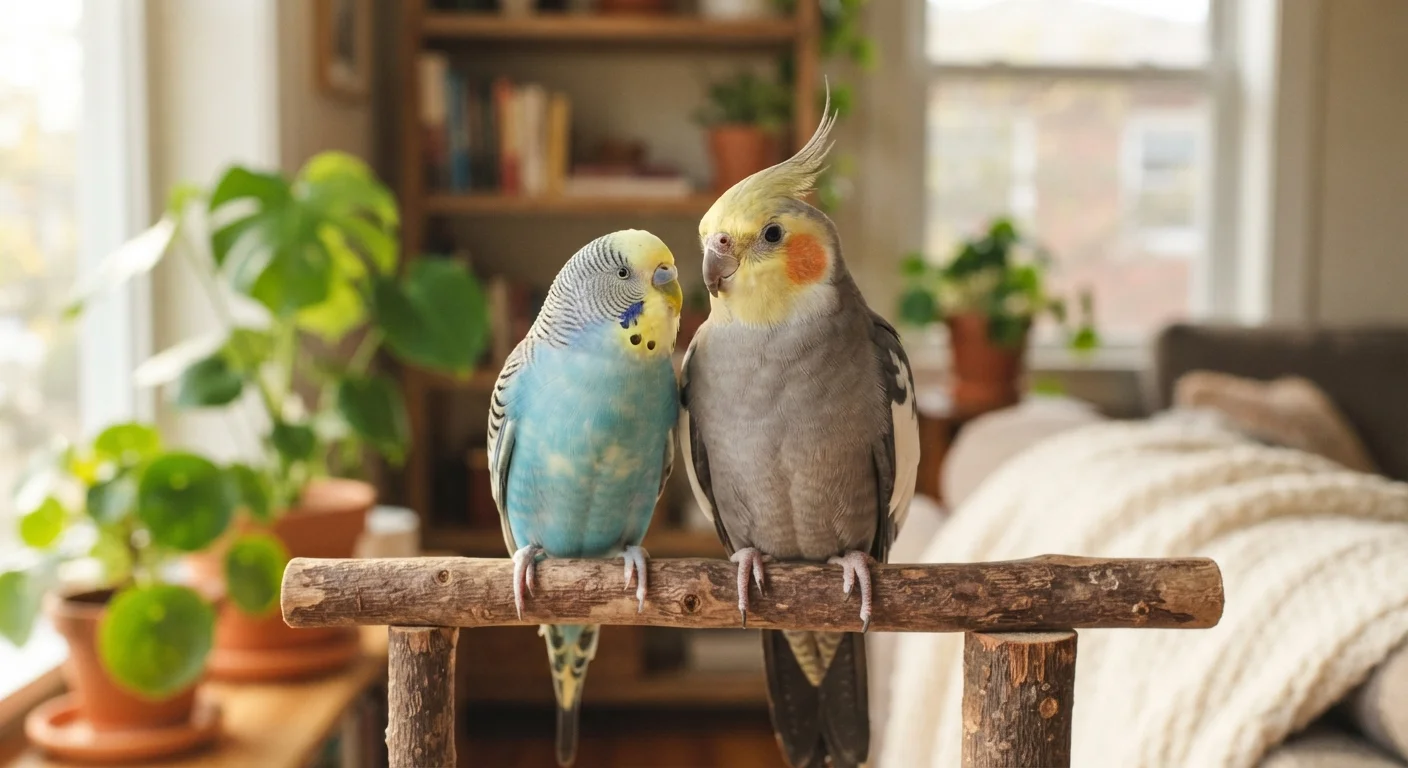
Key Takeaways
- Budgies are smaller, quieter overall, and generally less expensive to purchase and maintain.
- Cockatiels are more affectionate and easier to hand-tame, making them great for kids who want a bird to hold.
- Both species need daily social interaction and mental stimulation to stay healthy and happy.
- Cockatiels tend to live longer - roughly 15-20 years compared to 7-10 years for budgies.
- Neither bird does well in isolation; consider adopting a same-species pair if your schedule is demanding.
Option A
Budgie (Budgerigar)
The compact, lively, budget-friendly beginner bird.
Best for: Families or individuals who want an active, entertaining bird that takes up little space and costs less to keep.
Option B
Cockatiel
The gentle, affectionate bird that craves companionship.
Best for: Families looking for a hands-on, cuddly bird with a mellow temperament and impressive whistling ability.
If you have limited space and a tighter budget
Budgie (Budgerigar)
Budgies thrive in smaller cages, eat less, and typically cost less upfront. They're ideal for apartment living or households new to bird care.
If you want a bird your children can handle and bond with
Cockatiel
Cockatiels are naturally gentler and tame more readily, making hands-on interaction safer and more rewarding for younger family members.
If you're away from home for long stretches each day
Budgie (Budgerigar)
A bonded budgie pair keeps each other entertained, so they cope better with an owner's absence than a solo cockatiel would.
If you want a long-term feathered companion
Cockatiel
With a lifespan of up to 20 years in good care, a cockatiel can be a decades-long family member - a meaningful commitment worth considering.
If noise sensitivity is a concern in your home
Budgie (Budgerigar)
Budgies chatter and chirp rather than screech. Cockatiels can produce loud contact calls, especially if they feel lonely or startled.
Size, Space, and Setup Costs
Budgies are among the smallest pet parrots, typically weighing just 1-1.4 oz (28-40 g). A standard cage measuring around 18 × 18 × 24 inches is workable for one bird, though bigger is always better. Cockatiels are noticeably larger - usually 3-4 oz (85-110 g) - and need a cage at least 24 × 24 × 30 inches to move comfortably. That size difference translates directly to cost: cockatiels require larger, more expensive enclosures and eat more food each day.
Initial purchase prices vary widely depending on your region and whether you adopt or buy, but cockatiels generally cost more than budgies. Factor in a quality cage, perches, toys, food dishes, and a first veterinary visit, and your startup budget for a cockatiel can easily run significantly higher than for a budgie setup. Neither cost is prohibitive, but it's worth penciling out before you commit.
| Criterion | Budgie | Cockatiel |
|---|---|---|
| Typical adult weight | 1-1.4 oz (28-40 g) | 3-4 oz (85-110 g) |
| Average lifespan | 7-10 years | 15-20 years |
| Minimum cage size | 18 × 18 × 24 in | 24 × 24 × 30 in |
| Ease of hand-taming | Moderate | Easier |
| Talking ability | High - large vocabularies possible | Moderate - whistles and short phrases |
| Noise level | Lower - cheerful chatter | Higher - loud contact calls |
| Relative startup cost | Lower | Higher |
| Good with children | Yes, with patience | Yes, more naturally so |
Temperament, Tameness, and Handling
This is often the deciding factor for families. Cockatiels are widely regarded as easier to hand-tame - they're naturally more relaxed about being held and tend to bond closely with individual family members. Many will happily perch on a shoulder for extended periods, and they respond well to gentle, patient handling from children.
Budgies can absolutely become tame and affectionate, but it typically requires more time and consistency. Hand-raised budgies are significantly easier to work with than those from large aviary flocks. Once tamed, budgies can learn to step up, perch on fingers, and even mimic words - they're actually among the best talking birds of any parrot species, often building vocabularies of dozens of words.
Cockatiels lean more toward whistling and mimicking melodies than building large word vocabularies, though individual birds vary a lot. If talking ability is a priority, budgies have a slight edge; if cuddle factor matters most, cockatiels win.
A Note on Sourcing Your Bird
Wherever possible, consider adopting from an avian rescue organization before purchasing from a breeder or pet store. Both budgies and cockatiels are commonly surrendered to rescues - often by families who underestimated the time commitment - and many are already hand-tame. Adoption fees are typically lower than purchase prices, and you'll be giving a bird a second chance at a loving home.
Noise, Social Needs, and Daily Care
Both species are social animals that should never be left entirely alone without interaction or a companion bird. A budgie pair kept together will entertain each other, chattering cheerfully throughout the day - that sound is generally pleasant background noise rather than a disturbance. A lone budgie who lacks stimulation can become depressed or develop repetitive behaviors.
Cockatiels are louder, particularly their contact calls - the sharp whistle a cockatiel makes when it can't see its flock (that includes you). If you work from home or have close neighbors, this is worth thinking through carefully. That said, a cockatiel whose social needs are consistently met tends to be calmer and less vocal.
Daily care for both species includes fresh food and water, cage cleaning, safe out-of-cage time, and meaningful interaction. Veterinary care from an avian vet - a vet with specific bird experience - is essential for both. Annual wellness checkups are the baseline recommendation from avian veterinary organizations.
15-20 yrs
Cockatiel average lifespan in good care
The Association of Avian Veterinarians notes cockatiels commonly reach 15-20 years, making long-term planning essential.
Top 3
Budgie ranking among talking parrot species
Avian behaviorists frequently cite budgerigars as among the most prolific mimics of human speech of any parrot species.
2+
Hours of out-of-cage time recommended daily
Most avian welfare guidelines suggest pet birds receive at least two hours of supervised, stimulating time outside their cage each day.
Which Bird Is Right for Your Family?
There's no universally "better" starter bird - it comes down to your household's lifestyle. Budgies reward patient, observant owners who enjoy watching active, playful birds; cockatiels reward hands-on families who want a bird that sits with them and seeks physical closeness.
Before deciding, spend time with both species at an avian rescue or reputable bird sanctuary if possible. Temperament varies between individual birds as much as between species. Adopting from a rescue is always worth exploring - many perfectly healthy budgies and cockatiels are looking for homes.
Whichever bird you choose, the commitment is real. These are intelligent, sensitive animals that thrive on consistency, enrichment, and affection. Give them that, and either species will reward your family with years of personality, song, and genuine companionship.
This article provides general information for educational purposes only. For advice tailored to your bird's individual health or behavior, consult a qualified avian veterinarian.