

Key Takeaways
- Free shipping thresholds often push shoppers to spend more than they intended.
- Return shipping costs can quietly cancel out the savings from free delivery.
- Membership fees that unlock free shipping may cost more annually than the shipping fees they replace.
- Handling fees are separate from shipping fees and are rarely waived, even on free-shipping orders.
- Product prices are sometimes raised to offset free shipping costs.
- Reading the fine print before checkout is the most reliable way to avoid surprise charges.
Free Shipping
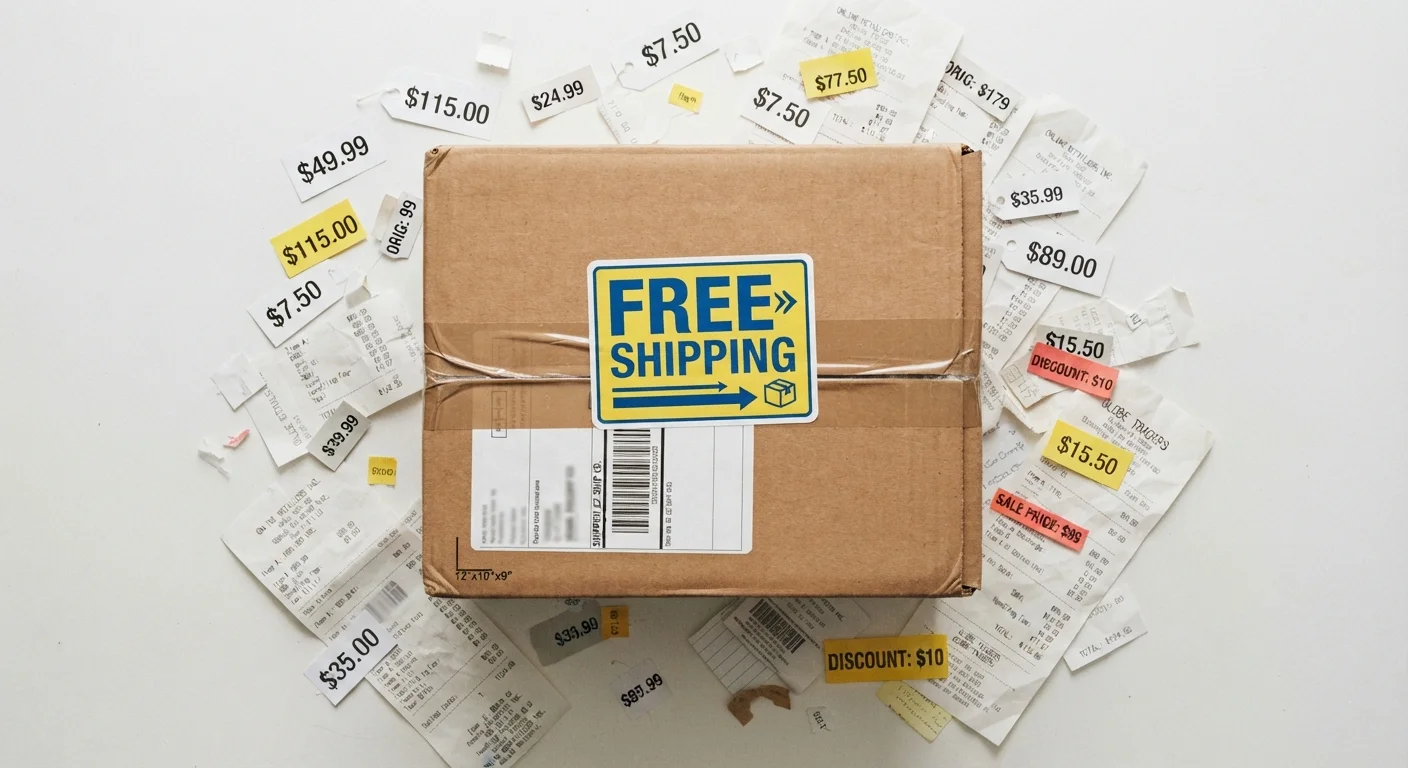
Free shipping is a retail offer where the seller does not charge the buyer a separate delivery fee at checkout. However, that cost doesn't disappear - it's often built into product prices, attached to minimum purchase thresholds, or offset by fees elsewhere in the transaction. Understanding how retailers structure these offers helps you evaluate whether you're actually getting a deal.
Economists refer to this type of pricing as 'cost bundling' - the shipping expense is absorbed into margins or redistributed through order minimums, membership fees, or return-shipping charges.
Why 'Free' Is Rarely the Whole Story
The phrase "free shipping" is one of the most effective tools in online retail. Studies by the Baymard Institute consistently show that unexpected shipping costs are among the top reasons shoppers abandon their carts. Retailers responded by making shipping appear free - but the mechanics behind that offer are worth understanding before you click "place order."
Shipping costs don't evaporate. They're paid by someone. In most cases, that someone is still you - just indirectly. The expense gets folded into product pricing, redistributed through membership fees, or shifted onto your return transaction. Knowing where to look is the first step to spending more deliberately.
48%
Of cart abandonments caused by extra costs
According to Baymard Institute research, nearly half of all cart abandonments occur because shoppers encounter unexpected costs - including shipping fees - at checkout.
$3-$10
Typical return shipping fee range
Many major retailers charge between $3 and $10 for return shipping, even when outbound delivery was advertised as free, according to general industry reporting on e-commerce return policies.
58%
Shoppers who add items to hit free-shipping minimums
A National Retail Federation consumer survey found that a majority of online shoppers have added items to their cart specifically to qualify for free shipping thresholds.
The Threshold Trap: Spending More to Save on Shipping
The most common structure is the minimum purchase threshold - spend $35 (or $50, or $75) and shipping is free. The intent is straightforward: get shoppers to add more items. The problem is that adding a $12 item you don't need to avoid a $5.99 shipping fee means you've spent $6 more than necessary, not less.
Before padding your cart to hit a threshold, calculate the actual math. If the shipping fee is lower than the cost of items you'd add just to qualify, paying the fee is the smarter choice. This is one of those common shopping myths - that hitting a free-shipping minimum automatically saves you money.
It's also worth noting that some thresholds exclude certain product categories - oversized items, sale merchandise, or specific brands - so you may not qualify even after meeting the dollar amount.
Membership Fees, Handling Charges, and Other Hidden Costs
Many retailers lock free shipping behind an annual membership. These programs can make sense for frequent shoppers, but they require an honest calculation. If you're paying $100 or more per year for a membership primarily to access free shipping, and you only place a handful of orders annually, the economics may not favor the subscription.
Handling fees are a separate category entirely. Unlike carrier shipping fees, handling covers labor, packaging materials, and warehouse processing. It's a line item that persists even when shipping is waived. A $0.00 shipping charge alongside a $3.99 handling charge is a pattern worth recognizing before you assume checkout will be cheaper than advertised. For a broader look at how fees inflate totals, see why your cart total changes at checkout.
Check the Full Checkout Breakdown First
Before confirming any online order, scroll through the complete cost summary at checkout - not just the cart total. Look specifically for handling fees, processing charges, or membership auto-enrollment offers. These line items are often placed below the prominent 'free shipping' confirmation and are easy to miss on a small screen.
The Return Shipping Loophole
Free outbound shipping does not guarantee free return shipping. This distinction matters most for categories where fit, sizing, or quality is hard to judge online - clothing, shoes, furniture, and electronics especially. Some retailers charge a flat return-shipping fee; others deduct it directly from your refund. Either way, a "free shipping" order that doesn't work out can end up costing you both ways.
Restocking fees compound this issue. A retailer may offer free delivery, charge $8.99 for return shipping, and deduct a 15% restocking fee from your refund - making the effective cost of a returned item substantial. Before purchasing, read the returns policy independently from the shipping policy. Our guide on decoding return policies walks through exactly what to look for.
How to Evaluate a Free Shipping Offer Before You Buy
A few practical habits can protect your budget without requiring you to distrust every retailer:
- Compare total order costs, not just item prices. Check whether a competitor with visible shipping fees comes out cheaper overall.
- Look for the handling fee line during checkout before completing your purchase.
- Read the returns policy before buying anything you're uncertain about - especially in categories where sizing or quality is variable.
- Calculate the membership break-even point if a free-shipping subscription is being offered. Divide the annual fee by the per-order shipping charge to find out how many orders you'd need to place to come out ahead.
- Don't add items just to hit a threshold unless those items were already on your list and you genuinely need them.
These aren't complex strategies - they're the kind of deal-evaluation habits that consistently prevent overspending across every category of online shopping.
This article is for general informational and educational purposes only. Individual pricing, policies, and offers vary by retailer and may change. Always verify current terms directly with the seller before completing a purchase.