

Key Takeaways
- Credit is a measure of your reliability as a borrower; debt is money you owe to a lender.
- Your credit score is calculated from five factors, with payment history carrying the most weight.
- Not all debt is equally harmful - understanding the difference between secured and unsecured debt matters.
- High debt loads can limit a family's ability to save, rent, or qualify for loans at reasonable rates.
- Listing every debt you owe is the essential first step before making any repayment plan.
- A household budget is the foundation on which any debt strategy must be built.
Start here
What Debt and Credit Actually Mean
Next
How Credit Scores Are Built
Then
The Two Main Types of Debt
Apply it
How Debt and Credit Affect Your Family's Financial Life
Take action
First Steps Toward Taking Control
What Debt and Credit Actually Mean
Many families use the words debt and credit interchangeably, but they describe two different things that work together. Understanding the distinction is the first step toward managing both with confidence.
Credit
A lender's willingness to let you borrow money, based on your history of repaying past debts. It's a measure of financial trustworthiness, not cash in your pocket.
Debt
Money you owe to a lender or creditor. It exists the moment you borrow - whether through a loan, credit card, or any other financing arrangement.
Credit Score
A three-digit number (typically 300-850 in the US) that summarizes how reliably you manage borrowed money. Lenders use it to decide whether to approve you and at what interest rate.
Interest Rate
The cost of borrowing money, expressed as a percentage of what you owe. A higher rate means you pay more over time for the same loan amount.
Credit Utilization
The percentage of your total available credit that you're currently using. Using a large portion of your limit can lower your credit score even if you pay on time.
Collateral
An asset - like a home or car - that a lender can claim if you stop repaying a secured loan. It reduces the lender's risk and often results in a lower interest rate for the borrower.
Credit Report
A detailed record of your borrowing and repayment history, maintained by the three major credit bureaus. Lenders use it to calculate your credit score.
Minimum Payment
The smallest amount a lender requires you to pay each billing cycle to keep your account in good standing. Paying only the minimum on high-interest debt means balances can grow slowly over time.
Credit is a lender's assessment of how reliably you repay what you borrow. When a bank, credit union, or card issuer decides whether to lend to you - and at what interest rate - they're evaluating your credit. Debt is the balance you actually owe once you've used that credit: the car loan, the credit card balance, the mortgage.
Together, they form a feedback loop. How you manage existing debt shapes your credit profile, which then determines what future borrowing options are available to you and at what cost.
How Credit Scores Are Built
In the US, credit scores are calculated by companies like FICO and VantageScore using information from your credit reports maintained by the three major bureaus - Equifax, Experian, and TransUnion. Scores generally range from 300 to 850, and higher is better.
Five factors drive your score, roughly in this order of importance:
- Payment history - whether you pay on time (typically the largest factor)
- Credit utilization - how much of your available credit you're using
- Length of credit history - how long your accounts have been open
- Credit mix - the variety of account types (cards, loans, etc.)
- New credit - how recently you've applied for new accounts
You're entitled to a free credit report from each bureau once per year through AnnualCreditReport.com, the federally authorized source. Reviewing your report regularly helps you catch errors that could be dragging your score down unnecessarily.
Check Your Report for Errors First
Before focusing on improving your score, pull your free credit reports and scan them carefully. Common errors include accounts that aren't yours, incorrectly reported late payments, and balances that haven't been updated after payoff. Disputing legitimate errors with the credit bureau directly can sometimes improve your score without changing any financial behavior.
The Two Main Types of Debt
Debt broadly falls into two categories, and understanding which type you're carrying helps you prioritize how to address it.
Secured Debt
Secured debt is backed by an asset - called collateral. A mortgage is secured by your home; an auto loan is secured by your vehicle. If you stop paying, the lender can claim that asset. Because the lender carries less risk, secured debt often comes with lower interest rates.
Unsecured Debt
Unsecured debt has no collateral behind it. Credit card balances, medical bills, and personal loans are common examples. Because the lender's only recourse if you don't pay is to pursue collection or report the delinquency, interest rates on unsecured debt are typically higher.
For most families, high-interest unsecured debt - particularly credit card balances carried month to month - represents the most urgent financial drain. See our plain-language debt glossary for definitions of terms you'll encounter when managing both types.
How Debt and Credit Affect Your Family's Financial Life
Debt and credit touch more of your daily financial reality than many families realize.
- Borrowing costs: A lower credit score usually means paying a higher interest rate on mortgages, auto loans, and personal loans - sometimes thousands of dollars more over the life of a loan.
- Renting a home: Most landlords run credit checks. A troubled credit history can make finding rental housing harder.
- Employment: Some employers, particularly in finance or government roles, review credit as part of background checks.
- Monthly cash flow: High minimum payments on multiple debts can crowd out savings, emergency funds, and everyday expenses.
Building a household budget is inseparable from managing debt well - knowing where every dollar goes reveals exactly how much you have available for repayment. Our complete household finance framework walks through building that foundation step by step.
Debt Isn't Always a Sign of Poor Decisions
Carrying debt doesn't automatically mean a household is financially irresponsible. Mortgages, student loans, and auto loans are normal parts of American family finances. What matters more than having debt is whether it's manageable relative to your income and whether you have a clear plan for repayment. Context matters far more than the balance alone.
First Steps Toward Taking Control
No debt or credit situation changes overnight, but every meaningful improvement starts with the same foundational moves.
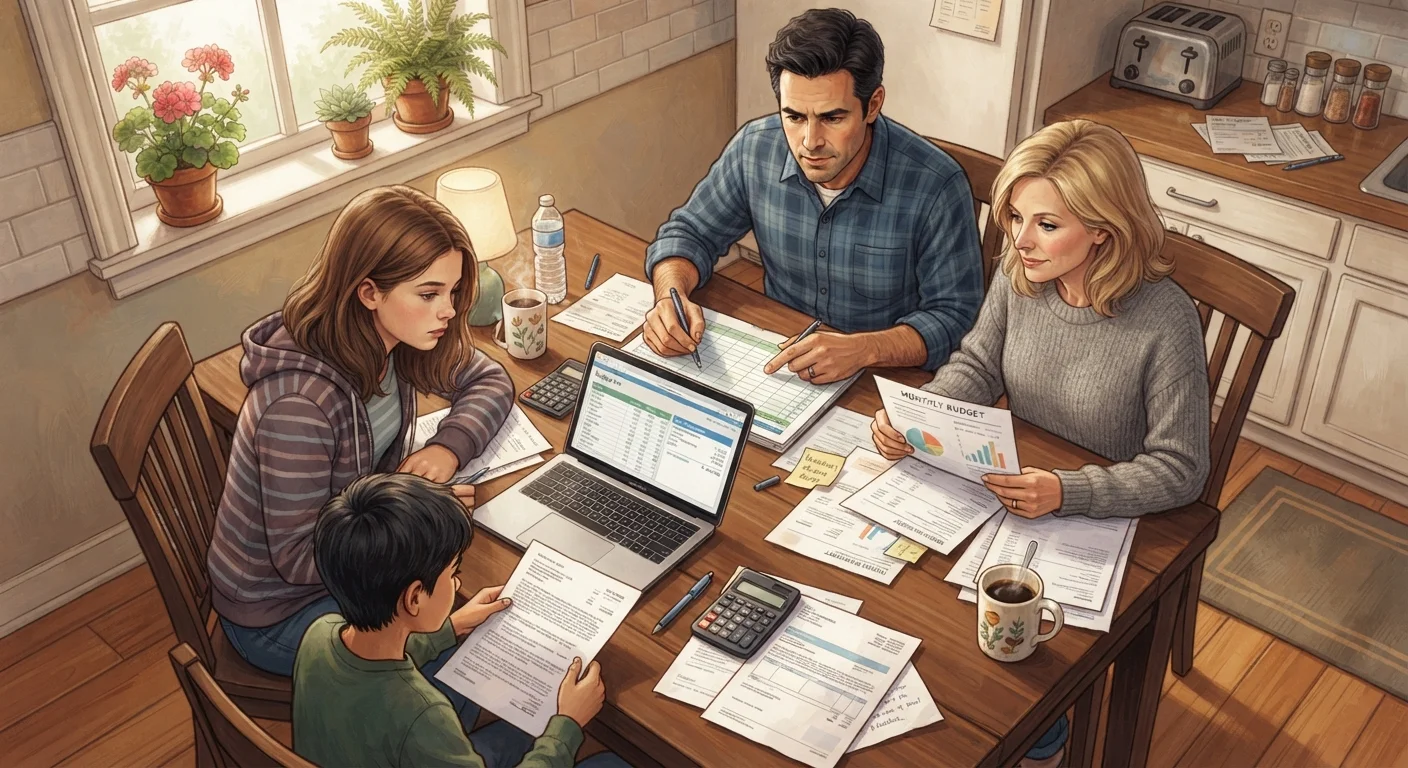
- List every debt you carry. Write down the creditor, balance, interest rate, and minimum payment for each account. This single exercise removes the fog of anxiety and replaces it with facts you can work with.
- Check your credit reports. Dispute any errors you find through the bureau's official dispute process - inaccurate negative entries can be removed.
- Build or tighten your budget. You need to know your monthly income and expenses before you can direct any extra dollars toward debt. If you're starting from scratch, our family budgeting starter guide is a practical place to begin.
- Pay on time, every time. Even minimum payments, made consistently, protect your payment history - the most heavily weighted factor in your credit score.
- Avoid opening new accounts unnecessarily. Each application generates a hard inquiry that can temporarily nudge your score down.
Major life events - a new baby, a job change, a health crisis - can reshape how debt fits into your family's picture. Our guide on managing debt through life changes covers how to adapt your approach when circumstances shift.
This article is for general informational purposes only and does not constitute personalized financial, legal, or tax advice. Consult a qualified financial professional before making decisions about your specific situation.