

Key Takeaways
- Predictable annual expenses — holidays, back-to-school, taxes — can be funded month by month rather than all at once.
- Dividing a known annual cost by 12 and saving that amount monthly is one of the simplest seasonal budgeting techniques.
- Automating small monthly transfers to labeled sub-accounts removes the temptation to skip contributions.
- Reviewing your seasonal budget each January helps you refine estimates based on what you actually spent the year before.
- Combining a seasonal savings plan with awareness of retailer markdown cycles can stretch each saved dollar further.
Why the Calendar Is a Budgeting Tool
Most household budgets treat every month as roughly the same — fixed bills plus variable spending. But real family life doesn't work that way. August arrives with back-to-school costs. November and December bring gift-giving, travel, and entertaining expenses. Spring brings tax prep fees, possibly a tax payment, and home maintenance needs after winter. These events aren't surprises — they happen every year on roughly the same schedule.
The problem isn't that families don't know these expenses are coming. The problem is that most budgets don't account for them until the bill is already due. A seasonal budget flips that script: it maps known annual costs across all 12 months so that when an expensive season arrives, the money is already set aside.
This approach is sometimes called a "sinking fund" strategy — you sink small amounts each month into a purpose-labeled pool so the withdrawal feels painless. It pairs naturally with the pay yourself first approach, where savings come out of each paycheck before discretionary spending begins.
Best Practices for Seasonal Budget Planning
The following practices form a reliable system for aligning your household budget to the yearly financial calendar. Together they move saving from reactive to proactive.
List every predictable annual expense before the year begins
You can't plan for what you haven't named. Writing out every recurring yearly cost — holiday gifts, school supplies, annual insurance premiums, vehicle registration, tax prep — gives you the complete picture of what the calendar will demand. Many families underestimate total annual irregular expenses by hundreds or even thousands of dollars.
Divide each annual cost by 12 and save that amount monthly
Breaking a large lump-sum expense into 12 smaller monthly contributions makes it manageable without disrupting cash flow. This turns a stressful $600 December bill into a routine $50 monthly deposit that barely registers in a monthly budget.
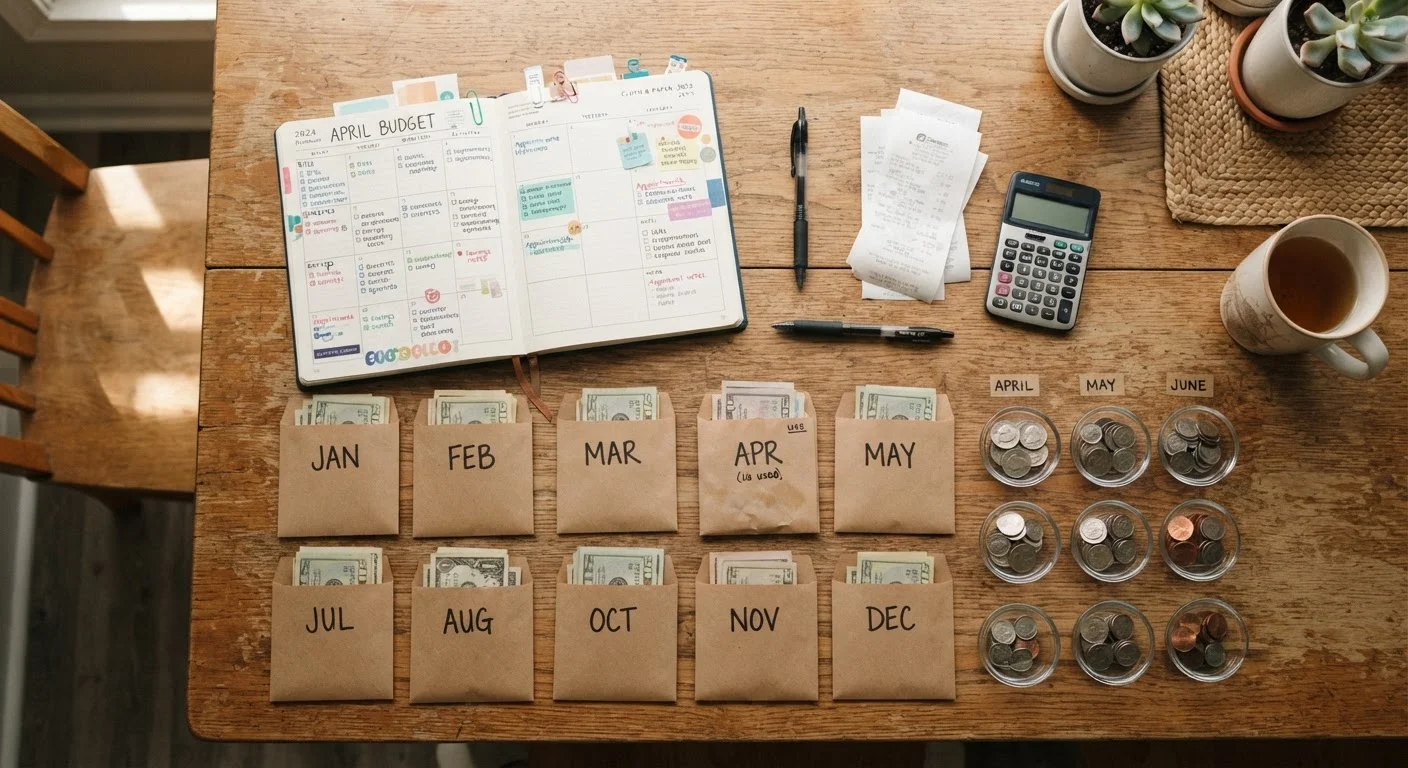
Open labeled sub-accounts or use named envelopes for each seasonal category
Pooling seasonal savings into a single account creates confusion and increases the temptation to borrow from one category to cover another. Separate labeled buckets — whether digital sub-accounts or physical envelopes — keep funds mentally and practically ring-fenced for their intended purpose.
Automate monthly transfers on payday
Manual saving requires a decision every month, and decisions introduce the risk of skipping. Automating the transfer — even a modest amount — removes that friction entirely. Money that never appears in a checking account is rarely missed. Learn more about how automated transfers quietly build savings over time.
Build a buffer of 10–15% above your estimated seasonal costs
Estimates are rarely perfect. Costs rise, guests are added to gatherings, or a child needs extra school supplies. A small buffer built into the savings target means a modest overrun doesn't blow the budget or send you to a credit card.
Do a midyear check-in to adjust contributions
Life changes — a new job, a move, a growing family — can shift both income and seasonal costs mid-year. A brief review in June or July ensures your savings targets still match reality and lets you correct course before the expensive fall and winter seasons arrive.
For a broader framework that brings all of these habits together, see the complete household finance framework for families.
Quick Actions You Can Take This Week
Starting a seasonal budget doesn't require a spreadsheet overhaul. These targeted moves can build momentum immediately.
Once your seasonal system is running, consider pairing it with an understanding of when retailer prices tend to drop — buying at the right time of year can reduce how much you need to save in the first place.
Keeping the System Honest Year After Year
A seasonal budget is a living document, not a one-time setup. Each January is an opportunity to look at what you actually spent versus what you saved. If your holiday fund ran short, increase the monthly contribution. If your back-to-school envelope had money left over, redirect the surplus or reduce future contributions.
Your Estimates Will Improve Over Time
First-year seasonal budgets are rarely perfect — and that's expected. The goal in year one is to capture spending you've historically ignored in your monthly plan. By year two, you have real data: what you actually spent versus what you saved. Use that information to adjust each category's monthly contribution rather than guessing again. Families who revisit their seasonal plan annually tend to find it becomes more accurate and less stressful with each iteration.
This annual calibration is exactly what the family budget reset checklist is designed to help with — it walks through reviewing every spending category and adjusting savings targets based on real data from the prior year.
Homeowners should also factor in seasonal maintenance costs. Furnace tune-ups in fall, gutter cleaning, and spring landscaping all follow a predictable rhythm. The seasonal home maintenance calendar is a useful companion for estimating these costs before they hit.
This article is for general informational and educational purposes only. It does not constitute personalized financial, tax, or investment advice. For guidance specific to your financial situation, consult a qualified financial professional.