

Key Takeaways
- A new car can lose 15-25% of its value in the first year alone.
- Depreciation is usually the largest single cost of car ownership over five years.
- Mileage, condition, and market demand all heavily influence how fast a vehicle loses value.
- Buying a vehicle that's 2-3 years old lets someone else absorb the steepest depreciation.
- Keeping a car well-maintained can slow value loss and improve resale outcomes.
- Some vehicle segments - like trucks and SUVs - historically retain value better than sedans.
Car Depreciation
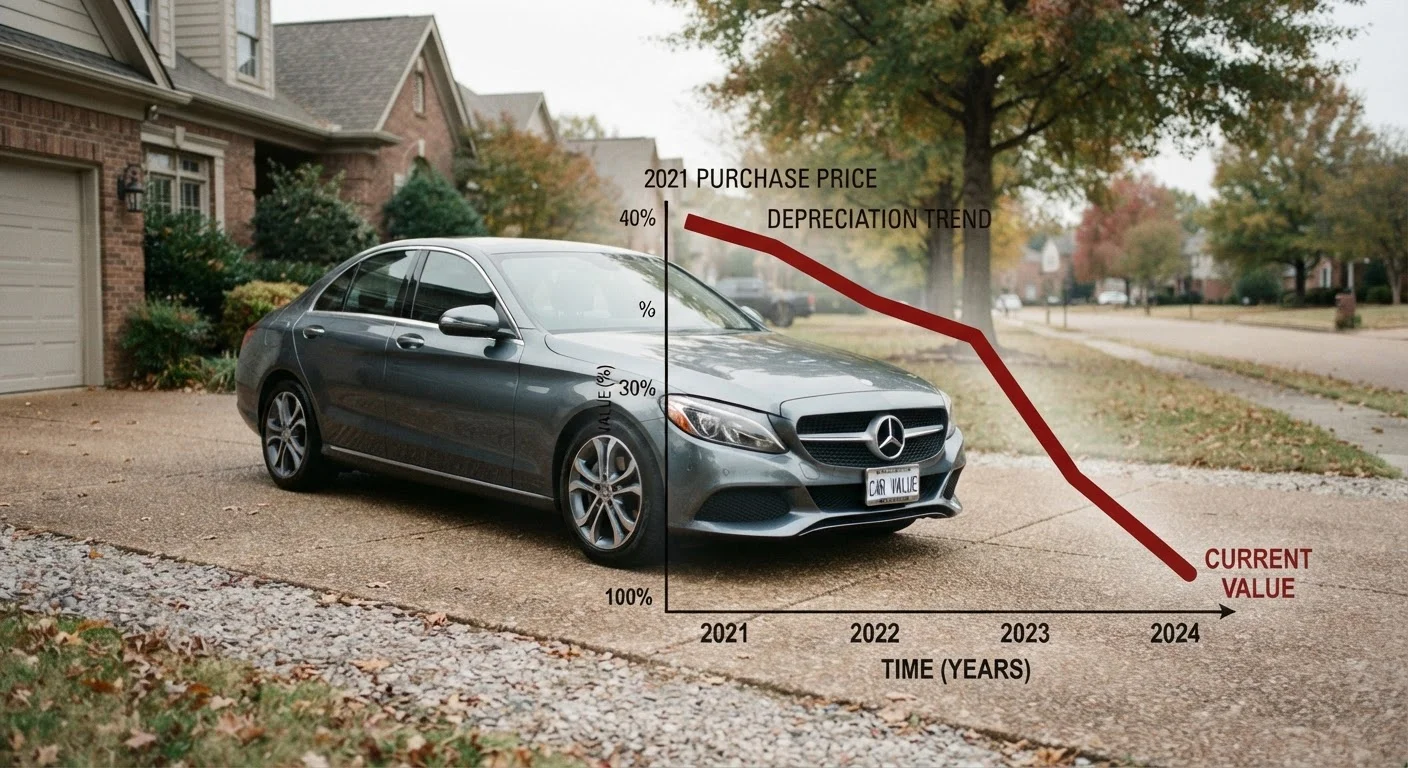
Car depreciation is the decline in a vehicle's market value over time. It starts the moment you drive off the dealership lot and continues every year you own the car. Depreciation is the single largest ownership cost for most drivers, often exceeding what they spend on fuel or insurance.
Depreciation is typically expressed as a percentage of original value lost per year, or calculated as the difference between purchase price and current resale or trade-in value.
What Depreciation Actually Means for Your Wallet
Depreciation isn't just an accounting concept - it's real money leaving your household budget. When you buy a new vehicle for $35,000 and sell it five years later for $16,000, that $19,000 gap is depreciation. It didn't go toward repairs, fuel, or insurance. It simply evaporated.
For context, the American Automobile Association (AAA) has consistently identified depreciation as the largest single component of vehicle ownership costs - larger than fuel, insurance, or maintenance for most owners. Understanding it helps families make sharper decisions about when to buy, what to buy, and when to sell.
Depreciation is also the reason a nearly new used car can represent strong value. The original buyer absorbed the biggest loss, and you get the remainder of the vehicle's useful life at a lower cost basis. See how depreciation fits into the full picture of car ownership costs to understand the broader financial landscape.
15-25%
Value lost in year one on a new vehicle
Industry estimates consistently show new cars shed the largest share of their value in the first 12 months of ownership.
~50-60%
Typical five-year depreciation rate
After five years, most vehicles retain only 40-50% of their original purchase price, according to automotive valuation research.
#1
Depreciation as a share of total ownership cost
AAA's vehicle cost studies regularly identify depreciation as the single largest expense in the total cost of car ownership.
How Depreciation Is Calculated
There's no single official formula, but the most common method compares a vehicle's current market value - typically sourced from industry guides used by lenders and dealers - against its original purchase price.
Simple depreciation formula:
- Depreciation amount = Purchase price − Current market value
- Depreciation rate = Depreciation amount ÷ Purchase price × 100
So a car bought for $30,000 now worth $18,000 has depreciated $12,000, or 40%. If that happened over three years, the average annual depreciation rate is roughly 13% of the original price per year - though the loss is front-loaded, not linear.
Dealers and lenders use tools such as industry pricing guides to assess current market value. These estimates account for mileage, trim level, geographic market, and condition - not just age.
Key Factors That Affect How Fast a Car Loses Value
Depreciation isn't uniform across all vehicles. Several variables determine whether a car holds its value or craters quickly:
- Age and mileage: Both drive depreciation independently. A two-year-old car with 50,000 miles will typically be worth less than one with 20,000 miles, all else equal.
- Brand reputation and reliability perception: Models with strong reliability track records tend to retain more value because used-car buyers are willing to pay a premium for lower risk.
- Market demand: Trucks and SUVs have historically depreciated more slowly than sedans in the US market, reflecting buyer preferences.
- Fuel type: Fuel-efficient vehicles may hold value better when gas prices rise, while some EVs have seen accelerated depreciation due to battery technology changes.
- Condition and maintenance history: A well-documented service record signals to buyers that the car was cared for. Keeping up with your vehicle's maintenance schedule is one of the most direct ways to protect resale value.
- Color and options: Neutral colors and popular trim configurations typically sell faster and closer to market value.
Protect Resale Value With Consistent Upkeep
One of the most actionable steps you can take is following your vehicle's recommended maintenance schedule and keeping receipts. When it comes time to sell or trade in, buyers and dealers will pay more for a car with a verifiable service history. Small investments in upkeep today directly reduce your depreciation loss tomorrow.
Practical Strategies to Limit Depreciation's Impact
You can't eliminate depreciation, but you can make buying and ownership decisions that reduce its financial sting:
- Buy used, not new. A vehicle 2-3 years old has already shed its steepest loss. You still get a reliable car with years of service life ahead.
- Choose models with strong resale history. Research resale value trends before purchasing - some segments (full-size trucks, certain SUVs) consistently outperform average depreciation curves.
- Limit discretionary mileage. Every mile adds up on the odometer and affects the eventual trade-in or sale value.
- Maintain the car properly and keep records. A clean, documented service history improves buyer confidence and can yield a better sale price.
- Don't over-finance. Long loan terms on depreciating assets can leave you "underwater" - owing more than the car is worth. This is a significant financial risk families should plan around.
For a complete picture of what vehicle ownership costs US families annually, see our annual car ownership cost breakdown. And if you're newer to car ownership, this guide for first-time buyers walks through every expense category to budget for.