

Key Takeaways
- The sticker price of a car represents only a fraction of what you'll spend over its lifetime.
- Depreciation is typically the single largest ownership cost, often exceeding $3,000 per year on a new vehicle.
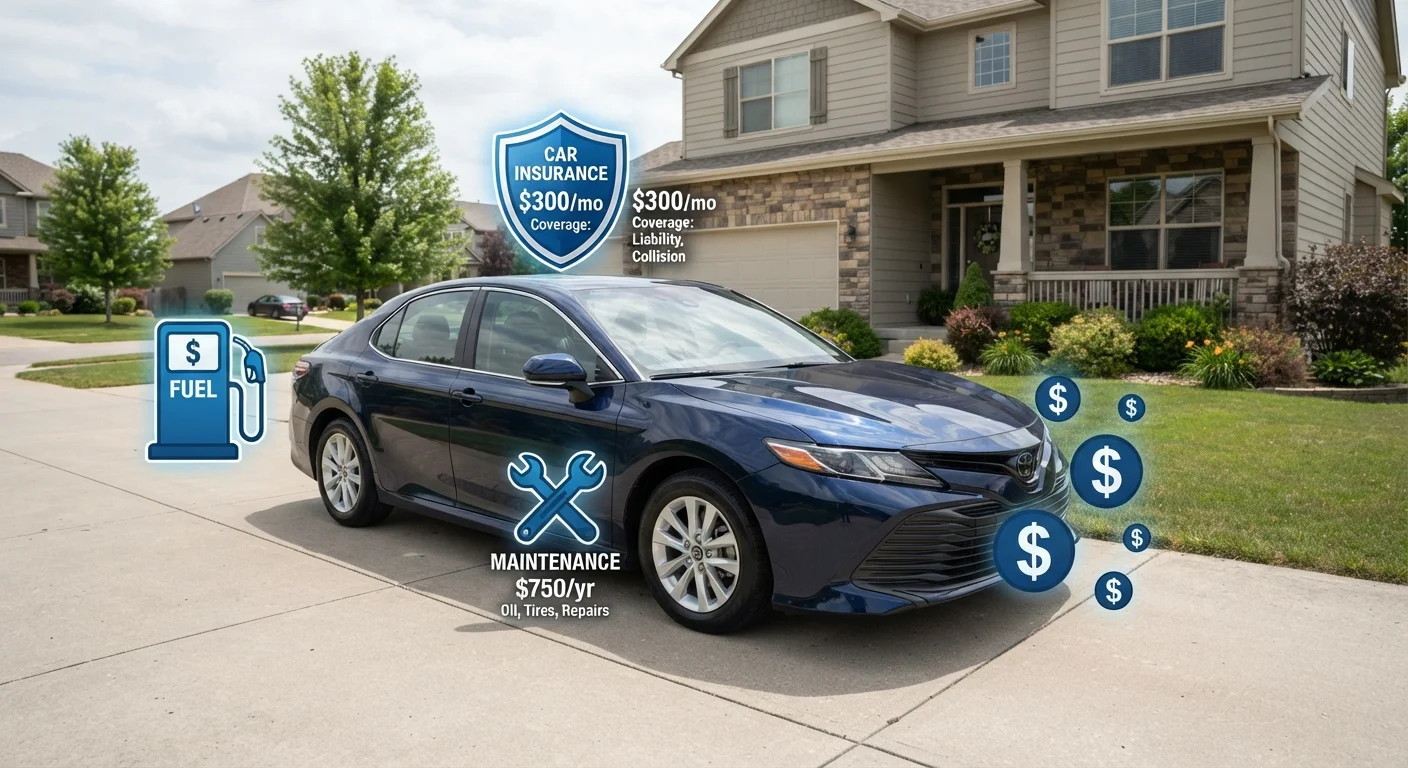
- Insurance, fuel, and maintenance together frequently add $4,000-$6,000 or more annually.
- Hidden costs like registration fees, loan interest, and parking can catch families off guard.
- Understanding total ownership costs before buying helps families make more informed budget decisions.
True Cost of Car Ownership
The true cost of car ownership is the total amount a vehicle actually costs you over time, including every expense beyond the purchase price. This includes depreciation, insurance, fuel, maintenance, registration, loan interest, and other recurring fees. When all these costs are added together, the annual total is often significantly higher than most families anticipate.
Economists sometimes refer to this as the 'total cost of ownership' (TCO), a framework used to capture both direct and indirect costs associated with an asset over its useful life.
Why the Sticker Price Is Just the Starting Line
When a family visits a dealership or browses listings online, the purchase price naturally dominates the conversation. It's the number on the window, the figure tied to monthly payments. But that number, whether $18,000 or $45,000, represents only a portion of what that vehicle will ultimately cost to own and operate.
The gap between the sticker price and the true cost of ownership surprises many buyers - not because they're careless, but because the additional costs are spread across time and categories that don't appear in a single invoice. Depreciation doesn't show up as a bill. Insurance renews quietly each year. Fuel costs accumulate fill-up by fill-up. Understanding these costs before signing - not after - gives families real financial control.
For a detailed category-by-category breakdown, see the Annual Car Ownership Costs reference guide built specifically for US families.
Depreciation: The Invisible Expense That Hits Hardest
Depreciation is the loss in a vehicle's market value over time. Unlike a car payment, it never appears on a bank statement - but it's often the single largest cost of owning a car, particularly in the first few years.
A new vehicle typically loses 15-25% of its value in its first year on the road, and around half its original value within five years. On a $30,000 vehicle, that first-year loss alone can represent $5,000-$7,500 in wealth that simply evaporates. The rate of decline slows after the early years, which is one reason some financial analysts suggest buying a vehicle that's two to three years old - much of the steepest depreciation has already occurred.
~50%
Value a new car loses in first 5 years
Industry data consistently shows that most new vehicles lose roughly half their purchase value within the first five years of ownership.
$10,000+
Estimated average annual car ownership cost
Consumer and automotive research organizations have repeatedly estimated total annual ownership costs for a typical US vehicle in the range of $10,000-$12,000 when all expenses are included.
15-25%
Depreciation in year one for new vehicles
Most new vehicles lose between 15% and 25% of their value in the first 12 months, making the initial year the most financially significant for depreciation.
Buyers weighing whether to purchase or lease should factor depreciation into that decision. Buying vs. leasing carries very different depreciation implications for a family's long-term financial picture.
Insurance, Fuel, and Maintenance: The Recurring Big Three
After depreciation, three cost categories tend to define the annual budget burden of car ownership:
- Auto insurance: Premiums vary widely based on location, driving record, vehicle type, and coverage level. National averages for full-coverage insurance frequently run $1,500-$2,500 per year, though rates in urban areas or for younger drivers can be considerably higher.
- Fuel: Annual fuel costs depend heavily on how many miles you drive, your vehicle's fuel economy, and local gas prices. A household driving 15,000 miles per year in a vehicle averaging 28 mpg pays for roughly 535 gallons annually - a cost that fluctuates substantially with gas prices. Families curious about longer-term fuel cost comparisons can explore the gas vs. electric cost picture for everyday drivers.
- Maintenance and repairs: Routine upkeep - oil changes, tire rotations, brake service, filters - typically costs $500-$1,200 per year for a well-maintained vehicle. Older vehicles or those with deferred maintenance can push repair bills considerably higher.
Track Every Car Expense for 12 Months
Open a simple spreadsheet or use a budgeting app to log every car-related cost - fuel, insurance, repairs, registration, parking, and tolls. After 12 months, you'll have an accurate picture of your true annual ownership cost, which is almost always higher than expected. That number becomes your baseline for smarter decisions on your next vehicle.
It's worth noting that not all maintenance advice circulating among drivers is accurate. The vehicle maintenance myths guide can help families separate fact from fiction on routine car care and avoid unnecessary spending.
The Costs Families Most Often Miss
Several ownership expenses tend to fall outside the mental budget most people run when buying a car:
- Loan interest: Financing a $28,000 vehicle at 7% over 60 months means paying roughly $5,200 in interest charges over the life of the loan - money that provides no tangible asset in return.
- Registration and title fees: These vary by state but can run $100-$400 or more annually, sometimes tied to the vehicle's value.
- State inspections: Many states require annual safety or emissions inspections, adding $20-$100 per year.
- Parking and tolls: In urban and suburban areas, parking costs and tolls can easily add hundreds of dollars annually.
- Roadside assistance and memberships: Often overlooked until needed, these services add a modest but real annual cost.
The costs families frequently underestimate covers these categories in greater depth, with practical planning guidance.
Families new to the car-buying process will also find the full cost of car ownership guide for first-time buyers a useful planning resource before committing to a vehicle.
This article is for general informational and educational purposes only and does not constitute financial or legal advice. For guidance tailored to your personal financial situation, consult a qualified financial adviser.