

Key Takeaways
- Children often cannot identify blurry vision because they assume their sight is normal.
- Behavioral clues - like squinting, head tilting, or avoiding reading - can signal undetected vision issues.
- Routine well-child visits include basic vision screening, but a formal eye exam provides more thorough evaluation.
- Early detection of vision problems supports better learning outcomes and developmental progress.
- Parents should mention any behavioral concerns to their pediatrician even between scheduled checkups.
Why Children Rarely Complain About Their Eyesight
Children don't have a reference point for clear vision. If a child has never seen the world in sharp detail, blurriness simply feels like how things are - not like a problem worth mentioning. This is why parents, teachers, and pediatricians play such an important role in spotting the signs that a child's vision may need professional evaluation.
According to the American Academy of Ophthalmology, vision problems affect roughly one in five school-age children - yet many go undetected for years. The good news is that most pediatric vision conditions respond well to treatment when caught early. Knowing what to look for gives your family a meaningful head start.
The behavioral clues below are worth discussing with your child's doctor. This article is general health information and is not a substitute for a professional eye exam or medical evaluation. If you have concerns, bring them up at your next visit - and consider adding vision-related questions to your well-child visit checklist.
Frequent squinting or eye rubbing
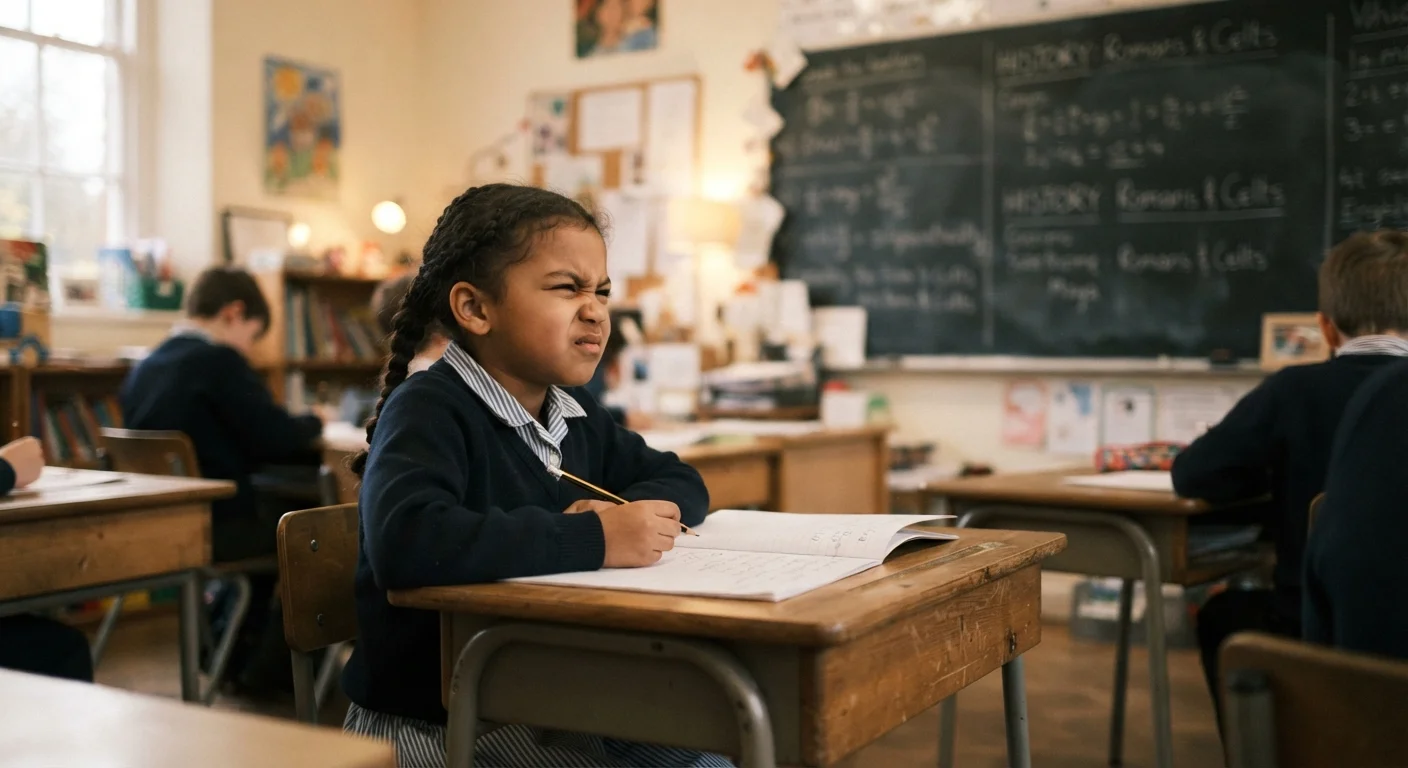
Squinting temporarily improves focus by reducing the amount of light entering the eye - it's the brain's natural workaround for blurry vision. If your child squints regularly when watching TV, reading, or looking at distant objects, it may indicate nearsightedness or another refractive error rather than tiredness or habit. Occasional eye rubbing is normal, but persistent rubbing - especially with redness or tearing - can signal eye strain or an underlying condition worth evaluating.
Squinting is the brain's natural workaround for blurry vision - not a habit to dismiss.
Sitting unusually close to screens or books
When a child consistently pulls a book inches from their face or migrates to the front row of any room with a screen, they are instinctively compensating for difficulty seeing at a comfortable distance. While some proximity is normal for younger children still developing reading habits, a persistent pattern - especially if it increases over time - is worth mentioning to your pediatrician.
Consistently moving closer to text or screens is a quiet, self-correcting behavior that parents can easily observe.
Covering or closing one eye
A child who covers one eye while watching TV, reading, or doing close work may be attempting to eliminate double vision or to rely on the stronger eye. This behavior can be associated with strabismus (where the eyes don't align properly) or with amblyopia, a condition in which one eye develops weaker visual acuity. Either condition benefits significantly from early intervention.
Covering one eye is rarely random - it often signals the brain is trying to resolve a visual conflict.
Tilting the head or turning to one side
Head tilting is sometimes dismissed as a quirky posture, but it can indicate that a child is compensating for misaligned eyes or unequal vision between the two eyes. By turning or tilting their head, children can shift their field of view to find the angle where both eyes work together more effectively. If you notice this happening consistently during visual tasks, bring it to your pediatrician's attention.
A habitual head tilt during reading or TV-watching can be the body's quiet signal of eye misalignment.
Avoiding reading or complaining of headaches after close work
Children with uncorrected farsightedness often have to exert significant extra effort to focus on near objects - effort that can produce eye strain, headaches, and fatigue. Because kids may not connect the headache to the reading, they may simply avoid the activity or become irritable after schoolwork. If your child resists reading more than seems typical, or frequently complains of headaches in the afternoon or evening, an eye exam is worth considering.
Headaches after reading or homework can be a sign of eye strain, not just stress or fatigue.
Losing their place while reading or skipping lines
Struggling to track text smoothly across a page - losing place mid-sentence, skipping lines, or re-reading the same line - can reflect problems with eye coordination or focusing control rather than a reading disorder. These signs sometimes surface when children begin learning to read, and they're easy to attribute to learning challenges before the visual component is ruled out. A comprehensive eye exam can help clarify whether vision is a contributing factor.
Losing place while reading can reflect visual tracking difficulty - not necessarily a learning disorder.
A visible change in one or both eyes
If one eye appears to drift inward, outward, upward, or downward - even occasionally - this is a sign that warrants prompt evaluation rather than a watchful wait. Intermittent eye turns (strabismus) are sometimes noticed only in photos or when a child is tired, which makes them easy to overlook. Similarly, a white reflection in the pupil in photographs (instead of the typical red-eye effect) should be evaluated by a doctor without delay, as it can occasionally indicate serious conditions affecting the eye's interior.
An eye that drifts - even occasionally - should be evaluated promptly, not monitored indefinitely.
When to Act and What to Expect
If you recognize several of the signs above, a visit to your pediatrician is a reasonable first step. They can conduct a basic vision screening and, if warranted, refer your child to a pediatric optometrist or ophthalmologist for a comprehensive eye exam. Comprehensive exams go beyond standard screenings and can identify issues like amblyopia (lazy eye), strabismus (eye misalignment), and refractive errors such as nearsightedness or farsightedness.
Ask about a comprehensive eye exam
Standard vision screenings at school or during well-child visits can detect some problems, but they don't catch everything. A comprehensive pediatric eye exam performed by an optometrist or ophthalmologist evaluates eye health, eye coordination, and focusing ability in much greater depth. If your child shows any of the signs in this article, asking for a referral is a reasonable step - not an overreaction.
Vision problems don't always affect both eyes equally, which is another reason children may not self-report - one eye may compensate for the other, masking the issue in everyday life. Early intervention is especially important before age seven or eight, when the visual system is still developing rapidly.
Keep in mind that pediatric vision checks are just one part of the broader picture of your child's health. Tracking growth patterns, developmental milestones, and behavioral changes together gives your care team the most useful information. For more on how those pieces fit together, see our guide on reading your child's growth chart.
This article is for general informational purposes only and does not constitute medical advice. Always consult a qualified healthcare professional regarding your child's specific health needs.