

Key Takeaways
- The American Academy of Pediatric Dentistry recommends scheduling a child's first dental visit by their first birthday.
- Early visits focus on prevention and parent education, not complex procedures.
- Choosing a pediatric dentist trained in child behavior can make the experience much smoother.
- Reading books and role-playing the visit at home can significantly reduce a child's anxiety.
- Establishing a twice-daily brushing routine before the first visit supports a positive checkup outcome.
What you will need
Why the First Dental Visit Is Earlier Than Most Parents Expect
Many parents assume a dental visit isn't necessary until a child has a full set of teeth or is old enough to sit still for a cleaning. In reality, the AAPD and the American Academy of Pediatrics both recommend the first visit happen by age one. Primary (baby) teeth are highly susceptible to early childhood caries - a form of tooth decay that can progress quickly and affect nutrition, speech development, and the alignment of permanent teeth.
An early dental visit isn't primarily about cleaning; it's a prevention and education session. The dentist evaluates the eruption pattern of new teeth, checks for early decay, and offers guidance on feeding practices, fluoride, and habits like pacifier use. Think of it similarly to a well-child checkup - a routine baseline that catches small concerns before they grow. Our well-child visit checklist can help you stay organized across all your child's routine health appointments.
First Visit Timing Really Matters
The American Academy of Pediatric Dentistry (AAPD) recommends that a child's first dental visit happen no later than their first birthday - or within six months of the first tooth appearing, whichever comes first. Early visits allow a dentist to catch potential issues before they become serious problems and give parents personalized guidance on feeding, teething, and oral hygiene. Waiting until preschool age, as many families do, can mean missing an important window for prevention.
Dental health is also part of the broader picture of childhood preventive care. You can explore how it fits alongside other age-based recommendations in our overview of preventive screenings by age.
This article provides general health information for educational purposes and is not a substitute for professional dental or medical advice. Always consult a qualified healthcare provider for guidance specific to your child's needs.
How to Prepare Yourself and Your Child
The groundwork you lay at home before the appointment matters more than most parents realize. Children take emotional cues from their caregivers, so your calm confidence is one of the most effective tools available.
Avoid Transferring Your Own Dental Anxiety
Research consistently shows that parental attitudes toward dental care shape how children feel about their own visits. Try to speak about the dentist in neutral or positive terms in the weeks leading up to the appointment. Phrases like 'it won't hurt' or 'don't be scared' can actually prime children to expect a negative experience - instead, focus on curiosity and routine.
Make Oral Care a Daily Ritual Early
Begin wiping your infant's gums with a soft, damp cloth even before teeth arrive. Once the first tooth appears, switch to a soft-bristled infant toothbrush with a rice-grain-sized smear of fluoride toothpaste, as recommended by the AAPD. Building this habit early makes the dentist's exam feel familiar rather than foreign.
What you will need
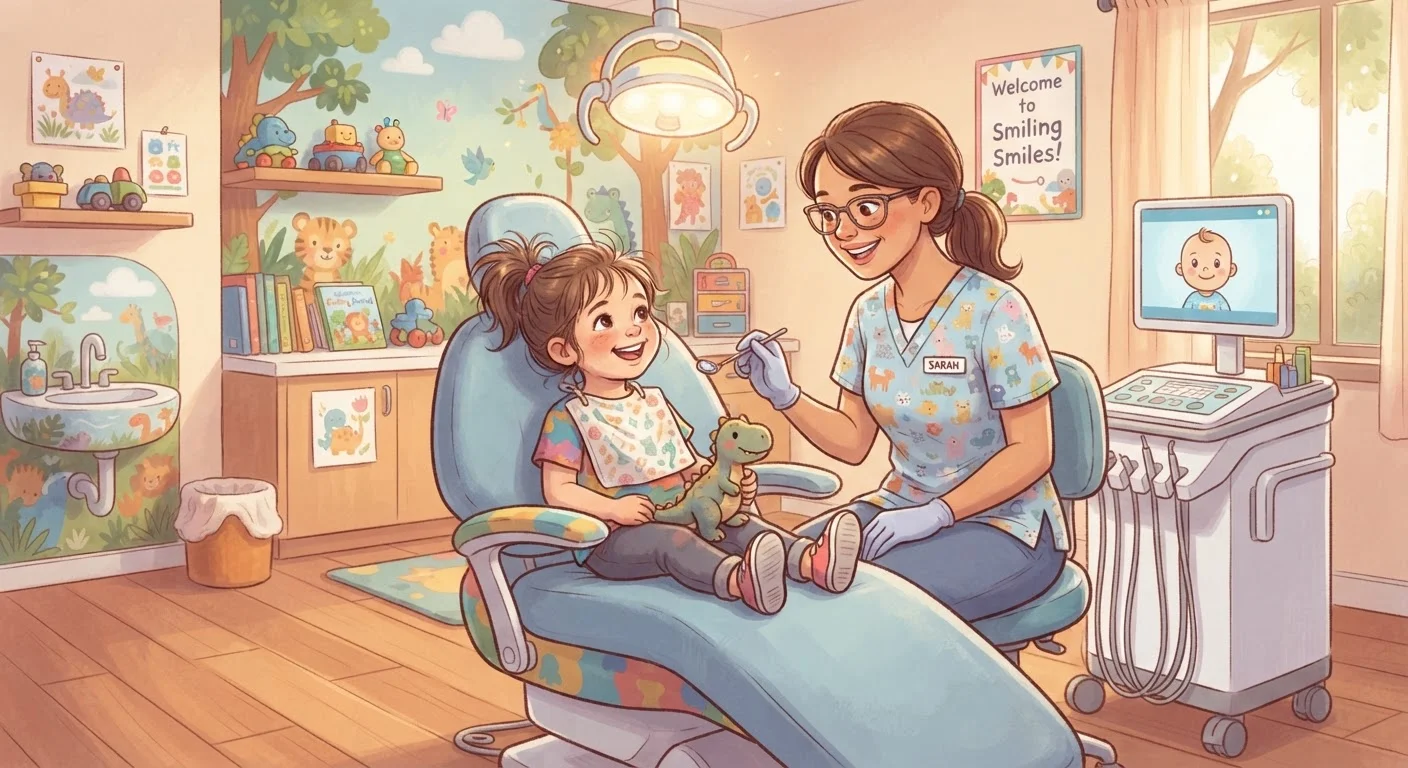
When you arrive, the office environment will do some of the work - pediatric dental offices are typically designed with children in mind, with colorful décor and staff trained in behavior guidance. Your role is to stay relaxed, follow the dental team's lead, and offer quiet reassurance rather than hovering anxiously.
Pediatric dentist or family dentist with pediatric experience
Provides age-appropriate dental care and behavior management techniques suited to young children.
Soft-bristled infant or toddler toothbrush
Used to clean your child's teeth gently before and after the first visit as part of daily oral care.
Fluoride toothpaste (infant formula)
A rice-grain-sized amount applied twice daily helps protect newly erupted teeth from early decay.
Children's book about dental visits
Reading a story about going to the dentist helps demystify the experience and reduce pre-visit anxiety.
Insurance card and completed health history form
Required at check-in; completing paperwork ahead of time reduces waiting-room stress.
Schedule the appointment at the right time
Aim to book the first visit by your child's first birthday or within six months of the first tooth appearing. Call your pediatrician for a referral to a pediatric dentist, or search for a board-certified pediatric dental specialist in your area. When calling the office, ask whether they routinely see infants and toddlers - not all general dentists do.
Prepare your child at home
In the week or two before the appointment, read age-appropriate books about dental visits and consider doing a gentle role-play at home: take turns 'counting teeth' with a toothbrush. Keep your language simple, positive, and honest - tell them the dentist will look in their mouth and count their teeth to make sure they're healthy.
Gather records and complete paperwork in advance
Most pediatric dental offices will send or post intake forms you can complete before the visit. Fill these out ahead of time, covering your child's medical history, any medications, and known allergies. Bring your insurance card and, if applicable, immunization records or any notes from your child's pediatrician about oral health concerns.
Know what to expect during the exam
For very young children, the dentist often uses a 'knee-to-knee' position, where the child lies back with their head resting in the dentist's lap and their legs across a parent's lap. The dentist will count teeth, check for early signs of decay, assess jaw and bite development, and may apply a fluoride varnish. The appointment is generally brief - often under 30 minutes - and largely educational for parents.
Ask your questions and note the dentist's guidance
Use this visit as a direct line to personalized guidance. Common topics include teething discomfort, thumb-sucking and pacifier use, appropriate fluoride exposure, and how diet affects tooth health. Jot down recommendations before you leave so you can apply them at home consistently. The dentist can also advise on when the next visit should occur - typically every six months.
Reinforce positive associations after the visit
After the appointment, acknowledge your child's effort in calm, low-key terms - 'You did great sitting for the dentist!' rather than outsized praise that signals the visit was a big ordeal. Continue the brushing routine at home, and keep talking about oral care as a normal part of daily life, just like bathing or getting dressed.