

Key Takeaways
- Snacks with protein, fiber, and healthy fat sustain energy far better than sugary or refined options.
- A blood sugar crash after school can look like irritability, difficulty focusing, or low motivation.
- Pairing foods - like fruit with nut butter - improves satiety and nutritional value.
- Budget-friendly whole foods like eggs, bananas, and cheese are genuinely effective snack anchors.
- Kids who have some snack choice are more likely to eat what's offered.
Sustaining After-School Snack
A sustaining after-school snack is one that provides a meaningful combination of nutrients - typically protein, fiber, and healthy fat - that helps stabilize a child's blood sugar and energy levels for several hours. Unlike snacks that deliver a quick sugar spike followed by a crash, sustaining options support focus, mood, and physical activity through the rest of the afternoon and into the evening meal.
Nutritionally, foods with a lower glycemic index and adequate protein slow glucose absorption, helping avoid the rapid rise-and-fall pattern associated with high-sugar, low-fiber snacks.
Why the After-School Window Actually Matters
For most school-age children, the stretch between afternoon dismissal and dinner is the longest gap between proper meals in their day. Lunch is typically eaten around midday, meaning a child arriving home at 3:30 p.m. may have gone four or five hours without eating - a significant span for a growing body that's been sitting through lessons, navigating social situations, and, for many kids, participating in physical activity.
What happens in this window shapes more than just hunger. Stable blood sugar supports mood regulation, homework focus, and cooperative behavior. When it dips sharply - often because the last meal was light or because energy-dense but nutritionally thin snacks were consumed - many parents recognize the result: the grumpy, distracted, hard-to-reach child who suddenly can't seem to manage simple tasks.
Understanding the difference between a snack that truly sustains and one that simply fills time is one of the most practical nutritional shifts a family can make. You can also review broader eating patterns using a weekly family nutrition audit to spot other gaps beyond snack time.
What "Just Fills Time" Actually Looks Like
Snacks that fill time rather than fuel kids tend to share a few traits: they're high in refined carbohydrates or added sugars, low in protein and fiber, and designed primarily for palatability rather than nutrition. Common examples include flavored crackers eaten by the handful, juice boxes paired with nothing else, sweetened fruit pouches marketed as "natural," and most candy-adjacent snack foods.
These foods aren't inherently forbidden - occasional treats are a normal part of childhood. The problem arises when they become the default. A high-sugar snack triggers a rapid rise in blood glucose, which the body responds to by releasing insulin. Blood sugar then dips, sometimes below pre-snack levels, producing the familiar crash: fatigue, irritability, and renewed hunger within an hour or two.
Fortified Doesn't Always Mean Sustaining
Many packaged snack products labeled 'with added vitamins' or 'made with real fruit' are still built on a base of refined flour and sugar. Added micronutrients don't change a snack's glycemic impact or its ability to hold off hunger. Reading the full ingredient list and nutrition facts panel gives a more accurate picture than front-of-package claims.
It's also worth noting that some well-intentioned choices - like "fortified" snack products - can create a false sense of nutritional security. A snack bar with added vitamins doesn't automatically qualify as sustaining if it's built on a base of sugar and refined flour. See our piece on nutrition shortcuts that quietly undermine a family's diet for more context.
The Simple Formula for a Sustaining Snack
Nutrition researchers and registered dietitians broadly agree that the most effective snacks pair at least two of the following: a quality carbohydrate, a protein source, and a healthy fat. This combination slows digestion, moderates the glucose response, and keeps hunger at bay longer.
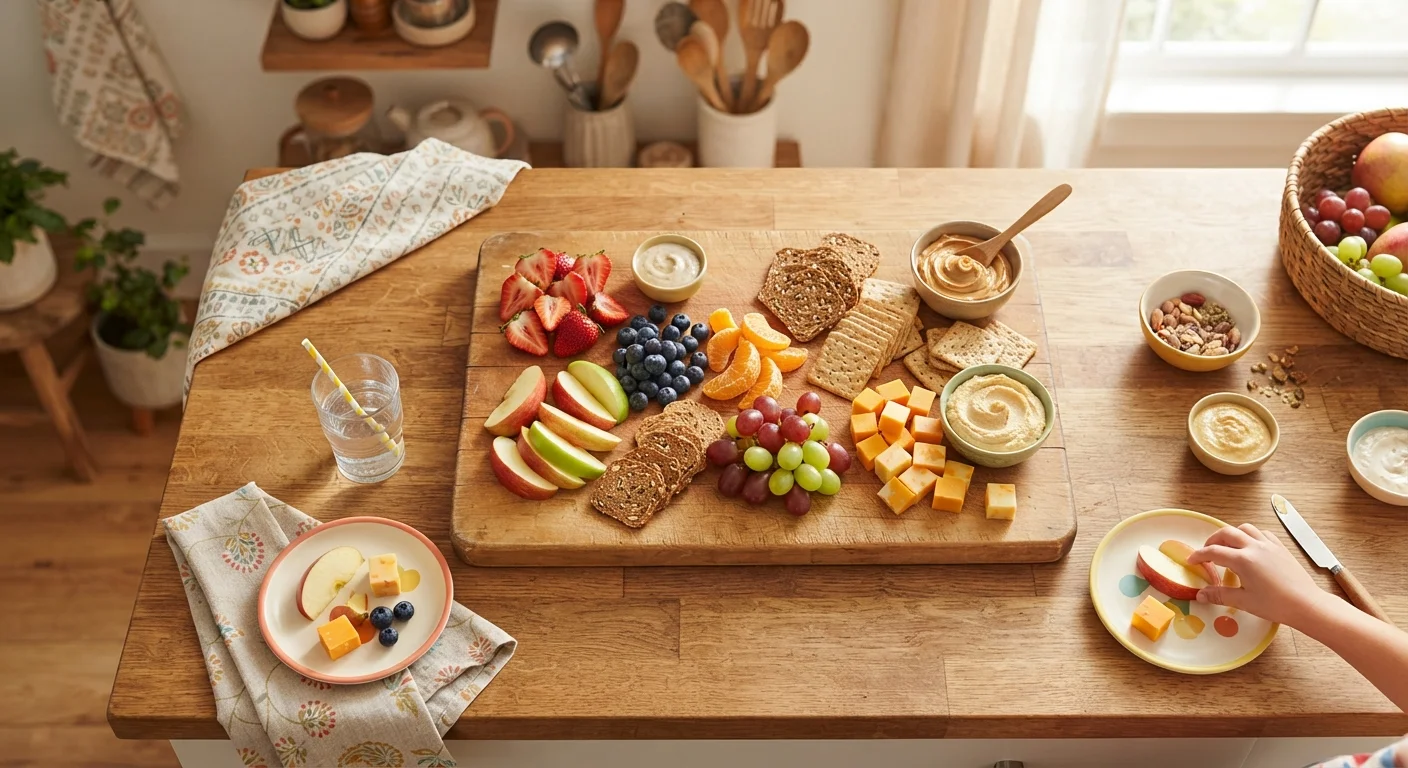
- Carbohydrate + Protein: Apple slices with peanut butter, whole grain crackers with cheese, or a hard-boiled egg with a small piece of fruit.
- Carbohydrate + Healthy Fat: Banana with a small handful of nuts, or whole grain toast with avocado.
- All three: Plain yogurt with berries and a sprinkle of granola is a classic example that hits all the bases.
None of these require significant culinary skill or an expensive grocery run. Eggs, cheese, peanut butter, bananas, apples, carrots, and plain yogurt are among the most affordable and widely available foods in US supermarkets - and they anchor genuinely sustaining snacks.
Make the Healthy Option the Easy Option
Spend ten minutes on the weekend washing fruit, portioning trail mix, or boiling eggs, and you'll dramatically reduce the chance that hunger drives kids to the nearest bag of chips. Visibility matters too - food that's at eye level in the fridge or on the counter gets eaten first.
Making It Work in Real Family Life
The biggest barrier to better after-school snacks isn't knowledge - it's friction. Kids arrive home hungry and reach for whatever is easiest. That means the practical strategy is to make sustaining foods the easy choice.
Some approaches that work for busy families:
- Pre-portion and refrigerate. Cutting fruit, portioning crackers with cheese cubes, or boiling a batch of eggs on the weekend reduces after-school prep to seconds.
- Keep it visible. A bowl of whole fruit on the counter or a designated snack shelf at eye level in the fridge signals where to look without any prompting from a parent.
- Give kids some agency. Children who have a small role in choosing from a pre-approved set of options are generally more willing to eat what's available. Two or three choices is enough.
Shared meals are another touchstone here - kids who eat with family regularly tend to develop broader food acceptance over time. The research behind this is explored further in our article on how eating together shapes children's food habits.
This article is for general informational and educational purposes only and is not a substitute for professional medical or nutritional advice. Speak with your child's pediatrician or a registered dietitian for guidance tailored to your child's individual health needs.