

| Iron - daily target (children 4-8) | 10 mg per day (National Institutes of Health, Office of Dietary Supplements) |
| Calcium - daily target (children 9-18) | 1,300 mg per day (National Institutes of Health, Office of Dietary Supplements) |
| Vitamin D - daily target (children & most adults) | 600 IU (15 mcg) per day (National Institutes of Health, Office of Dietary Supplements) |
| Fiber - daily target (adults) | 25-38 g per day (Dietary Guidelines for Americans, 2020-2025) |
| Average U.S. fiber intake | ~16 g per day (Dietary Guidelines for Americans, 2020-2025) |
Why These Four Nutrients Keep Falling Short
Surveys of U.S. dietary patterns consistently identify the same handful of nutrients that families consume below recommended levels: iron, calcium, vitamin D, and dietary fiber. These aren't exotic micronutrients - they're foundational to energy, bone health, immune function, and digestive wellbeing. Yet busy schedules, picky eaters, and tight food budgets can quietly push them to the margins of everyday meals.
Understanding why gaps happen is a useful first step. Iron drops when meals lean heavily on refined grains and processed snacks rather than beans or leafy greens. Calcium intake slips when dairy is limited without substituting other calcium-rich foods. Vitamin D is difficult to get from food alone, and many families have limited sun exposure. Fiber falls short when fruits, vegetables, and whole grains are crowded out by packaged convenience foods.
The encouraging news: most of these gaps can be narrowed with realistic, budget-conscious food choices - no specialty products required. For broader meal-planning strategies, see our guide to family nutrition on a tight budget.
| Iron - daily target (children 4-8) | 10 mg per day (National Institutes of Health, Office of Dietary Supplements) |
| Calcium - daily target (children 9-18) | 1,300 mg per day (National Institutes of Health, Office of Dietary Supplements) |
| Vitamin D - daily target (children & most adults) | 600 IU (15 mcg) per day (National Institutes of Health, Office of Dietary Supplements) |
| Fiber - daily target (adults) | 25-38 g per day (Dietary Guidelines for Americans, 2020-2025) |
| Average U.S. fiber intake | ~16 g per day (Dietary Guidelines for Americans, 2020-2025) |
Nutrient-by-Nutrient: Food Sources That Deliver
Use this section as a practical reference when planning meals or grocery lists.
Iron
Iron supports red blood cell production and energy metabolism. Children, adolescent girls, and pregnant individuals have especially high needs. There are two dietary forms: heme iron (from animal sources, more readily absorbed) and non-heme iron (from plant sources, less readily absorbed but still valuable). Pairing plant iron sources with foods rich in vitamin C - such as bell peppers, tomatoes, or citrus - meaningfully improves absorption.
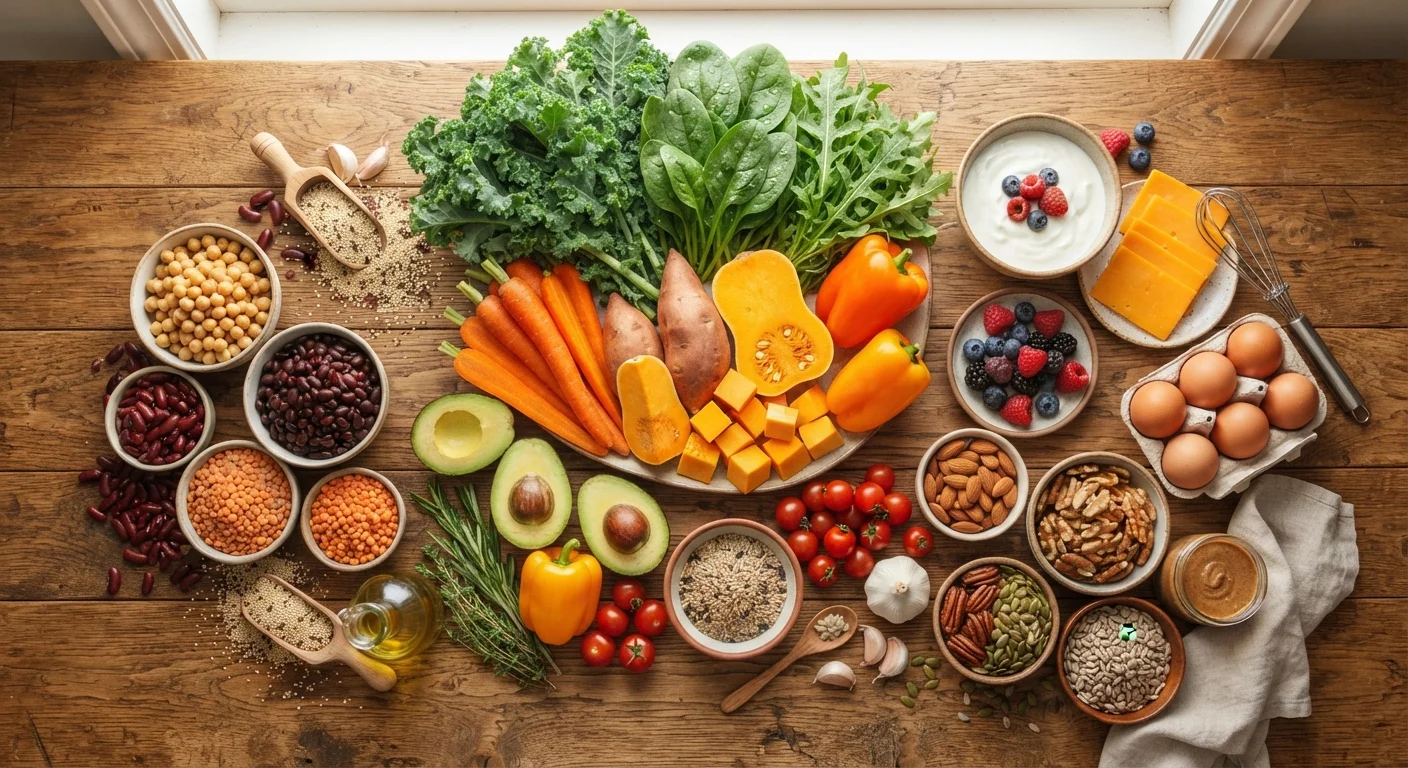
- Affordable sources: canned or dried lentils, kidney beans, chickpeas, tofu, fortified breakfast cereals, ground beef, chicken thighs, canned sardines
Calcium
Calcium builds and maintains bone density during childhood and adolescence - a window that has lasting consequences. It also supports muscle function and nerve signaling. Dairy foods are the most concentrated sources, but non-dairy options are plentiful.
- Affordable sources: low-fat milk and yogurt, canned salmon (with bones), low-sodium canned white beans, fortified plant-based milks, firm tofu set with calcium sulfate, bok choy, kale, broccoli
Vitamin D
Vitamin D helps the body absorb calcium and plays a role in immune regulation. Very few foods naturally contain significant amounts, which is why deficiency is widespread. Sunlight triggers skin production of vitamin D, but factors like sunscreen use, time indoors, and geographic latitude limit this meaningfully.
- Affordable sources: canned or fresh salmon and tuna, eggs (especially the yolk), fortified cow's milk, fortified orange juice, fortified plant-based milks
Dietary Fiber
Fiber supports digestive health, helps regulate blood sugar, and promotes satiety - making it valuable for both children's growth and adult weight management. Most Americans get roughly half the recommended amount. Increasing fiber gradually and drinking adequate water helps the body adjust comfortably.
- Affordable sources: oats, brown rice, whole-wheat bread and pasta, all dried and canned legumes, apples, pears, frozen peas and corn, carrots, potatoes with skin
Heme iron
A form of iron found in animal-based foods such as meat, poultry, and fish. It is absorbed more efficiently by the body than non-heme iron from plant sources.
Non-heme iron
The form of iron found in plant foods such as beans, lentils, and fortified cereals. Absorption is lower than heme iron but can be improved by consuming vitamin C-rich foods at the same meal.
Dietary fiber
Indigestible carbohydrates found in plant foods. Fiber supports digestive health, helps regulate blood sugar levels, and contributes to feelings of fullness.
Fortified food
A food product that has had one or more nutrients added during processing that are not naturally present or are present in low amounts - for example, vitamin D added to milk.
Calcium bioavailability
The proportion of calcium in a food that the body can actually absorb and use. It varies by food source; for example, calcium from kale is absorbed at a relatively high rate, while that from spinach is lower due to compounds that bind it.
For habits that can quietly work against these efforts, our article on nutrition shortcuts that undermine family diets is worth a read.
Practical Ways to Fill Gaps Without Overhauling Everything
Small, consistent swaps tend to stick better than dramatic dietary overhauls - especially with children. A few approaches families find workable:
- Swap refined grains for whole grains at one meal per day. Choosing oatmeal at breakfast or whole-wheat bread at lunch adds meaningful fiber with no extra cost.
- Add legumes to familiar dishes. Stirring canned black beans into taco meat, or blending lentils into tomato sauce, boosts both iron and fiber without changing the flavor profile much.
- Use fortified foods deliberately, not exclusively. Fortified cereals and milks are convenient tools for vitamin D and calcium, but they work best as part of a varied diet rather than the only strategy. Our weekly nutrition audit checklist can help you spot where variety is slipping.
- Include vitamin C at iron-rich meals. A glass of orange juice, a handful of strawberries, or sliced bell peppers alongside beans or fortified cereal meaningfully improves iron uptake.
- Keep canned and frozen options on hand. Canned salmon, frozen edamame, and canned white beans are shelf-stable, affordable, and packed with the nutrients most families are missing.
If you're concerned that a child or family member may have a significant nutrient deficiency, a conversation with a healthcare provider or registered dietitian is the right next step. They can assess individual needs, consider relevant health history, and guide supplementation if appropriate. This article provides general nutritional information and is not a substitute for personalized medical or dietary advice.
This article is for informational and educational purposes only and does not constitute medical or dietary advice. Consult a qualified healthcare professional or registered dietitian before making significant changes to your family's diet, especially for children, pregnant individuals, or anyone with a chronic health condition.