

Key Takeaways
- Children's portion sizes and nutrient priorities change meaningfully at every growth stage.
- Half the plate being fruits and vegetables is a practical starting point for all age groups.
- Toddlers need energy-dense foods in small, frequent servings rather than large portions.
- School-age children benefit from iron- and calcium-rich foods to support rapid development.
- Teens have among the highest caloric and calcium needs of any life stage.
- Consistent variety across the week matters more than hitting every nutrient at every meal.
A Balanced Plate for Kids
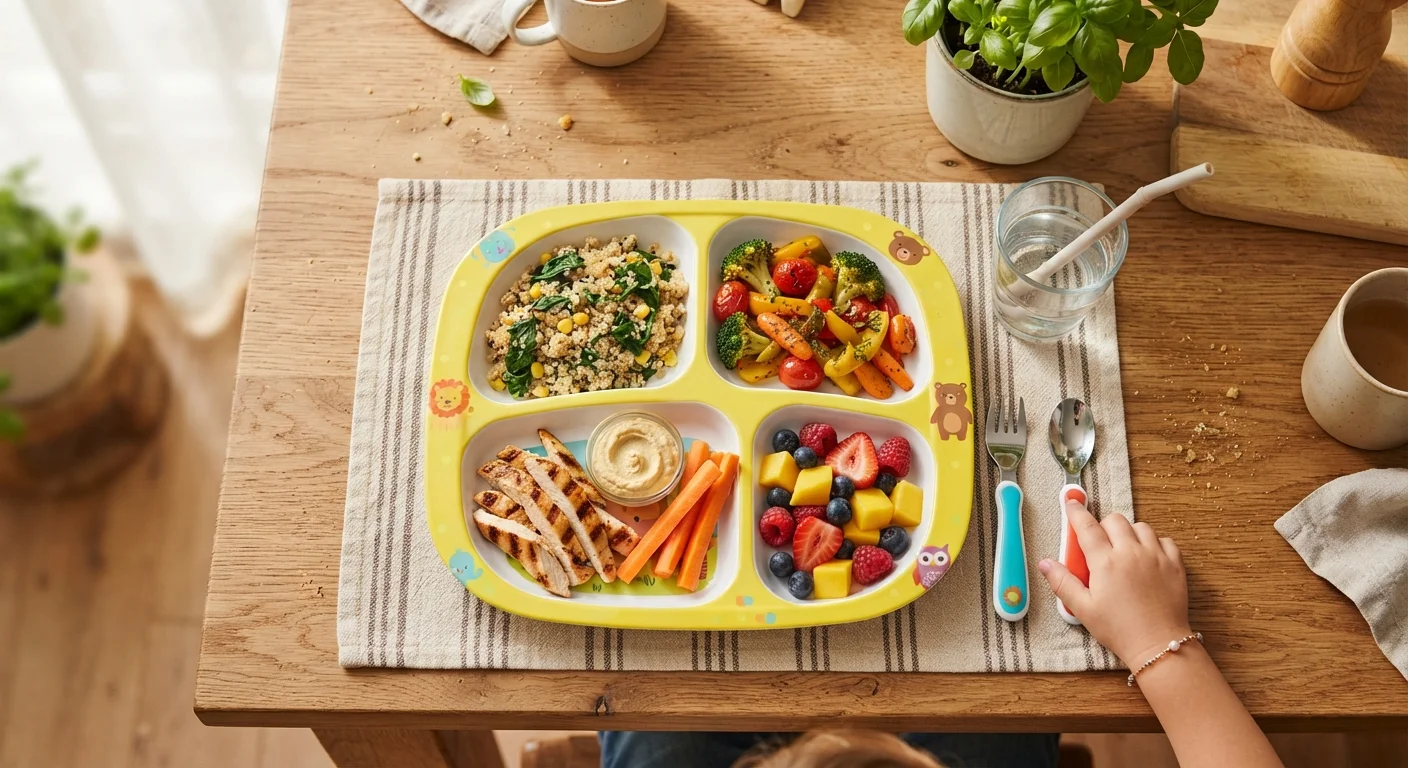
A balanced plate for children means offering a mix of food groups - vegetables, fruits, grains, protein, and dairy or dairy alternatives - in proportions appropriate for a child's age and size. Unlike adult nutrition goals, children's needs shift significantly from toddlerhood through the teen years, both in portion size and in specific nutrients. The goal is consistent variety over time, not perfection at every single meal.
The USDA's MyPlate model is the leading framework for child nutrition in the US, recommending that roughly half the plate consist of fruits and vegetables, with the remainder split between grains and protein, plus a serving of dairy.
Why One-Size Nutrition Doesn't Fit All Ages
It's tempting to think of a healthy plate as a single, fixed picture - but children's bodies are constantly changing, and so are their nutritional needs. A two-year-old's plate looks genuinely different from a twelve-year-old's, not just in size but in the balance of nutrients that support healthy development at each stage.
The USDA's MyPlate framework offers a useful foundation: roughly half the plate filled with fruits and vegetables, about a quarter with grains (at least half of which should be whole grains), and a quarter with protein foods, alongside a serving of dairy or a fortified alternative. That proportion holds across age groups, but serving sizes, calorie needs, and specific nutrient priorities shift considerably as children grow.
Understanding those shifts helps parents make confident, practical choices without turning every meal into a complicated calculation. For a deeper look at how portion labeling can mislead even well-intentioned parents, see how adult serving sizes can mislead parents.
~50%
Plate share recommended for fruits and vegetables
The USDA MyPlate model recommends filling roughly half of every plate with fruits and vegetables across all age groups.
1,300 mg
Daily calcium target for adolescents
According to the National Institutes of Health, teens ages 9-18 have the highest calcium requirement of any life stage to support peak bone development.
5-6
Eating occasions per day for toddlers
Pediatric nutrition guidelines suggest toddlers are better served by multiple small meals and snacks daily rather than three larger meals, reflecting their small stomach capacity.
The Toddler Plate: Ages 1-3
Toddlers are in a period of rapid brain and body development, and they need energy-dense foods delivered in small, manageable amounts. Their stomachs hold very little, so five or six small eating occasions a day is more realistic than three full meals.
A practical approach: offer about one tablespoon of each food per year of age as a starting point, adjusting based on your child's hunger cues. Half the plate should still aim for fruits and vegetables - soft-cooked vegetables, ripe fruit pieces, or mashed options work well at this stage. Whole-fat dairy remains important for brain development at ages one to two; after two, most children can transition to lower-fat options based on their pediatrician's guidance.
Iron deserves extra attention in toddlerhood. Iron-rich foods like fortified cereals, beans, lentils, and small pieces of meat support cognitive development. Pairing them with vitamin C-rich foods - think a few orange segments alongside a bowl of lentil soup - helps the body absorb plant-based iron more effectively.
For a more detailed walkthrough of introducing foods and textures at this stage, this practical toddler feeding overview covers the essentials.
The School-Age Plate: Ages 4-12
School-age children are growing steadily and becoming more active, which means calorie needs increase gradually from early to late elementary years. By ages 6-8, many children need around 1,200-1,400 calories daily; by ages 9-12, that range climbs toward 1,400-1,800 depending on activity level.
The plate composition remains consistent with MyPlate principles. Calcium and vitamin D take on heightened importance during this period because bone density is actively building - a process that continues into early adulthood. Dairy, fortified plant milks, calcium-set tofu, and leafy greens like kale and bok choy are all good contributors.
Whole grains, lean proteins, and a variety of colorful vegetables and fruits round out the plate. At this age, children are also developing food preferences and habits that tend to persist. Shared family meals are one of the most effective - and budget-friendly - ways to reinforce healthy patterns.
Make Variety the Goal, Not Perfection
If a child refuses a vegetable at dinner, it doesn't undo an otherwise balanced day. Focus on offering a wide range of foods across the week - different colors of produce, varied protein sources, and whole grains alongside refined ones. Research consistently shows that repeated, low-pressure exposure to new foods builds acceptance over time. Consult your child's pediatrician if you have persistent concerns about limited eating.
The Teen Plate: Ages 13-18
Adolescence brings a second major growth surge, and calorie needs peak during these years. Many teen boys need 2,200-3,200 calories daily; teen girls typically need 1,800-2,400, though activity level matters significantly. Importantly, more calories should come from nutritious foods rather than simply more of anything.
Calcium requirements hit their lifetime high during adolescence - around 1,300 mg per day according to current dietary reference intakes. Three servings of dairy or fortified equivalents daily is a common way to approach this, but teens who avoid dairy need a deliberate plan to meet calcium needs through other sources.
Iron is another standout concern, particularly for teen girls who have begun menstruating. Lean red meat, fortified cereals, beans, and dark leafy greens can all contribute. Teens who follow vegetarian or vegan eating patterns should discuss iron and vitamin B12 status with a healthcare provider.
Tracking whether your family's overall eating patterns are covering nutritional bases across all ages is easier with a structured approach - a weekly nutrition audit can help identify gaps without a full diet overhaul.
This article is for general informational and educational purposes only and is not a substitute for personalized medical or nutritional advice. Always consult your child's pediatrician or a registered dietitian for guidance specific to your child's health, growth, and dietary needs.