
Whole Grains vs. Refined Grains: Does the Difference Matter for Growing Children?

Key Takeaways
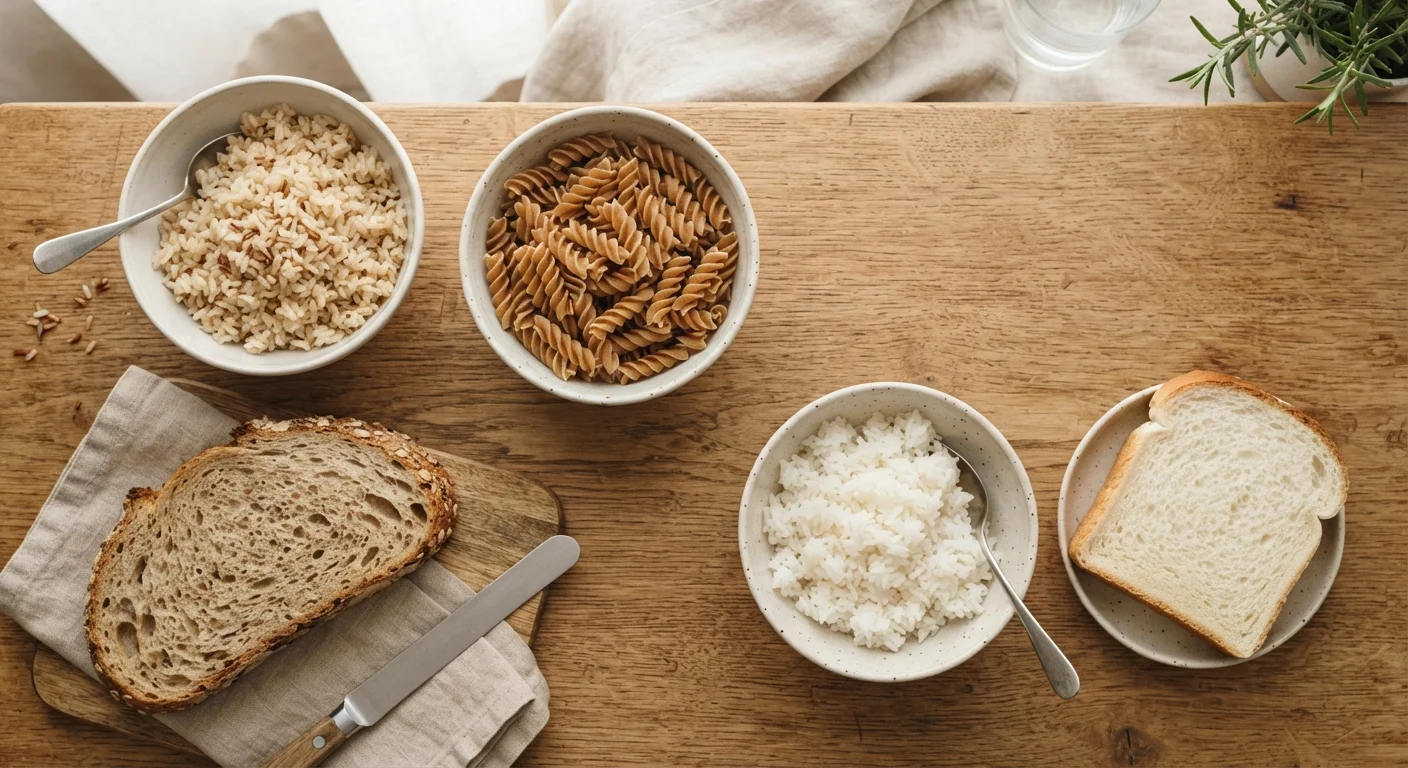
- Whole grains retain fiber, vitamins, and minerals that refining removes from the grain.
- Many refined grains are enriched with B vitamins and iron, partially closing the nutrient gap.
- Current USDA guidance recommends that at least half of daily grain servings come from whole grains.
- Swapping half of refined grains for whole grains is a realistic, effective middle-ground strategy for families.
- Texture and taste preferences - especially in children - are valid factors when choosing grain foods.
- Overall diet quality matters more than any single food swap; variety supports long-term healthy habits.
Option A
Whole Grains
The fiber-rich, nutrient-dense grain option.
Best for: Families aiming to maximize nutritional value from everyday staples like bread, rice, and pasta.
Option B
Refined Grains
The familiar, often fortified everyday option.
Best for: Families balancing picky eating, texture preferences, and budget without sacrificing all nutritional benefit.
If you want the most nutritional value from every grain serving
Whole Grains
Whole grains provide fiber, magnesium, and B vitamins in their natural form, supporting digestive health and sustained energy for growing children.
If your child is a picky eater who refuses whole grain textures
Refined Grains
Enriched refined grains still deliver key nutrients, and accepting foods children will actually eat supports better overall calorie and nutrient intake.
If you're working with a tight grocery budget
Refined Grains
Enriched white rice and standard pasta are affordable staples that contribute meaningfully to a balanced diet when paired with vegetables, protein, and legumes.
If you want to gradually improve your family's diet without friction
Whole Grains
Starting with small swaps - such as whole wheat tortillas or oatmeal - builds acceptance over time without overhauling the family menu all at once.
What Processing Actually Does to a Grain
A whole grain is made up of three parts: the bran (outer layer), germ (nutrient-rich core), and endosperm (starchy center). Refining strips away the bran and germ, leaving mostly endosperm. That process extends shelf life and produces the softer textures many children prefer - but it also removes a meaningful share of fiber, B vitamins (thiamin, niacin, folate), vitamin E, iron, and magnesium.
To offset some of those losses, most refined grain products sold in the United States are enriched - meaning manufacturers add back iron and several B vitamins after milling. However, enrichment does not restore fiber or all of the phytonutrients that were naturally present. Think of enrichment as a partial, not complete, nutritional correction.
This distinction shapes why public health guidance consistently encourages whole grain choices - but it also explains why enriched refined grains are not nutritionally worthless, particularly within an otherwise varied diet.
Nutritional Comparison: What the Numbers Show
Seeing the differences side by side helps families make more informed decisions at the grocery store. The comparison below reflects typical values for common grain foods and is meant as general guidance, not a prescription.
| Criterion | Whole Grains | Refined Grains |
|---|---|---|
| Fiber (per serving) | 2-4g (higher) | 0.5-1g (lower) |
| B Vitamins | Naturally present | Added back via enrichment |
| Iron | Naturally present | Added back via enrichment |
| Magnesium & Zinc | Good source | Significantly reduced |
| Phytonutrients | Present in bran & germ | Largely removed |
| Shelf life | Shorter (oils in germ) | Longer |
| Texture / palatability | Denser, nuttier | Softer, milder |
| Typical cost | Slightly higher | Generally lower |
Fiber is the most significant practical difference for children. Adequate fiber supports healthy digestion, helps children feel satisfied between meals, and is associated with stable blood sugar levels over time. Many US children fall short of fiber recommendations, making whole grain choices a straightforward opportunity to close that gap.
For a deeper look at how portion sizes and nutrient labels translate specifically to children's needs, see our guide to nutrition labels and kids.
What Current Guidelines Recommend
The USDA's Dietary Guidelines for Americans recommend that at least half of all grains consumed should be whole grains - for both children and adults. That framing is intentional: it acknowledges that refined grains can remain part of a balanced diet rather than calling for their elimination.
≥50%
Of daily grains should be whole grains
According to the USDA Dietary Guidelines for Americans, this target applies to children and adults across all age groups.
~1 in 10
US children meet whole grain recommendations
Research published in nutrition surveillance studies consistently shows most American children fall well short of the recommended whole grain intake.
In practical terms, the "half" benchmark is achievable without dramatic change. A family that serves oatmeal at breakfast, offers whole wheat tortillas with dinner, and keeps white rice or regular pasta for other meals can meet this guideline without conflict. The goal is a pattern over time, not perfection at every meal.
It is also worth remembering that overall diet quality - including fruits, vegetables, legumes, and protein variety - matters more than any single grain choice. Families navigating common nutrition shortcuts often find that small, consistent shifts produce more lasting results than rigid rules.
Real-World Considerations for Families
Nutrition advice that ignores cost, convenience, and a child's willingness to eat is advice that rarely survives the dinner table. Here are a few practical realities worth keeping in mind:
- Picky eaters: Some children strongly reject the denser texture of whole grain bread or pasta. Forcing unfamiliar textures can heighten mealtime tension. Gradual introduction - blending whole wheat pasta with white, for example - tends to be more effective. For families navigating feeding challenges beyond typical pickiness, understanding the difference between picky eating and problem feeding can be a helpful first step.
- Budget constraints: Store-brand enriched white rice and pasta are among the most affordable shelf-stable foods available. When budget is the binding constraint, pairing affordable refined grains with vegetables, beans, and lean protein achieves strong overall nutrition.
- Family meals: Shared mealtimes naturally create opportunities to introduce a wider variety of grain foods. Research consistently links eating together as a family with healthier dietary patterns in children - the social context of eating matters alongside the food itself.
A Note on 'Multigrain' Labels
A product labeled 'multigrain' simply means it contains more than one type of grain - it does not guarantee those grains are whole. To confirm a product is a genuine whole grain choice, look for 'whole wheat' or 'whole grain' as the first ingredient on the nutrition label. The Whole Grain Stamp, issued by the Whole Grains Council, is another reliable indicator on packaging.
This article provides general nutrition information and is not a substitute for personalized guidance from a registered dietitian or your child's healthcare provider.