

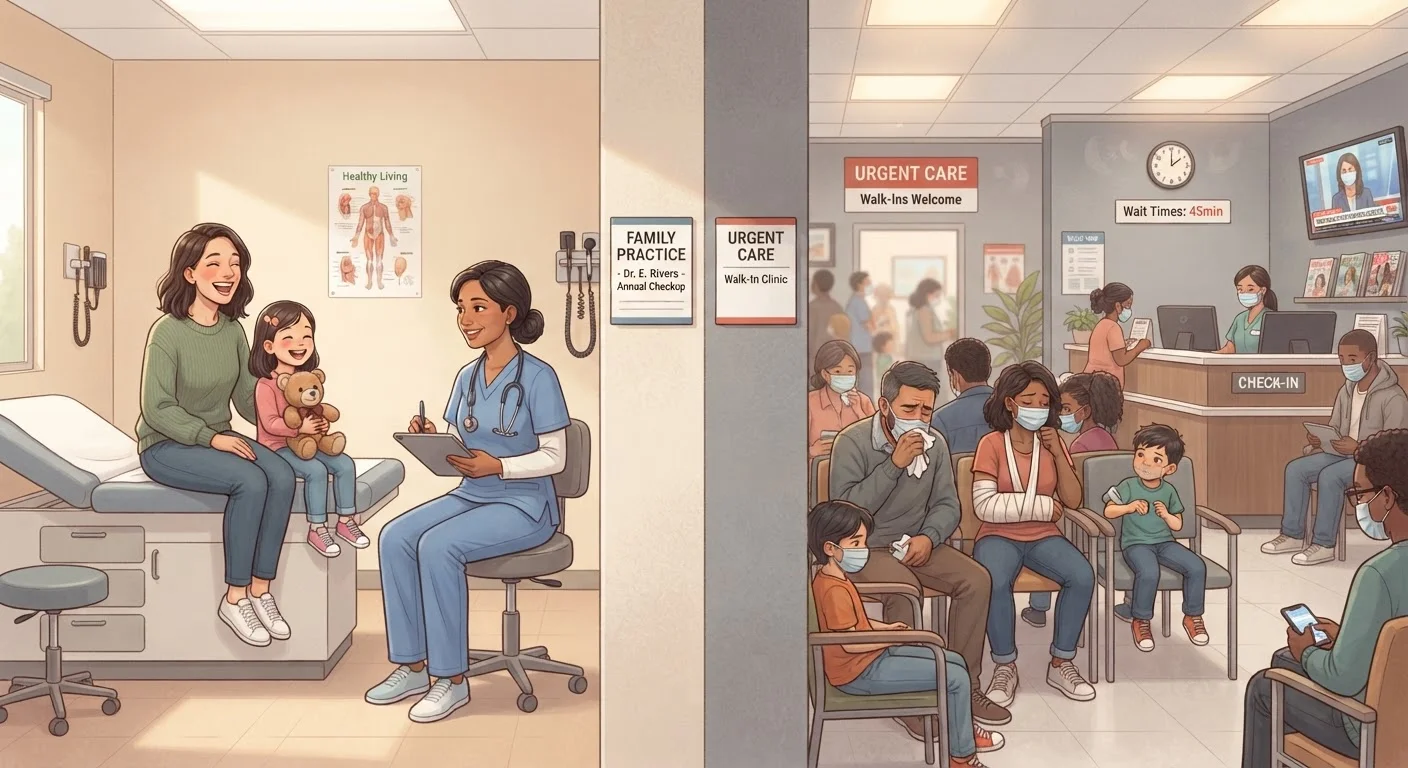
Key Takeaways
- Reactive care treats problems after they appear; preventive care works to stop them from developing.
- Both approaches serve important roles - the goal is finding the right balance for your family.
- Preventive care includes screenings, vaccinations, and everyday habits like nutrition and sleep.
- Many preventive measures are covered by insurance at no additional cost under the ACA.
- Shifting toward prevention doesn't require perfection - small, consistent habits add up significantly.
Option A
Reactive Health Care
The familiar response: treat illness or injury after it appears.
Best for: Addressing acute symptoms, injuries, or diagnosed conditions that require immediate medical attention.
Option B
Preventive Health Care
The proactive approach: reduce risk before problems develop.
Best for: Families looking to catch issues early, build lasting wellness habits, and reduce long-term health costs.
If your family needs immediate relief from symptoms or illness
Reactive Health Care
When someone is sick or injured, reactive care is essential and appropriate. Don't delay necessary treatment in favor of preventive strategies.
If you want to reduce how often your family needs urgent medical visits
Preventive Health Care
Routine checkups, screenings, and healthy daily habits help catch issues early and lower the likelihood of acute health events.
If you're managing a tight household budget
Preventive Health Care
Many preventive habits - like consistent sleep, balanced meals, and staying active - cost little but deliver lasting health value over time.
If your family includes young children or aging parents
Preventive Health Care
Preventive milestones like well-child visits and recommended screenings are especially critical at developmental and age-related health transition points.
What Each Approach Actually Means
Reactive health care is what most of us think of first: you feel sick, something hurts, or a symptom appears - so you see a doctor. Urgent care visits, ER trips, and prescriptions for an active infection all fall into this category. It's a necessary, important part of medicine. No one should delay care when they genuinely need it.
Preventive health care focuses on avoiding or detecting problems before they become serious. This includes annual well-child exams, recommended vaccinations, adult health screenings (like blood pressure checks or cholesterol panels), and the day-to-day habits that support long-term wellness - adequate sleep, balanced nutrition, and regular physical activity.
Neither approach replaces the other. Most families naturally use both, often without labeling them. The goal is to shift the balance so that prevention plays a bigger role before reactive care becomes necessary. For families with children, this balance is especially relevant - the Child Wellness hub covers how preventive milestones support healthy development from infancy through adolescence.
How They Compare Side by Side
The differences between reactive and preventive care go beyond just timing. They affect cost, stress, and long-term health outcomes in distinct ways. Understanding where each approach typically lands can help families make more intentional decisions.
| Criterion | Reactive Care | Preventive Care |
|---|---|---|
| When it happens | After symptoms or illness appear | Before problems develop |
| Primary goal | Treat or relieve an active issue | Reduce risk and detect early |
| Common examples | Urgent care, ER visits, prescriptions | Annual checkups, vaccines, screenings |
| Typical out-of-pocket cost | Often higher due to urgency | Often covered under ACA-compliant plans |
| Stress level | Higher - driven by immediate need | Lower - scheduled and planned |
| Long-term health impact | Addresses current condition only | May reduce severity of future conditions |
It's worth noting that the Affordable Care Act (ACA) requires most insurance plans to cover a core set of preventive services - like annual wellness visits, immunizations, and certain screenings - at no cost-sharing. This makes preventive care financially accessible for many families, even on tighter budgets. If you're curious about low-cost preventive options, see our guide to preventive health on a tight budget.
Why Families Often Default to Reactive Care
Preventive care sounds straightforward in theory, but life makes it easy to skip. Busy schedules, the feeling that nothing is wrong right now, and concerns about cost all contribute to families putting off well visits and screenings. There's also a psychological element: it's harder to motivate action when there's no immediate problem to solve.
8 in 10
Adults who see a doctor reactively first
CDC data consistently shows the majority of healthcare visits in the US are initiated in response to symptoms rather than for routine prevention.
$1,500+
Average cost of an ER visit
According to Health System Tracker data, the average emergency department visit in the US carries significant out-of-pocket costs compared to routine preventive visits.
These patterns are extremely common and nothing to feel ashamed of. Recognizing them is the first step toward changing them. Our article on why families skip preventive care walks through these barriers in detail and offers realistic workarounds.
It's also worth remembering that preventive care isn't only physical. Emotional well-being - for children and adults alike - is a meaningful part of long-term health. The role of mental health as preventive care is something many families underestimate but can meaningfully address with simple, consistent habits.
A Note on Special Populations
Preventive care recommendations vary meaningfully by age, health history, and family situation. Children follow a different schedule of well visits and vaccines than adults, and adults over 50 or those with chronic conditions often have additional recommended screenings. Always consult your family's healthcare provider to understand which preventive services apply to each person in your household.
Building a Realistic Balance for Your Family
You don't need to overhaul everything at once. A practical starting point is identifying any routine screenings or well visits your family may have missed, then scheduling those before adding anything new. From there, small daily habits - consistent bedtimes, vegetables at most meals, limiting screen time before sleep - compound meaningfully over months and years.
Families with structured health routines tend to feel more confident navigating both preventive and reactive care decisions. For a balanced look at what those routines can realistically offer, see The Case for Family Health Routines, which honestly addresses both the benefits and limitations of structured preventive habits.
If budget is a concern, many of the most effective preventive steps require very little money. Consistent sleep schedules, hand-washing, and keeping up with vaccinations are all low- or no-cost strategies with strong evidence behind them. Your family budgeting approach and your health goals don't have to be in conflict.
This article is for general informational purposes only and does not constitute medical advice. Always consult a qualified healthcare professional for guidance specific to your family's health needs.