

Key Takeaways
- Habits introduced before age 12 are significantly more likely to persist into adulthood, according to behavioral research.
- Developmental stage matters - what works for a toddler differs greatly from what engages a tween.
- Children absorb habits through repetition and modeling, not lectures or warnings.
- Framing prevention as normal, enjoyable routine - rather than a chore - is the key to long-term success.
- Small, consistent actions in nutrition, sleep, hygiene, and movement compound into meaningful health outcomes over time.
Why Childhood Is the Right Time to Start
The brain's habit-forming architecture is especially active during childhood. Neural pathways built through repeated behavior become increasingly automatic over time - which means routines practiced at age six have a genuine chance of showing up at age thirty-six. This isn't just intuition; it's consistent with what developmental psychologists and public health researchers understand about behavior formation.
That's both an opportunity and a responsibility. When families weave preventive habits into everyday life early, they're not just reducing childhood illness - they're shaping the health behaviors their kids will carry forward. For more on building these routines into your family's daily structure, see our guide to family morning routines.
“The habits we form from childhood make no small difference, but rather they make all the difference.”
— Aristotle, Ancient Greek philosopher, writing on the formation of character
Stage-by-Stage: Matching Habits to Development
Not every habit fits every age. Matching the practice to the child's developmental stage makes it feel natural rather than forced.
- Toddlers (ages 2-4): Focus on handwashing, tooth brushing twice daily, and consistent sleep schedules. These become anchored through repetition and gentle ritual rather than explanation.
- Early elementary (ages 5-8): Introduce the concept of why - why we cover a cough, why vegetables matter, why bedtime protects the brain. Children this age respond well to simple cause-and-effect framing.
- Older elementary (ages 9-12): Bring kids into the process. Let them help plan meals, set their own bedtime wind-down, or track water intake. Autonomy builds ownership.
- Tweens (ages 11-13): Habits around screen time limits, physical activity, and stress management become especially important as social pressures increase and sleep tends to erode.
Our guide to healthy sleep habits by age covers how rest needs - and the routines that support them - shift at each stage.
Practices That Actually Stick
The following approaches are grounded in established health guidance from sources like the American Academy of Pediatrics (AAP) and the Centers for Disease Control and Prevention (CDC). The goal is practical implementation, not perfection.
Model the behavior you want your child to adopt
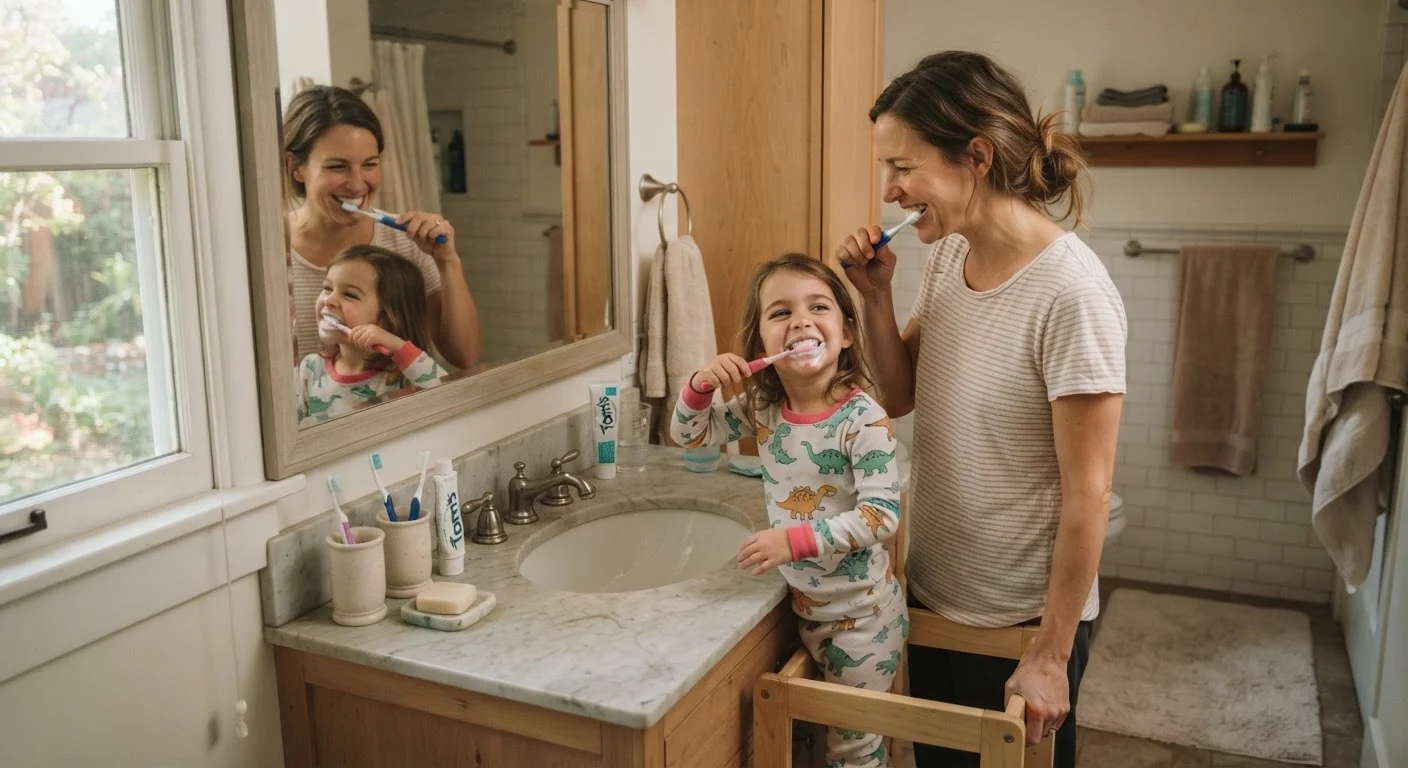
Children learn far more from observation than instruction. When parents consistently brush their teeth, eat vegetables, move their bodies, and manage stress visibly, children internalize these as normal adult behaviors worth adopting. Telling a child to do something while skipping it yourself sends a conflicting signal that undermines the habit.
Anchor new habits to existing routines rather than introducing them in isolation
Habit science consistently shows that 'habit stacking' - attaching a new behavior to an established one - dramatically improves follow-through. Children already have anchored routines: waking up, eating meals, and going to bed. These are ideal attachment points for preventive habits.
Keep explanations age-appropriate and honest without alarming
Children who understand the 'why' behind a habit are more motivated to maintain it independently. However, framing prevention around fear of illness tends to backfire - it creates anxiety rather than capability. Simple, positive framing works best at every age.
Give children graduated ownership over their own preventive routines
As children develop, shifting control to them - rather than managing every step - builds the intrinsic motivation that sustains habits when parents aren't watching. This transition requires patience and some tolerance for imperfect execution.
Use consistent positive reinforcement, not punishment, to sustain new habits
Behavioral research supports positive reinforcement as more durable than punishment-based motivation. Celebrating small wins - without making every success into a performance - keeps children engaged without creating pressure or shame around slip-ups.
Making It Work in a Real Household
Families face real constraints - busy schedules, tight budgets, and kids who push back. The good news is that most foundational preventive habits cost very little and require no special equipment. Our overview of budget-friendly preventive habits shows how accessible prevention actually is.
When routines get disrupted - travel, illness, school breaks - consistency can feel impossible. That's normal, and imperfect consistency still delivers meaningful benefits. See strategies for maintaining habits through disruption for practical approaches.
This article is for general informational and educational purposes only. It is not a substitute for professional medical advice, diagnosis, or treatment. Always consult a qualified healthcare provider with questions about your child's health.