

Key Takeaways
- Paper charts work well for young children and families who benefit from visual, tactile reminders posted in shared spaces.
- Digital apps offer automation, reminders, and multi-member syncing that paper simply cannot replicate.
- Privacy and screen-time considerations are real factors when choosing app-based health tracking for children.
- Neither approach requires a financial investment to be effective - free or low-cost versions of both exist.
- The best system is the one your family will actually use consistently over time.
Our Verdict
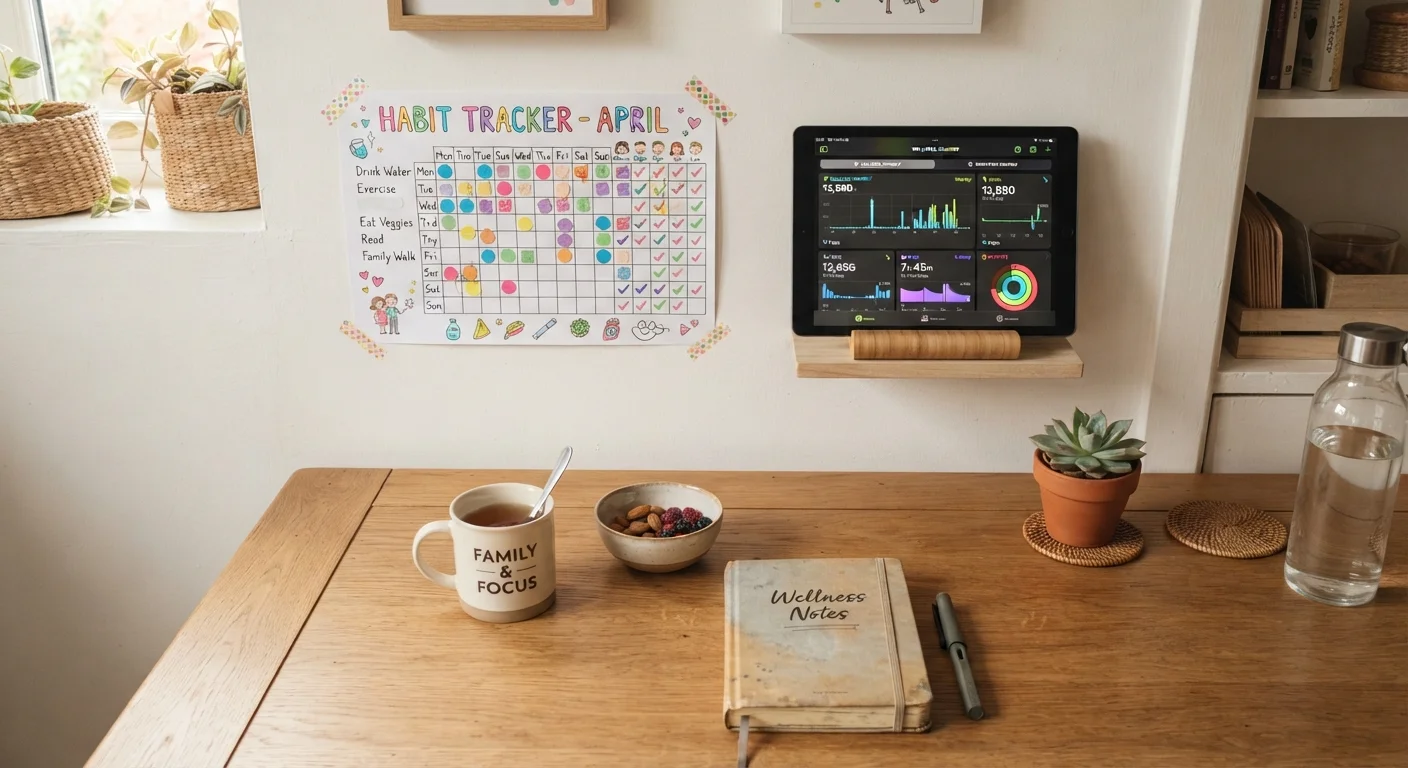
Paper charts and digital apps each have genuine strengths, and neither is universally superior. Paper tends to work best for younger children and households that thrive on physical, shared-space cues, while apps suit families who want automation, reminders, and the ability to track multiple people across different routines. Many families find a hybrid approach - paper for kids, apps for adults - offers the best of both worlds.
| Best for | Recommended |
|---|---|
| Families with young children building foundational habits | Paper Charts |
| Busy households needing automated reminders and syncing | Digital Apps |
| Households with privacy or screen-time concerns | Paper Charts |
| Families tracking multiple health categories simultaneously | Digital Apps |
Why Tracking Matters in the First Place
Building proactive health habits - regular movement, hydration, sleep, and preventive care check-ins - is far easier when you can actually see patterns over time. Tracking creates accountability without requiring willpower alone to carry the load. Whether you use a handwritten chart on the refrigerator or a smartphone app, the underlying goal is the same: make healthy behaviors visible and repeatable.
Before comparing methods, it helps to be honest about what your family actually needs to track. A structured household health review can surface the specific habits - sleep consistency, water intake, physical activity, medication schedules - worth monitoring in the first place. Once you know what to track, choosing the right tool becomes much clearer.
Paper Charts: Strengths and Limitations
A simple printed or hand-drawn chart taped to a shared wall has surprising staying power, especially for children. Research in behavioral psychology consistently supports the value of visual cues placed in the environment where the behavior happens - think a hydration chart near the kitchen sink or a sleep log on a bedroom door.
Where paper shines:
- Immediately visible to all household members without requiring a device
- No login, subscription, or data-sharing required
- Placing stickers or checkmarks gives young children a concrete, satisfying sense of accomplishment
- Zero screen time - an advantage for families managing device limits
- Completely customizable at no cost with basic supplies
Where paper falls short:
- Can't send reminders or alerts when a habit is missed
- Difficult to track nuanced data (sleep quality, symptom patterns) over long periods
- Charts can get lost, torn, or ignored after the novelty fades
- Doesn't aggregate data or show trends without manual effort
Make Paper Charts Work Long-Term
Place charts exactly where the habit happens - a water intake log near the kitchen sink, a sleep chart by the bedroom door. Involve children in designing their own chart; ownership increases follow-through. Refresh charts monthly to keep them from becoming invisible background noise.
Digital Apps: Strengths and Limitations
Health tracking apps - ranging from simple habit-streak tools to more comprehensive wellness platforms - can handle what paper cannot: automated reminders, multi-member profiles, and long-term trend visualization. For adults managing complex routines or chronic conditions, these capabilities matter.
Where apps shine:
- Push notifications help maintain streaks and catch missed habits before the day ends
- Family-oriented apps allow multiple profiles under one account
- Many sync with wearable devices for passive data collection (steps, sleep cycles)
- Historical data is preserved automatically and searchable
Where apps fall short:
- Privacy policies vary widely - review data-sharing terms before entering children's health information
- Added screen time for kids who already use devices heavily
- App fatigue is real; many people abandon habit apps within weeks
- Features that matter most may sit behind paywalls
| Paper Charts | Digital Apps | |
|---|---|---|
| Cost | Free or minimal supply cost | Free tiers available; some features cost |
| Setup effort | Minutes; no accounts required | Requires download, setup, and profile creation |
| Reminders & alerts | None - relies on visual placement | Push notifications and streaks built in |
| Long-term data trends | Manual effort required | Automated graphs and history |
| Privacy | No data shared with third parties | Varies by app; review terms carefully |
| Best age group | Young children (ages 3-10) | Teens and adults |
| Screen time impact | None | Adds daily device interaction |
| Customization | Fully flexible, DIY design | Limited to app's built-in categories |
For families weighing digital tools in other areas of life, the tradeoffs are similar to those explored in financial app reviews - convenience often comes with privacy considerations worth examining.
Choosing What Works for Your Household
Neither system is inherently superior. The right choice depends on the ages of your children, how your family responds to digital versus physical cues, and the specific habits you're trying to reinforce. A few practical questions can help guide the decision:
- Who is being tracked? Young children typically engage more with tangible paper rewards. Teens and adults often benefit from the autonomy and data depth that apps provide.
- How many habits are you tracking? A single focus - like consistent bedtime - is easy to manage on paper. Tracking sleep, nutrition, movement, and medication together is more manageable digitally.
- How does your family respond to reminders? If habits slip because everyone forgets, app notifications add genuine value. If the household is already motivated, a visible chart may be enough.
Many families land on a hybrid approach: paper charts for younger kids, apps for adults or teens - combining the tactile engagement of physical tracking with the efficiency of digital tools. Understanding how family health routines work in practice can also help set realistic expectations before committing to either system.
Once you've chosen a method, sustaining it through busy seasons is the next challenge. Evidence-informed strategies for maintaining habits through disruption apply regardless of whether you're working from a paper chart or a phone screen.
This article is for general informational purposes only and does not constitute medical advice. Consult a qualified healthcare professional for guidance specific to your family's health needs.