

Key Takeaways
- Stroller-accessible infrastructure is a baseline requirement, not a bonus feature, for city trips with young children.
- Green spaces and quiet zones act as pressure-release valves that keep toddlers regulated throughout the day.
- Neighborhood character matters as much as headline attractions - dense, loud areas exhaust young kids quickly.
- Shorter, closer urban destinations often deliver more value than ambitious long-haul city trips with toddlers.
- Nap logistics and midday downtime need to be built into a city itinerary, not treated as optional.
Family-Workable City Destination
A family-workable city destination is an urban area that genuinely accommodates the physical, logistical, and attention-span realities of traveling with young children - not just one that markets itself as family-friendly. It typically means walkable or stroller-accessible infrastructure, low-stress public transit or parking, green spaces for downtime, and enough variety to absorb unexpected schedule changes without a crisis.
Walkability scores, transit coverage maps, and park density data are publicly available through city planning portals and help families objectively compare destinations beyond marketing claims.
Why Most City Trip Advice Misses the Point for Families
Standard city travel guides are built around adult priorities: iconic museums, restaurant scenes, nightlife, and efficiently packed itineraries. When families try to apply that framework to a trip with a two- or three-year-old, the result is predictable friction. The destination itself may be genuinely great - the mismatch is between how the city functions and what a young child actually needs from a day.
A workable city trip for families is less about finding cities with a children's museum and more about understanding the structural factors that either absorb or amplify the chaos of traveling with small kids. For a broader framework on how different destination types match different ages, see our destination-type reference guide.
"Kid-Friendly" Is a Marketing Term, Not a Standard
Many cities and hotels use "kid-friendly" to signal basic amenities like a pool or a children's menu. It says little about stroller access, transit ease, neighborhood noise levels, or whether the destination's core attractions genuinely engage young children. Treat it as a starting point for your own research, not a reliable stamp of approval.
The Infrastructure Factors That Actually Matter
Before evaluating attractions, evaluate the city's physical infrastructure through the lens of your specific family situation.
Stroller and mobility access
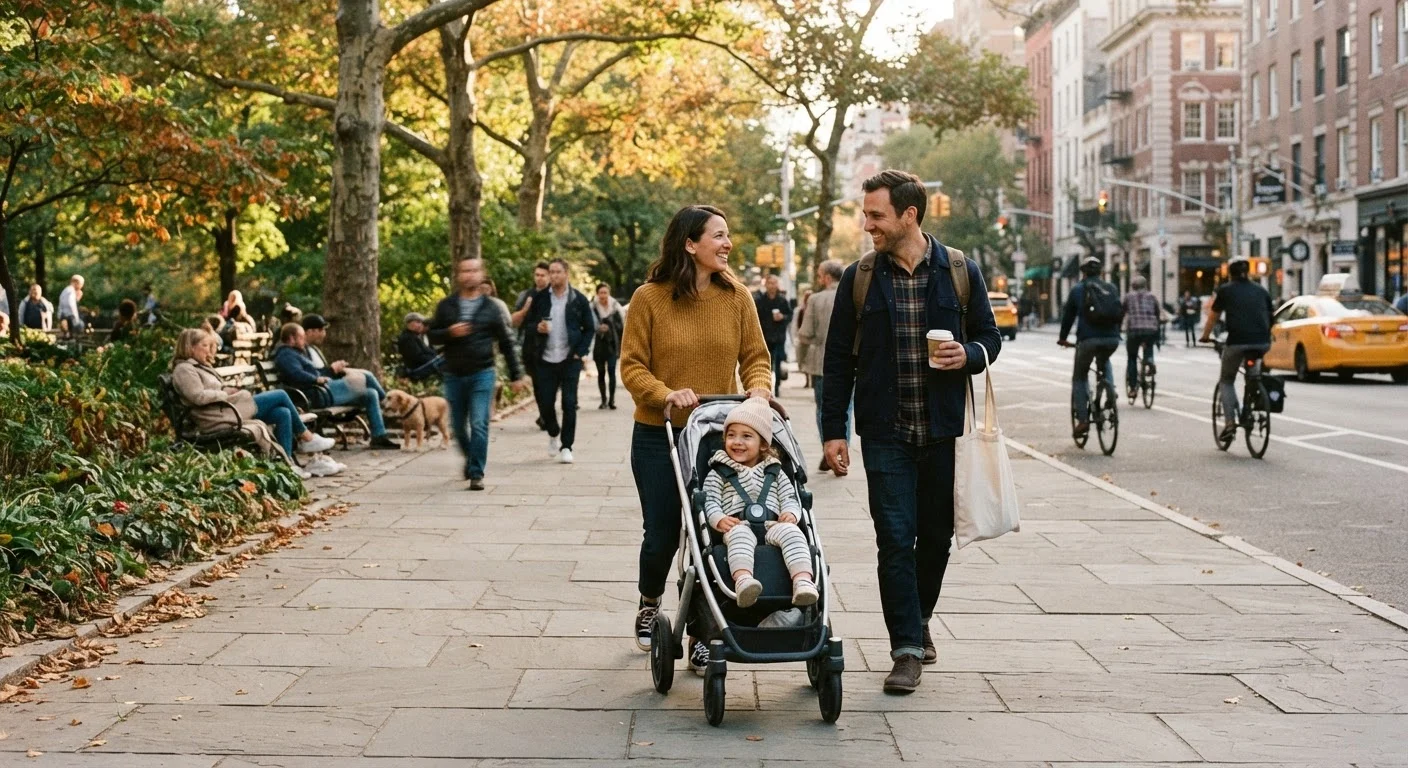
Cities with uneven cobblestone streets, minimal elevator coverage in transit systems, and narrow crowded sidewalks create constant low-grade stress that accumulates over a trip. This isn't about avoiding all challenge - it's about whether basic movement through the city requires problem-solving at every block. A city where you can push a stroller from your accommodation to a park and back without navigating stairs or construction gaps is fundamentally easier to operate in.
Green space distribution
Parks and open spaces are not optional extras on a city trip with young children. They are the pressure-release mechanism that makes the rest of the itinerary sustainable. Cities with green space distributed throughout residential neighborhoods - not just one large central park - give families more flexibility to decompress close to wherever the day takes them. Research consistently shows that unstructured outdoor time supports children's regulation and focus, which matters when you're asking a three-year-old to tolerate a museum visit afterward.
Neighborhood noise and density
Where you stay shapes the entire experience. Dense, high-traffic tourist zones are overstimulating for toddlers and offer little space to slow down. Residential neighborhoods adjacent to major attractions tend to be quieter, have better sidewalk continuity, and often include local playgrounds that are not listed in any travel guide.
1-2
Structured activities per day recommended for toddlers
Child development guidance consistently suggests young children need significant unscheduled time and rest to avoid dysregulation during travel days.
~30%
Of US families say logistics were their biggest travel challenge
A widely cited travel industry survey found that logistical complexity - not cost - was the most common barrier families cited for urban trip difficulties with young children.
Attraction Quality vs. Attraction Volume
Families with young children consistently do better with fewer, higher-quality experiences than with packed itineraries covering many sites. The calculus for what counts as "high quality" shifts with age. For children under five, interactive, open-ended environments - hands-on science centers, aquariums, wide public markets, waterfront areas - tend to hold attention longer than static collections or guided tours.
Before committing to a destination, be honest about whether the city's core attractions are genuinely engaging for the specific ages in your group or whether you're selecting it based on what sounds impressive to adults. Our destination research checklist provides a structured way to evaluate this before booking.
It also helps to identify at least two fallback options - free or low-stakes activities you can pivot to if the planned activity doesn't land or a child is having a hard day. Cities with dense cultural districts and public spaces generally offer more pivot options than those where the main draw is a single major attraction.
Logistics That Families Underestimate
Several logistical realities separate a manageable urban trip from an exhausting one, and they rarely appear in destination marketing.
Nap and rest infrastructure
If your child still naps, your accommodation is the center of your trip structure - not a place you return to at the end of the day. This means accommodation location and quality matters more for families with young children than for adults. Being 40 minutes from everything by transit doubles the cost of every rest-and-return cycle.
Food access and flexibility
Cities vary significantly in how easy it is to find quick, reasonably priced food that children will actually eat, without a reservation or a long wait. Neighborhoods with grocery stores, food halls, or casual counter-service options give families far more flexibility than destination-restaurant-heavy areas where a meltdown mid-meal is a logistical problem.
Weather and seasonality
Urban trips are more weather-dependent with young children than outdoor trips in some ways - dense city blocks magnify heat, and a full day of rain with a toddler in a city hotel room is genuinely difficult. Checking average weather for your travel window and identifying indoor backup options in advance is practical, not overcautious. See our itinerary-building guide for how to build weather contingencies into a travel plan.
Calibrating Expectations by Child Age
The honest answer to "can we do a city trip with our kids?" is almost always yes - but what that trip looks like varies significantly by age. For children under two, city trips are largely about what the parents want to experience, with the child along for the ride. For children between two and five, the trip structure needs to be built around the child's pace, rest needs, and genuine engagement capacity. For school-age children, cities with strong educational and historical depth can deliver genuinely enriching experiences that justify more complex itineraries.
Families who struggle most on city trips tend to have underestimated how much ground-level logistics - the walking distances, the waiting, the transitions between activities - accumulate over a day. Planning conservatively and treating any bonus activity as a win rather than a baseline expectation makes the trip experience significantly better for everyone.
For more on evaluating whether "kid-friendly" destination claims hold up on the ground, see what kid-friendly actually means before booking.