

Key Takeaways
- More insulation is not always better - the wrong type or placement can trap moisture and cause rot.
- Sealing grout too soon after installation locks in moisture and leads to early failure.
- Deck stain applied over an unprepared surface peels faster than no stain at all.
- Bigger isn't better with furnace filters - an overly restrictive filter strains your HVAC system.
- Many DIY mistakes stem from skipping prep work, not lacking technical skill.
Why Good Intentions Lead to Expensive Fixes
Most DIY disasters don't start with bad tools or poor craftsmanship - they start with misinformation. Homeowners repeat advice they've heard from neighbors, seen in passing online, or absorbed from outdated guides, and that advice sounds plausible enough that nobody questions it. The result: hours of work, real money spent on materials, and a repair bill that outstrips what a professional would have charged in the first place.
The myths covered here are especially costly because they're specific, confident, and widespread. Each one leads homeowners to do something actively harmful - not just ineffective. Before you start your next project, check whether you're working from fact or folklore. And if you want a broader overview of what separates a smooth job from an expensive redo, see what every homeowner should know before starting a DIY project.
Myth
Adding more attic insulation always saves energy. The thicker the layer, the better.
Fact
Insulation only performs well when air sealing is done first. Piling on insulation over air leaks is largely wasted effort - and the wrong type in the wrong location can trap moisture.
Attic insulation has a ceiling on its usefulness. Once you've reached the recommended R-value for your climate zone (the measure of thermal resistance), additional layers provide sharply diminishing returns. More importantly, insulation does not stop air movement - it only slows heat transfer. If warm, humid interior air is leaking into a cold attic through gaps around recessed lights, plumbing penetrations, or the attic hatch, adding insulation on top seals in that moisture pathway and can lead to mold and wood rot over time.
The correct sequence is: seal air leaks first, then insulate to the appropriate R-value for your region. The U.S. Department of Energy publishes climate-zone-specific R-value recommendations that are a reliable starting point. Skipping the air-sealing step and adding bulk insulation instead is one of the most common - and expensive - attic DIY errors.
Myth
You should seal your grout right after installation to protect it while it's fresh.
Fact
Grout must cure completely - typically 48 to 72 hours at minimum - before sealer is applied. Sealing too early traps residual moisture and causes the grout to discolor, crack, or fail prematurely.
Fresh grout contains water that needs to evaporate as part of the curing process. Applying a penetrating sealer before that moisture escapes essentially locks it inside. The result is often white haze, uneven color, or grout that crumbles sooner than it should - exactly the opposite of what you were trying to prevent.
Most grout manufacturers specify a waiting period of at least 48 to 72 hours before sealing, though high-humidity environments or thicker applications may require longer. Check the specific product's technical data sheet, not just the back-of-bag summary. Once grout is fully cured and the surface is clean and dry, sealer applied correctly can meaningfully extend its life - but timing is everything.
Myth
You can stain a deck any time the wood looks dry. Surface appearance is what matters.
Fact
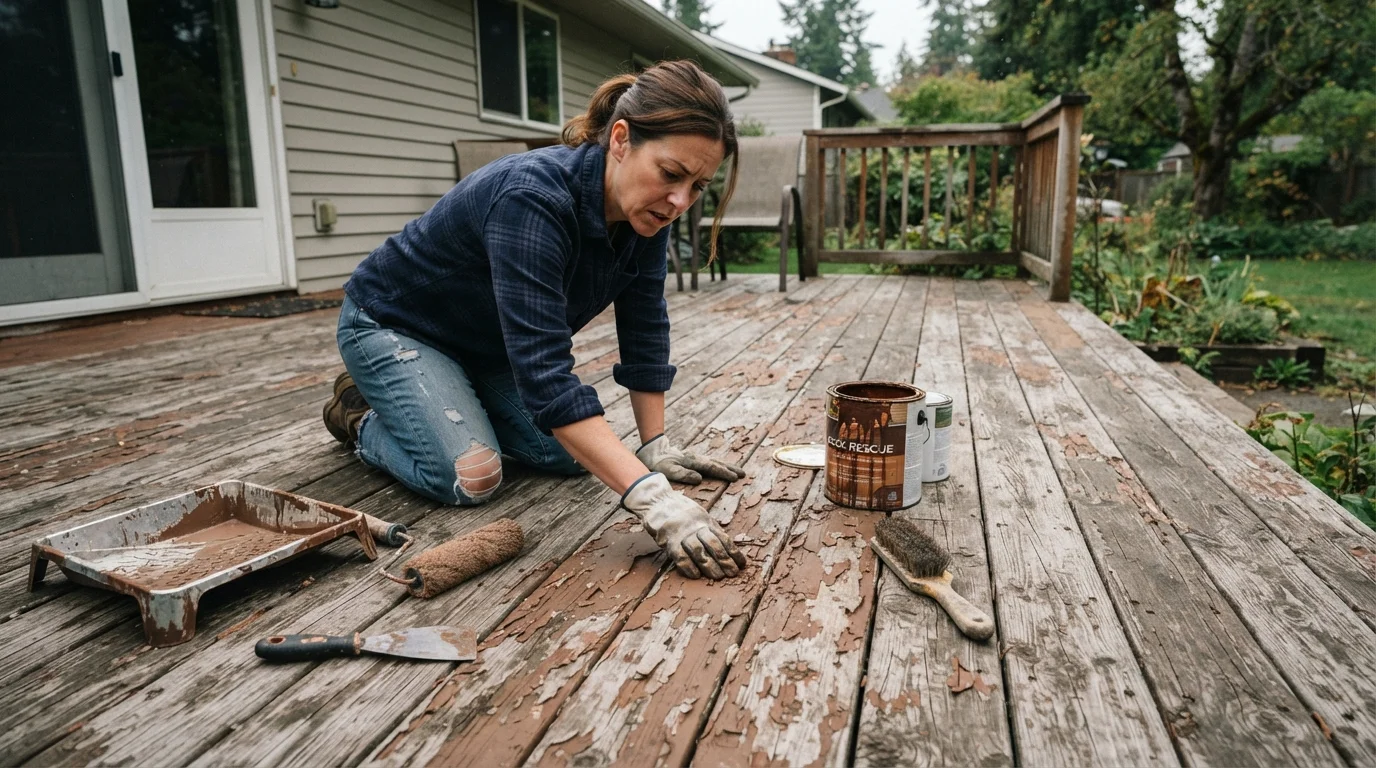
Wood must be structurally clean, lightly abraded, and tested for moisture content before stain is applied. Staining visually dry but unprepared wood is the leading cause of early peeling.
Deck stain failure - the kind that peels, bubbles, or flakes within a season - almost always traces back to surface preparation, not product quality. Wood that looks dry on top can still hold significant moisture below the surface, especially after rain or in humid climates. Most penetrating stains require the wood's moisture content to be below roughly 15 percent; a basic wood moisture meter, available at most hardware stores, can confirm this in seconds.
Beyond moisture, mill glaze on newer lumber and oxidized gray fibers on older wood both block stain penetration. Light sanding or cleaning with an appropriate wood brightener restores an open grain that accepts stain evenly. Applying product to a closed or dirty surface means the stain sits on top rather than soaking in - and it won't stay there long. For related guidance on surface prep gone wrong, why DIY paint jobs go wrong covers the same prep principles applied to interior and exterior painting.
Myth
A higher-MERV furnace filter cleans the air better, so the highest rating you can find is best for your home.
Fact
Filters with very high MERV ratings restrict airflow more than most residential HVAC systems are designed to handle, potentially overworking the blower motor and reducing system efficiency.
MERV (Minimum Efficiency Reporting Value) measures how effectively a filter captures particles of various sizes. A higher number catches smaller particles - but also creates more resistance to airflow. Most residential systems are engineered for filters in the MERV 7-12 range. Installing a MERV 13 or higher filter without confirming your system can handle the static pressure increase can reduce airflow, cause the heat exchanger to overheat, or shorten the blower motor's lifespan.
The practical fix: check your HVAC system's manual or the manufacturer's specifications for the maximum recommended MERV rating. If improved indoor air quality is the goal, that's a valid priority - but match the filter to what your equipment can sustain. Changing filters on schedule matters far more than chasing the highest number on the packaging.
Myth
Caulking over old, cracked caulk is a quick fix that works just as well as removing and replacing it.
Fact
Caulk applied over failed caulk almost always fails again quickly because it can't bond properly to a non-solid substrate. Removal is required for a lasting seal.
Failed caulk - the kind that's cracked, pulling away from the surface, or gone moldy - has lost adhesion. Laying a new bead on top of it gives the fresh caulk nothing firm to stick to along the edges that matter most. Within a season or two (often sooner in wet areas like tubs and windows), the same failure pattern repeats.
Removing old caulk is tedious but straightforward. A utility knife and a plastic scraper handle most of it; a caulk-softening product can help with stubborn sections. Once the surface is stripped back to clean, dry material and wiped free of residue, fresh caulk bonds correctly and can last five to ten years or more with normal use. It's one of the clearest examples of a repair where doing it right the first time costs less than doing it twice.
Prep Work Is the Project - Not the Preamble
A theme runs through every myth above: skipping preparation. Whether it's rushing to seal grout before it cures, staining a deck without cleaning and sanding first, or piling on insulation without checking for air leaks, the costly error is almost always in the setup - not the execution. Skilled tradespeople spend the majority of their time on prep; novice DIYers often spend it on the visible, satisfying part of the job.
Don't Skip the Moisture Check Before Any Surface Project
Whether you're staining a deck, painting exterior siding, or sealing concrete, applying product over a surface with elevated moisture content is one of the fastest ways to waste time and materials. A basic moisture meter is an inexpensive tool that removes the guesswork. Many hardware stores carry them, and the reading takes seconds. When in doubt, wait another 24 hours and test again.
If you're unsure whether your next project falls into a gray area - something that seems simple but might require a permit or licensed professional - the balanced truth about taking on DIY projects at home offers a clear-eyed look at where the real risks hide. For mistakes that DIYers repeat in specific repairs, DIY repairs homeowners often get wrong the first time breaks down the most common points of failure.
The single most cost-effective habit any homeowner can build is patience: read the product instructions fully, let materials cure as directed, and resist the urge to rush to the finish line. That discipline pays for itself many times over.