

Key Takeaways
- Skipping surface prep is the single most common reason DIY repairs fail prematurely.
- Using the wrong filler, caulk, or compound for the material almost always causes a visible or structural redo.
- Chemical drain cleaners can damage pipes and rarely fix the real clog source.
- Knowing when a repair exceeds DIY limits protects your home and your wallet.
Why Good Intentions Still Lead to Costly Redos
Most DIY repair mistakes aren't caused by carelessness - they're caused by skipping steps that feel unimportant or rushing past prep work to get to the visible fix. The result is a repair that looks acceptable for a few weeks, then fails, sometimes making the original problem worse. Understanding the pattern behind these mistakes helps you avoid the redo entirely.
For a broader look at how misinformation compounds these errors, see our article on home maintenance myths that cost homeowners money. And if you're weighing whether a project is worth tackling yourself, the balanced truth about DIY projects at home offers a clear-eyed assessment before you commit.
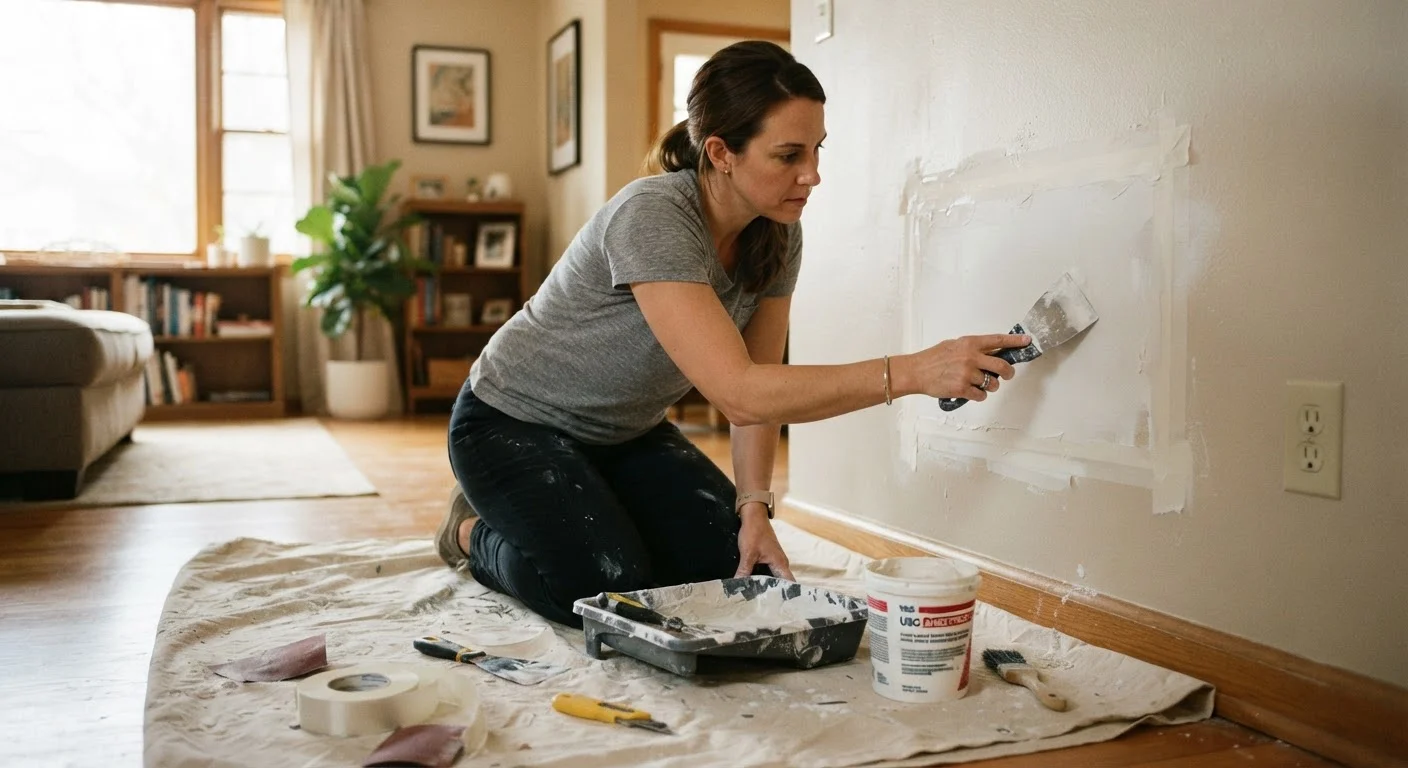
Applying drywall compound or spackle over a dirty or unprepared surface.
Why it happens: Homeowners focus on the visible hole and underestimate how much adhesion depends on what's underneath. Dust, grease, and peeling paint look minor but break the bond.
Using the wrong type of caulk for the location - such as interior paintable caulk in a wet bathroom area.
Why it happens: Caulk products look nearly identical on the shelf, and labels use technical terms most shoppers skip. Interior latex caulk breaks down quickly when exposed to repeated moisture.
Pouring chemical drain cleaners into a slow or clogged drain as a first response.
Why it happens: Liquid drain products are heavily marketed as quick fixes and feel like the path of least resistance compared to removing a P-trap or using a drain snake.
Skipping the underlayment or transition strips when installing floating floor panels.
Why it happens: These components seem like optional accessories, but they serve structural and acoustic functions. Homeowners cutting costs sometimes omit them to simplify the install.
Painting over peeling exterior surfaces without stripping the loose material first.
Why it happens: Scraping and sanding feels tedious and time-consuming. It's tempting to brush on a fresh coat over slightly soft or peeling paint and assume adhesion will hold.
Over-tightening plumbing fittings and supply line connections during a fixture replacement.
Why it happens: The instinct is to tighten until resistance disappears completely, but plastic fittings and valve seats crack under excess torque - often days or weeks after installation.
Where Homeowners Most Often Go Wrong
Each repair category below has its own failure pattern. Recognizing them before you start is the most reliable way to get a lasting result the first time.
~35%
DIY repairs that require professional correction
Industry estimates from home warranty and inspection sectors suggest roughly one in three amateur repairs is later redone or corrected by a professional.
2-4x
Cost multiplier when a failed repair is redone
Repair professionals commonly note that fixing a failed DIY attempt costs significantly more than doing the job correctly the first time, due to added material waste and damage remediation.
Patch It Right or Patch It Twice
Drywall patches, caulk lines, and grout repairs all depend on surface prep more than technique. Dust, grease, or old caulk residue left behind prevents adhesion, and no amount of product quality compensates for a dirty substrate. Always clean, dry, and - where needed - prime the surface before applying any filler or sealant. Our plain-language DIY glossary can help you decode product labels and instructions when material-specific prep steps are mentioned.
Plumbing Shortcuts That Backfire
Slow drains tempt homeowners toward chemical drain cleaners, but those products can soften PVC pipe joints and corrode older metal pipes with repeated use. A drain snake or a simple P-trap cleaning - the curved pipe section under your sink - resolves most slow-drain problems without chemical risk. For a clearer picture of which plumbing tasks belong in DIY territory and which don't, tackling plumbing fixes yourself vs. calling a plumber is worth reading before you start.
Don't Use Chemical Drain Cleaners in Standing Water
If water is backed up and not draining at all, pouring a chemical cleaner into the standing water creates a serious splash-back hazard when you use a plunger or open the trap. It also risks pipe damage if the product sits in contact with fittings longer than intended. In a fully blocked drain situation, mechanical clearing - a plunger, a snake, or a professional - is the safer path.
When Small Roof Problems Get Ignored
A loose shingle or minor flashing gap rarely looks urgent from the ground, but water intrusion behind walls and ceilings compounds quickly. If you're comfortable with a visual inspection from a ladder at the roofline, why small roof issues turn into big repair bills explains exactly what to look for before calling a professional. Actual roof repairs - anything involving sealant, nails, or replacement material - should be left to qualified contractors to avoid injury and inadvertent warranty voids.