

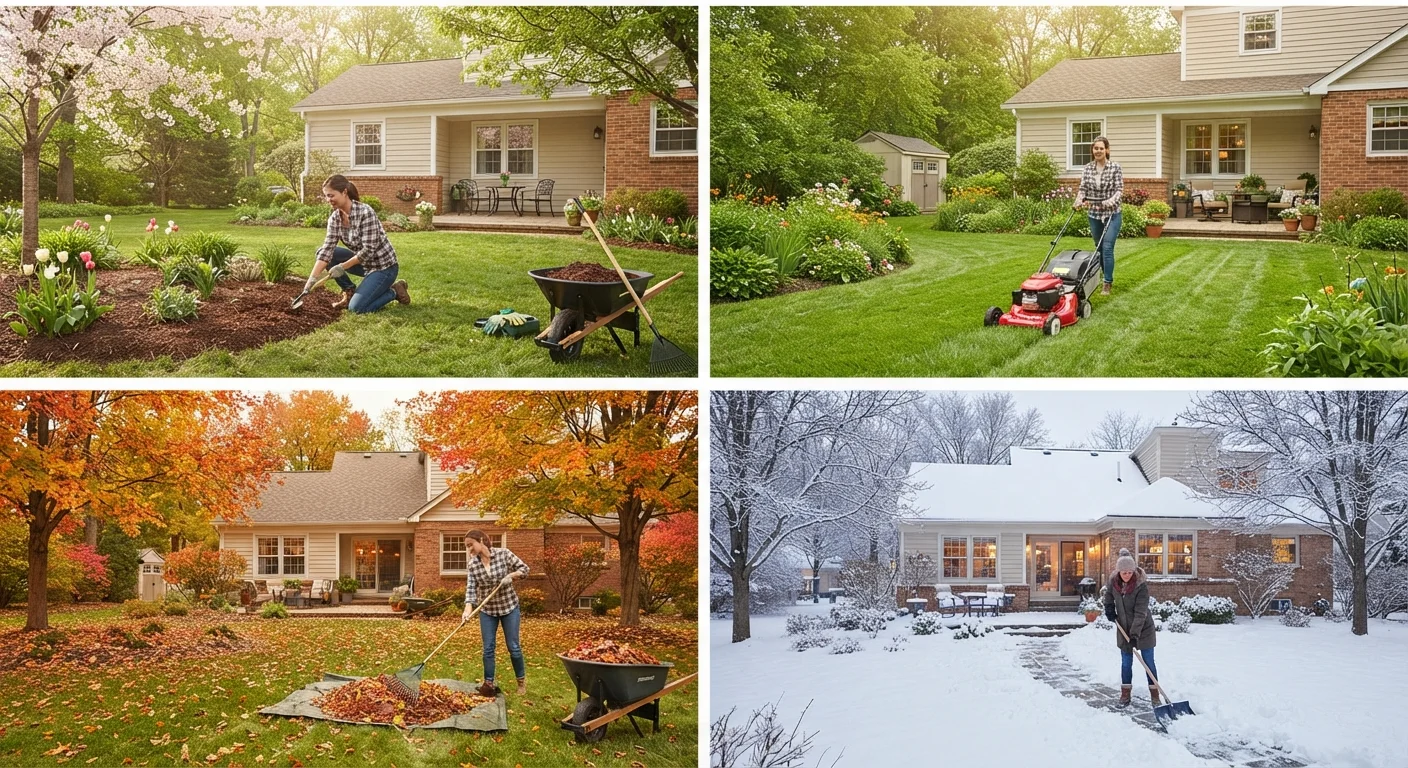
Key Takeaways
- Tackling yard tasks in the right season prevents costly repairs and plant loss down the road.
- Aerating and overseeding in fall gives cool-season grasses their best chance to thicken.
- Mulching beds each spring conserves moisture and suppresses weeds with minimal ongoing effort.
- Cutting grass at the correct height each season is one of the highest-impact, zero-cost habits.
- Winterizing irrigation systems and protecting tender plants avoids freeze damage that's expensive to fix.
- Consistent year-round habits reduce emergency spending and keep yards healthier without heavy inputs.
Why a Seasonal Routine Beats Reactive Yard Work
Most yard problems - bare patches, compacted soil, runaway weeds, dying shrubs - don't appear overnight. They build quietly over months when small maintenance windows are missed. A simple seasonal routine interrupts that cycle before it becomes expensive.
You don't need a large budget or professional help for the majority of these tasks. What you do need is timing. Each season opens a narrow window when soil temperature, plant biology, and weather patterns make certain tasks far more effective than they'd be at any other time of year. Understanding that logic helps you prioritize what's actually worth your time - and skip what isn't.
For a broader look at how yard care fits into whole-home upkeep, see the seasonal home maintenance calendar that covers everything from gutters to HVAC. Below, we focus specifically on the outdoor tasks that deliver real, lasting results when done on schedule.
Spring: Rake, Dethatch, and Clear Winter Debris
Before any planting or fertilizing begins, clear the slate. Matted dead grass - called thatch when it accumulates in a dense layer - blocks sunlight, traps excess moisture, and creates ideal conditions for disease and pests. A stiff rake or a dethatching rake (a tool with sharp, curved tines) pulls this layer up without damaging healthy roots beneath.
While raking, look for low spots where water pools, note any areas where grass didn't survive winter, and clear fallen branches from beds and lawn edges. This early assessment shapes every other task that follows in spring and early summer.
Clearing thatch in early spring lets sunlight and air reach the soil where new growth needs them most.
Spring: Apply Fresh Mulch to Garden Beds
A 2-3 inch layer of organic mulch - shredded bark, wood chips, or composted leaves - applied each spring does three things at once: it holds soil moisture, moderates soil temperature, and suppresses weeds before they get a foothold. That combination saves both water and labor over the entire growing season.
Keep mulch pulled a few inches away from the base of shrubs and tree trunks. Mulch piled against stems traps moisture and creates entry points for rot and pests. Proper mulching is one of the most cost-effective habits in yard maintenance because its benefits compound across the whole season. It also pairs well with smart watering schedules that reduce overall water use.
Two to three inches of mulch applied in spring can cut summer watering needs significantly.
Summer: Adjust Mowing Height for the Heat
During the peak heat of summer, raise your mower deck. Taller grass - typically 3.5 to 4 inches for most cool-season varieties - shades the soil, reduces evaporation, and crowds out weeds more effectively than short-cut turf. Scalped lawns in summer heat are far more vulnerable to drought stress and weed invasion.
Also stick to the one-third rule: never remove more than one-third of the grass blade in a single mowing session, regardless of season. Cutting too aggressively stresses the plant and slows recovery. This is one of those practices that costs nothing to implement but that many homeowners skip - our article on lawn care myths explains why short-cutting to reduce mowing frequency tends to backfire.
Raising your mower height in summer is one of the easiest ways to protect grass from heat stress.
Summer: Inspect and Maintain Outdoor Structures
Warm, dry weather makes summer the ideal time to inspect fences, retaining walls, pergolas, and decks for signs of wear. Look for loose boards, rust on hardware, cracked caulk, and wood that's beginning to gray or splinter. Addressing small issues now is far less expensive than repairing structural damage after another winter.
Decks in particular benefit from annual cleaning and periodic sealing to resist moisture penetration and UV damage. Our detailed deck maintenance guide walks through the cleaning, prep, and finishing steps that extend deck life significantly. Many of these are straightforward DIY tasks - see our DIY projects hub for additional project walkthroughs.
Summer inspections of outdoor structures let you catch small damage before fall and winter worsen it.
Fall: Aerate and Overseed Cool-Season Lawns
Early fall - typically September through mid-October in most of the US - is the single most important window for improving a struggling cool-season lawn. Soil aeration, the process of pulling small cores of soil from the turf (using a core aerator), relieves compaction, improves drainage, and opens pathways for air, water, and nutrients to reach roots.
Overseeding immediately after aeration takes advantage of those open channels. Grass seed dropped into aerated holes has far better soil contact and germination rates than seed scattered on a hard surface. Soil temperatures in early fall are still warm enough to support germination, while cooler air reduces drought stress on new seedlings. For more detail on protecting your garden through autumn, check our fall garden closedown checklist.
Aerating before overseeding in early fall gives new grass seed its best possible start.
Fall: Cut Back Perennials and Prep Beds
Once perennials have finished blooming and begun to die back, cut them down to 3-4 inches above soil level. This reduces habitat for overwintering pests and prevents disease from carrying over in dead plant material. However, leave ornamental grasses and plants with seed heads intact - they provide food and cover for birds through winter.
After cutting back, top-dress beds with a thin layer of compost to replenish organic matter before the ground freezes. This slow-feed approach improves soil structure over winter without requiring any action in spring. If you're considering swapping out high-maintenance plants, fall is also a good time to research native plants for your landscape, which often require far less seasonal intervention once established.
Cutting back perennials in fall reduces pest habitat and disease carryover for next year's growing season.
Winter: Winterize Irrigation and Protect Tender Plants
Before the first hard freeze, drain and shut down any in-ground irrigation system. Water left in lines can freeze, expand, and crack pipes - a repair that typically requires professional help and costs far more than a simple winterization procedure. In most regions, this means blowing out lines with compressed air or draining manually, depending on your system type.
Cover tender perennials, newly planted shrubs, and container plants with burlap wraps, frost cloth, or simply thick mulch mounded over roots. Evergreen shrubs in exposed locations can suffer winter burn - browning from cold, dry wind - and a breathable burlap windbreak reduces that risk considerably. These simple steps preserve plants you've already invested in, preventing the cost and disappointment of replacing them come spring.
Draining irrigation lines before a freeze prevents costly pipe damage that's easily avoided with one afternoon of prep.
Building the Habit That Pays Off Year After Year
None of these tasks requires a weekend marathon. Most take an hour or two when done on time - but become half-day projects when neglected. The key is treating your yard like any other system in your home: something that benefits from light, regular attention rather than sporadic intensive effort.
Start a Simple Yard Maintenance Calendar
A basic calendar with seasonal task reminders - even just a note on your phone - removes the guesswork about when to act. Group tasks by month rather than season for more precision: for example, 'overseed in late September' is more actionable than 'do it in fall.' Pairing this habit with a quick walkthrough of your yard each month helps you catch problems early, when they're still easy to fix.
If you're struggling with persistent bare or dying areas despite regular care, the cause is often something beneath the surface. Our guide on why grass dies in patches walks through the most common culprits - from compaction to fungal issues - and how to address each one. And if you're curious whether some of your current habits are actually helping or quietly hurting your lawn, it's worth checking our article on common lawn care myths to separate fact from fiction.
Done consistently, the tasks in this list help your yard build resilience - so it handles drought, cold snaps, and heavy rain seasons better than a yard that gets attention only when something goes wrong.