

Key Takeaways
- Patchy grass usually has a diagnosable cause - guessing wastes time and money.
- Soil compaction, fungal disease, and incorrect watering are among the most common culprits.
- Fixing the underlying problem matters more than reseeding over damaged areas.
- Some issues, like grubs or thatch buildup, require specific treatments, not just more fertilizer.
- Consistent seasonal maintenance significantly reduces the chance of patches recurring.
Why Patchy Grass Is a Diagnosis Problem, Not Just a Lawn Problem
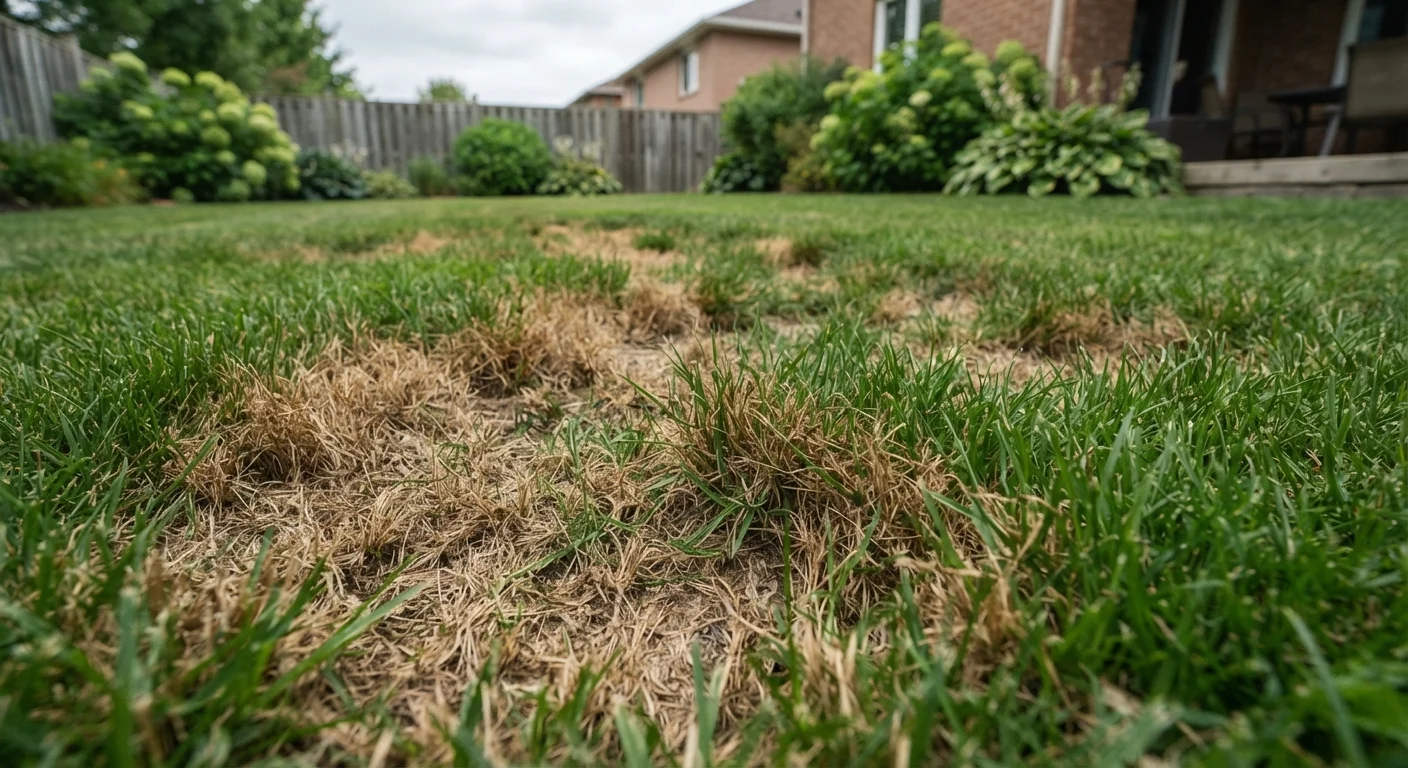
A struggling lawn is frustrating - but patchy grass that keeps coming back after reseeding is a sign that something deeper is going wrong. The most common mistake homeowners make is treating the symptom (dead grass) rather than the underlying cause. That approach wastes seed, water, and effort while the real problem continues unchecked.
Patchy dieback has a surprisingly short list of likely causes: soil problems, watering habits, mowing errors, disease, or pests. Most of them are diagnosable with a little observation before spending any money. Understanding which mistake is driving your lawn's decline is the single most valuable thing you can do. Check out our guide to common lawn care myths to clear up any misinformation that might be steering you wrong.
Don't Reseed Until You Diagnose First
Reseeding over a patch without identifying the cause almost always fails. If fungal disease, compacted soil, or a grub infestation is still present, new seed will die just as fast as the old grass. Take the time to diagnose before spending money on seed or sod.
The Most Common Mistakes Behind Dead Grass Patches
Most patchy lawns trace back to one or more of the fixable errors listed below. Work through them systematically - a combination of two or three is often the actual culprit.
Mowing too short and scalping the lawn during stress periods.
Why it happens: Many homeowners cut grass very short to reduce how often they mow, not realizing that blade height directly affects root depth and heat tolerance.
Ignoring soil compaction, especially in high-traffic areas.
Why it happens: Compaction builds gradually and isn't visible until grass thins noticeably. Homeowners often blame weather or pests rather than the soil structure underneath.
Watering lightly and frequently instead of deeply and infrequently.
Why it happens: Daily light watering feels thorough but only wets the surface. Roots follow moisture, so shallow watering produces shallow roots that are vulnerable to heat and drought.
Misidentifying fungal disease as a watering or fertilizer problem.
Why it happens: Fungal diseases like brown patch, dollar spot, or red thread create circular or irregular dead zones that closely resemble drought or nutrient stress to the untrained eye.
Overlooking grub or insect damage until the lawn is severely affected.
Why it happens: Grubs feed on grass roots underground, so damage appears suddenly when the turf detaches from the soil - often mistaken for drought dieback by the time it's visible.
Letting thatch build up beyond a half-inch layer.
Why it happens: A thin layer of thatch is normal and even beneficial, so many homeowners don't realize when it crosses into a problem thickness that blocks water and air from reaching soil.
Overwatering Can Look Like Drought Stress
Wilting, yellowing, and thinning grass are symptoms of both too much and too little water. Before adding more irrigation, push a screwdriver six inches into the soil. If it slides in easily, your lawn likely has enough moisture. Persistent overwatering promotes fungal disease and root rot - two major causes of patchy dieback.
Staying ahead of these problems is much easier than recovering from them. Our seasonal yard maintenance guide outlines the specific tasks - aeration, dethatching, inspection - that prevent most of these issues from taking hold in the first place.
How to Confirm the Cause Before You Reseed
Before purchasing seed, sod, or any treatment product, spend ten minutes doing a basic field assessment:
- Check the edges of the patch. Circular or ring-shaped patches often point to fungal disease. Irregular shapes that follow foot traffic suggest compaction.
- Pull on the turf. If it lifts like a loose rug, grubs may have eaten the roots beneath.
- Inspect individual blades. Lesions, discoloration, or a powdery coating suggest disease rather than drought.
- Test soil moisture. Push a screwdriver or soil probe six inches in. Bone-dry soil in an irrigated lawn signals watering problems; saturated soil in patches may mean drainage is poor.
If the cause still isn't clear, your local university cooperative extension service offers free or low-cost soil testing and pest identification - a genuinely useful resource that many homeowners overlook. For a broader perspective on building a resilient yard that holds up under stress, see our drought-tolerant landscaping overview.
40-60%
Lawn problems traced to soil issues
Turfgrass specialists commonly estimate that a large share of persistent lawn problems originate in soil quality rather than grass variety or watering habits.
1 inch
Recommended weekly lawn water depth
University cooperative extension programs generally advise most cool- and warm-season grasses need roughly one inch of water per week, including rainfall.