

| Recommended filter check frequency | Monthly during peak use seasons (U.S. Department of Energy general guidance) |
| Typical filter replacement interval | Every 30-90 days (Varies by filter type and household conditions) |
| Condenser clearance needed | At least 2 feet on all sides (Standard manufacturer and HVAC industry guidance) |
| Estimated energy lost to duct leaks | 20-30% of conditioned air (U.S. Department of Energy) |
| Professional inspection frequency (gas systems) | Annually (HVAC industry best practice) |
The Three Core Components You Should Know
Most home heating and cooling systems share three maintenance focal points: the air filter, the coils, and the supply and return vents. Understanding what each one does - and what happens when it's neglected - is the foundation of practical HVAC upkeep.
| Recommended filter check frequency | Monthly during peak use seasons (U.S. Department of Energy general guidance) |
| Typical filter replacement interval | Every 30-90 days (Varies by filter type and household conditions) |
| Condenser clearance needed | At least 2 feet on all sides (Standard manufacturer and HVAC industry guidance) |
| Estimated energy lost to duct leaks | 20-30% of conditioned air (U.S. Department of Energy) |
| Professional inspection frequency (gas systems) | Annually (HVAC industry best practice) |
Air filters trap airborne particles before they enter the system's blower and heat exchanger. A clogged filter forces the system to work harder, raises energy consumption, and can cause components to overheat or freeze. Coils - the evaporator coil (indoor) and condenser coil (outdoor) - transfer heat between refrigerant and air. Dirt buildup on either coil sharply reduces efficiency. Vents and registers distribute conditioned air through your home; blocked or dirty vents create pressure imbalances and uneven temperatures.
These aren't separate concerns. A dirty filter accelerates coil buildup, which strains the compressor, which shortens equipment life. Keeping all three clean is genuinely interconnected maintenance, not three independent tasks.
What Homeowners Can Realistically Do Themselves
Several HVAC maintenance tasks are well within reach for most homeowners with no specialized tools. Doing them consistently is more important than doing them perfectly.
Filter Replacement
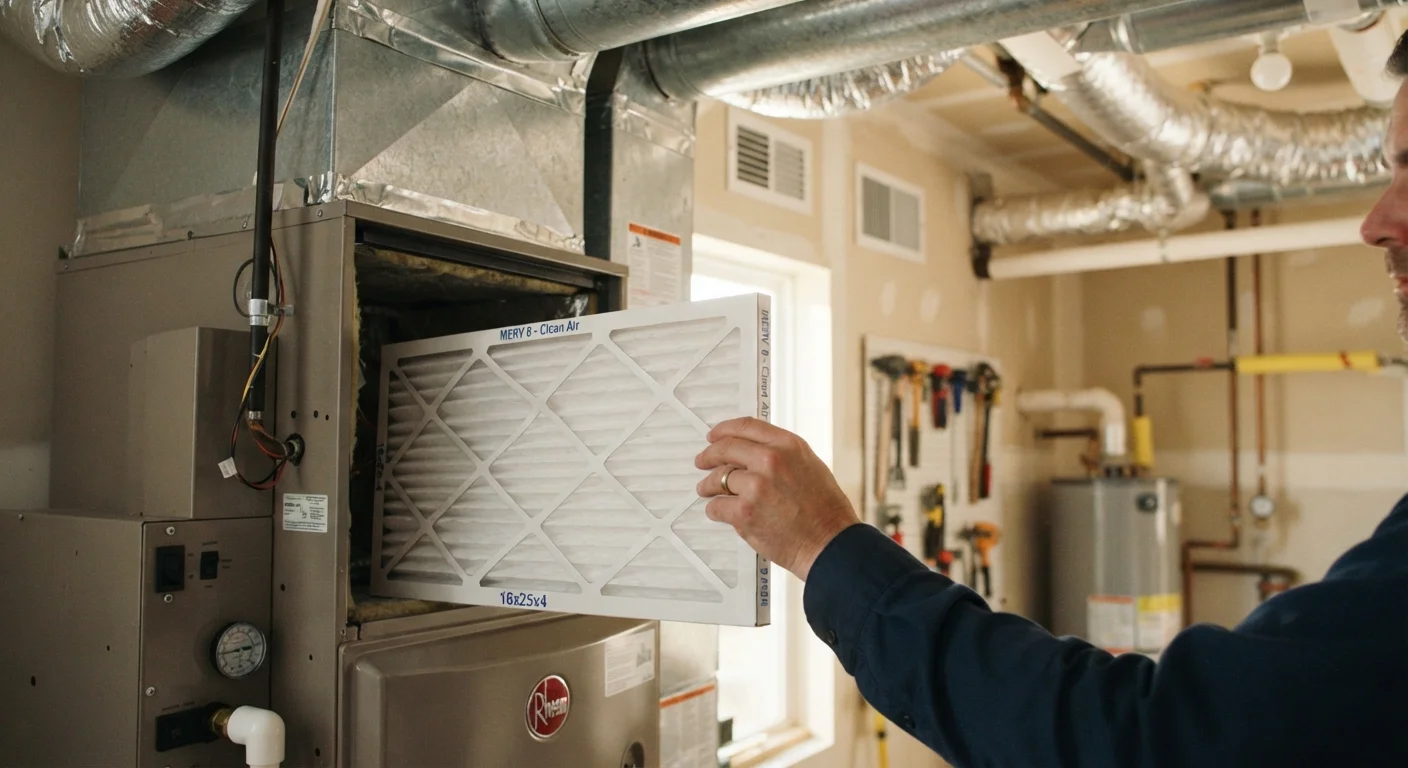
Check your air filter monthly, especially during peak heating or cooling months. Most standard 1-inch filters need replacement every 30-90 days depending on household conditions - homes with pets, allergies, or high dust levels trend toward the shorter end. Turn the system off before pulling the filter, note the airflow arrow printed on the frame, and insert the new filter with that arrow pointing toward the blower. Filters are sized by width, length, and thickness; the existing filter's dimensions are printed on its cardboard edge.
Clearing Supply and Return Vents
Walk your home periodically and confirm that furniture, rugs, and curtains aren't blocking supply registers (where air blows out) or return grilles (where air is pulled back in). Use a vacuum brush attachment to remove visible dust from grille surfaces. Do not close registers in unused rooms - this pressurizes ductwork and can strain the blower motor over time.
Outdoor Condenser Unit
Keep at least two feet of clearance around the outdoor condenser. Remove leaves, grass clippings, and debris from the top and sides. A garden hose can rinse the fins (the thin metal slats) from the inside out - spray gently to avoid bending them. Always shut power to the unit at the disconnect box before touching it.
When to Schedule Professional Tune-Ups
Most HVAC professionals recommend a system tune-up twice a year - once before the cooling season (spring) and once before the heating season (fall). These visits typically include coil cleaning, refrigerant pressure checks, electrical inspections, and safety testing. Scheduling early in the season generally means shorter wait times and avoids emergency service rates during peak demand periods.
For broader seasonal upkeep context, see the seasonal home maintenance calendar - it maps HVAC tasks alongside other time-sensitive jobs throughout the year.
Tasks That Belong to a Licensed Technician
Some HVAC maintenance involves refrigerant, electrical components, or gas lines - work that requires licensing, specialized equipment, and safety training. Attempting these without proper credentials is unsafe and, in many jurisdictions, illegal.
- Refrigerant handling: Adding or recovering refrigerant requires EPA Section 608 certification. Low refrigerant is a symptom of a leak, not a routine top-off situation.
- Evaporator coil cleaning: The indoor evaporator coil sits inside the air handler and is accessed by removing panels. Chemical coil cleaners can damage components if misapplied. A technician will clean this safely and inspect for freeze damage or mold.
- Duct inspection and sealing: Leaky ducts can waste 20-30% of conditioned air, according to the U.S. Department of Energy. A qualified technician uses pressure testing to locate leaks and applies appropriate mastic sealant or metal tape - not standard duct tape, which degrades quickly.
- Gas furnace inspection: Heat exchanger cracks can allow combustion gases into living spaces. Annual inspection by a licensed HVAC technician is strongly recommended for any gas-fired system.
- Electrical connections: Tightening terminals, checking capacitors, and testing contactors are jobs for a licensed professional.
Homeowners who handle their own plumbing upkeep often wonder where the professional line sits for HVAC as well. The same principle applies: routine tasks have a clear DIY tier, but anything involving system internals or regulated materials warrants professional help.
Evaporator coil
The indoor coil located inside the air handler where refrigerant absorbs heat from indoor air, cooling it before distribution. Dirt buildup on this coil reduces heat transfer and can cause the coil to freeze.
Condenser coil
The outdoor coil where refrigerant releases heat absorbed from inside the home. It is housed in the outdoor unit alongside the compressor and fan.
MERV rating
Minimum Efficiency Reporting Value - a scale from 1 to 16 used to rate how effectively a filter captures particles. Higher MERV ratings trap smaller particles but can restrict airflow in systems not designed for them.
Refrigerant
A chemical compound that cycles between liquid and gas states inside the HVAC system to move heat. Handling refrigerant requires EPA certification and cannot legally be purchased or managed by unlicensed individuals.
Return grille
The large vent opening, usually without a directional louver, through which room air is drawn back into the HVAC system to be filtered and reconditioned.
Heat exchanger
A component in a gas furnace that separates combustion gases from the air circulated through your home. A cracked heat exchanger is a serious safety concern requiring immediate professional attention.