

Key Takeaways
- Regularly testing shut-off valves and inspecting visible pipes can prevent costly water damage.
- Slow drains and running toilets are common DIY-friendly fixes that save on service calls.
- Knowing which tasks require a licensed plumber is just as important as knowing what you can do yourself.
- Small habits-like checking for leaks monthly-can extend the life of your plumbing system significantly.
- Never attempt repairs on gas lines, main sewer lines, or work requiring a permit without a professional.
Why Routine Plumbing Upkeep Belongs on Every Homeowner's List
Water damage is one of the most expensive problems a homeowner can face-and many cases trace back to neglected maintenance that could have been caught early. The good news is that a meaningful portion of plumbing upkeep doesn't require a service call. With basic tools and a few hours a year, you can keep your system running smoothly and spot trouble before it becomes a costly emergency.
That said, plumbing has real limits for DIY work. Tasks involving the main sewer line, gas-connected water heaters, or anything that requires a permit in your municipality should always go to a licensed plumber. Our guide on when to DIY versus call a plumber can help you draw that line confidently. For now, here are the maintenance tasks most homeowners can handle themselves.
Test every shut-off valve in your home
Most homes have individual shut-off valves under every sink, behind toilets, and near appliances like dishwashers and washing machines. These valves are your first defense in a leak emergency-but they can seize up from disuse, meaning they won't turn when you need them most.
Once or twice a year, turn each valve fully clockwise (off) and then back counterclockwise (on). If a valve is stiff, hard to turn, or won't move at all, that's a sign the valve may need replacement. This is a low-cost fix a plumber can handle quickly, and it's far better than discovering a frozen valve while water is spraying across your floor.
A valve that seizes in an emergency is just as bad as having no valve at all.
Inspect visible pipes and supply lines for early signs of trouble
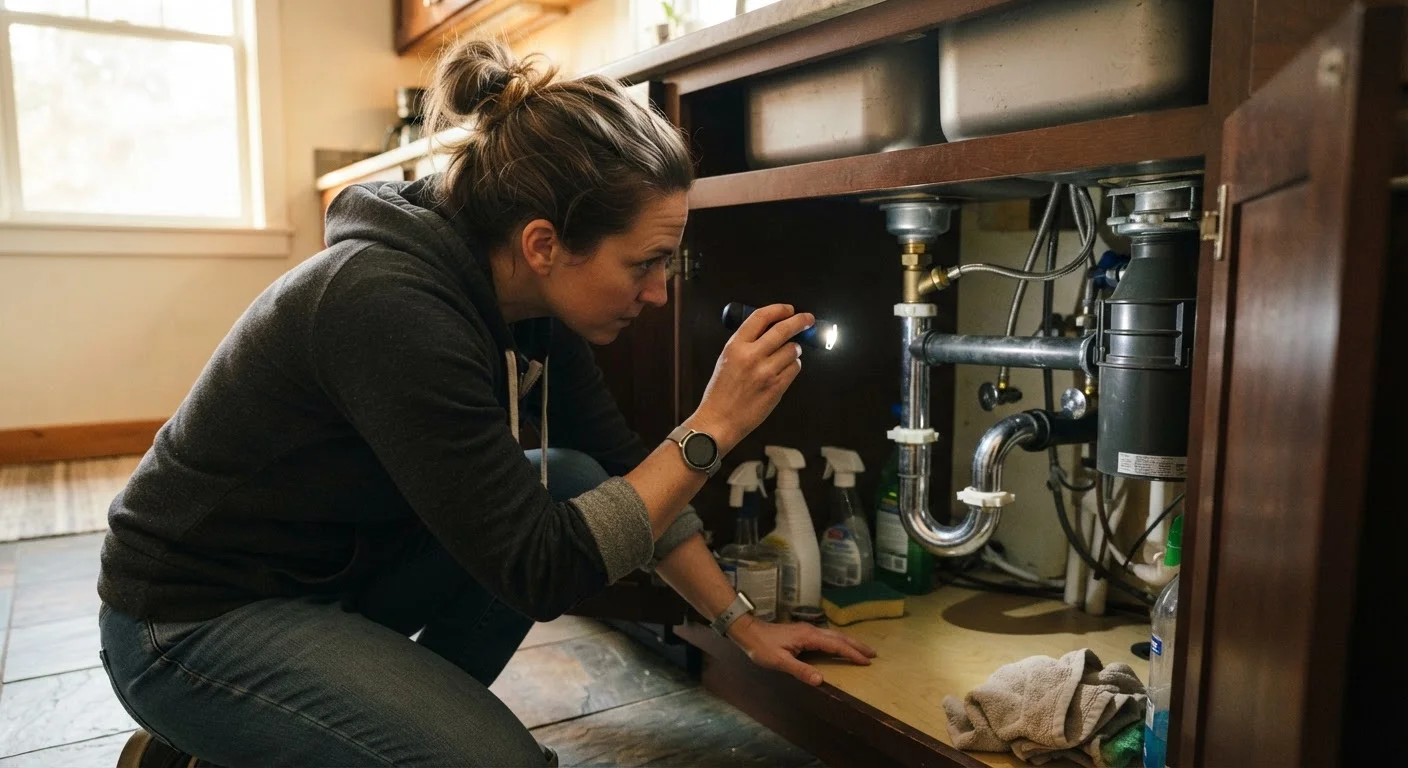
You don't need to open walls to do a useful plumbing inspection. Get under your sinks and look at the supply lines-the braided or ribbed hoses connecting valves to faucets and toilets. Check for bulging, corrosion, mineral crust, or any moisture on the outside of the lines.
Braided stainless steel supply lines are generally considered more durable than older rubber or plastic ones, but all supply lines have a lifespan. If you see any signs of wear or if your lines are more than 8-10 years old, replacing them is an inexpensive precaution. Also look at exposed pipe connections for greenish staining on copper (a sign of slow corrosion) or rust on steel fittings.
Spotting a failing supply line before it bursts can prevent thousands of dollars in water damage.
Clear slow drains before they become full blockages
A slow drain is almost always a warning. In bathroom sinks and tubs, the culprit is usually accumulated hair and soap residue just below the drain cover-something most homeowners can clear without chemical drain cleaners, which can damage older pipes over time.
A basic drain snake (also called a hand auger) or even a plastic hair-removal tool available at most hardware stores can pull out the clog directly. For kitchen sinks, running hot water regularly and avoiding pouring grease or oil down the drain goes a long way toward prevention. If multiple drains in your home are running slow simultaneously, that can indicate a deeper issue in the main line-a situation that warrants a professional evaluation.
Mechanical drain clearing is almost always safer for your pipes than chemical cleaners.
Fix a running toilet promptly
A toilet that runs continuously after flushing wastes a significant amount of water and can noticeably raise your utility bill. In most cases, the fix involves replacing the flapper-a rubber seal at the bottom of the tank-or adjusting the fill valve. Both parts are inexpensive and widely available, and most manufacturers include instructions on the packaging.
To diagnose the problem: remove the tank lid and watch what happens after a flush. If water continues trickling into the bowl, the flapper is likely the culprit. If the tank keeps filling past the overflow tube, the float or fill valve needs adjustment. This is one of the most approachable plumbing repairs for beginners, and it's a good entry point if you want to build confidence with DIY home projects.
A running toilet can waste hundreds of gallons per day-and it's usually a simple fix.
Check your water heater's pressure relief valve annually
The temperature and pressure relief (TPR) valve on your water heater is a safety device designed to release pressure if the tank overheats or pressure builds dangerously high. It should be tested once a year to make sure it's functioning and not corroded shut.
To test it, briefly lift the lever on the valve-you should hear a short rush of water or steam, then it should reseal cleanly when you release it. If nothing happens, or if it continues dripping after the test, the valve likely needs replacement. This is a task where the testing itself is homeowner-friendly, but if the valve does need replacing and you're not comfortable doing it, a plumber can handle it quickly. Always consult your water heater's manual before testing, and note that this task is separate from any gas connections, which should only be touched by a licensed professional.
A failed TPR valve is a serious safety hazard-test it every year without fail.
Clean faucet aerators and showerheads to maintain water pressure
Mineral deposits from hard water gradually clog the small screens (aerators) at the tip of faucets and inside showerheads. This reduces water pressure and can create uneven spray patterns. Cleaning them is a simple task that takes about 15 minutes per fixture.
Unscrew the aerator from the faucet tip (a cloth-wrapped pair of pliers helps avoid scratching). Soak the aerator in white vinegar for 30-60 minutes, then rinse and scrub off loosened deposits with an old toothbrush. Showerheads can often be soaked in vinegar while still attached-just fill a plastic bag with vinegar, secure it around the showerhead with a rubber band, and leave it for an hour. This simple habit preserves flow rate and can extend the life of your fixtures.
Vinegar and 15 minutes can fully restore a faucet aerator clogged by mineral buildup.
Keep These Habits Going Year-Round
Plumbing maintenance works best as a habit rather than a crisis response. Set a reminder twice a year-once in spring and once in fall-to run through the checks above. Pair it with other seasonal tasks like HVAC filter changes and coil inspections so nothing slips through the cracks.
Keep a simple plumbing log
A basic notebook or phone note tracking when you last tested valves, replaced supply lines, or serviced your water heater helps you stay on schedule and provides useful history if you ever sell your home. It also makes it easier to spot patterns-like a drain that keeps clogging despite repeated clearing, which might signal a deeper problem worth investigating.
If you're working with a tight household budget, our guide on prioritizing home maintenance spending can help you decide where preventive plumbing care fits alongside other must-dos. Prevention almost always costs less than repair-and plumbing is one area where that principle holds up especially well.