

Key Takeaways
- Cats rarely vocalize pain openly - behavioral changes are often the first clue.
- Hiding, reduced grooming, and changes in appetite can all signal underlying discomfort.
- A hunched posture or reluctance to jump may indicate musculoskeletal or abdominal pain.
- Aggression toward a normally trusted person can sometimes mean a cat hurts when touched.
- Emergency signs like labored breathing, inability to urinate, or collapse require immediate vet care.
- Routine wellness visits help catch pain early, before it becomes a crisis.
Feline Pain Masking
Cats instinctively hide signs of pain or illness as a survival behavior inherited from their wild ancestors. Because showing vulnerability could attract predators, even a well-cared-for house cat will often disguise discomfort until it becomes severe. This means owners need to watch for subtle changes rather than waiting for obvious distress signals.
Veterinary pain assessment in cats often uses validated tools like the Feline Grimace Scale, which measures ear position, orbital tightening, muzzle tension, whisker change, and head position.
Why Cats Are So Good at Hiding Pain
If you've ever suspected something was off with your cat but couldn't quite put your finger on it, you're not imagining things. Cats evolved as both predators and prey, and showing weakness in the wild was dangerous. That instinct doesn't disappear in a cozy living room - your cat may be genuinely hurting while appearing outwardly calm.
This masking behavior is one reason veterinarians emphasize observing changes in your cat's normal patterns rather than waiting for dramatic signals. A cat that suddenly sleeps in a different spot, stops jumping onto the couch, or becomes quieter than usual deserves a closer look. For a broader look at common misconceptions about cat health - including the idea that purring always means happiness - see our piece on cat health myths veterinary science has addressed.
Track Changes, Not Just Symptoms
Instead of looking for dramatic signs, focus on deviations from your specific cat's baseline. A cat that normally greets you at the door but has stopped doing so for several days is telling you something. Knowing your individual cat's habits makes it much easier to spot early warnings.
Behavioral Signs That May Indicate Pain
Behavioral shifts are often the earliest - and most overlooked - indicators of pain in cats. Watch for any of the following:
- Withdrawal and hiding: A normally social cat retreating under the bed or into closets for extended periods is a red flag.
- Reduced grooming or overgrooming: Painful cats may stop grooming (leading to a dull, matted coat) or obsessively lick one area, which can signal localized discomfort.
- Changes in appetite: Eating significantly less - or not at all - for more than 24 hours warrants attention.
- Litter box avoidance: Difficulty posturing, pain on entry or exit, or avoiding the box altogether can signal urinary issues, arthritis, or abdominal pain.
- Uncharacteristic aggression: A cat that hisses or bites when touched in a specific area may be protecting a painful spot.
It's worth noting that some of these behaviors - hiding, for example - can also reflect anxiety rather than physical pain. Our guide to creating a low-stress environment for anxious cats can help you think through the distinction.
~40%
Cats over 3 estimated to have arthritis
Research published in veterinary journals suggests arthritis may affect a significant proportion of cats, with prevalence rising sharply in those over 10 years old.
1 in 10
Cats seen for dental pain annually
Dental disease is one of the most common sources of chronic pain in cats, yet many owners don't recognize it as pain because cats continue eating.
70%+
Cats with pain showing behavioral - not vocal - signs
Veterinary behaviorists consistently note that the vast majority of pain signals in cats are behavioral or postural rather than auditory, underscoring the need for careful observation.
Physical Signs You Can Observe at Home
Beyond behavior, your cat's body language and posture can tell you a great deal. A healthy cat moves fluidly, holds its head up, and grooms regularly. A cat in pain often looks different:
- Hunched or guarded posture: Tucking the abdomen, sitting in a loaf position with weight shifted forward, or reluctance to stretch out fully.
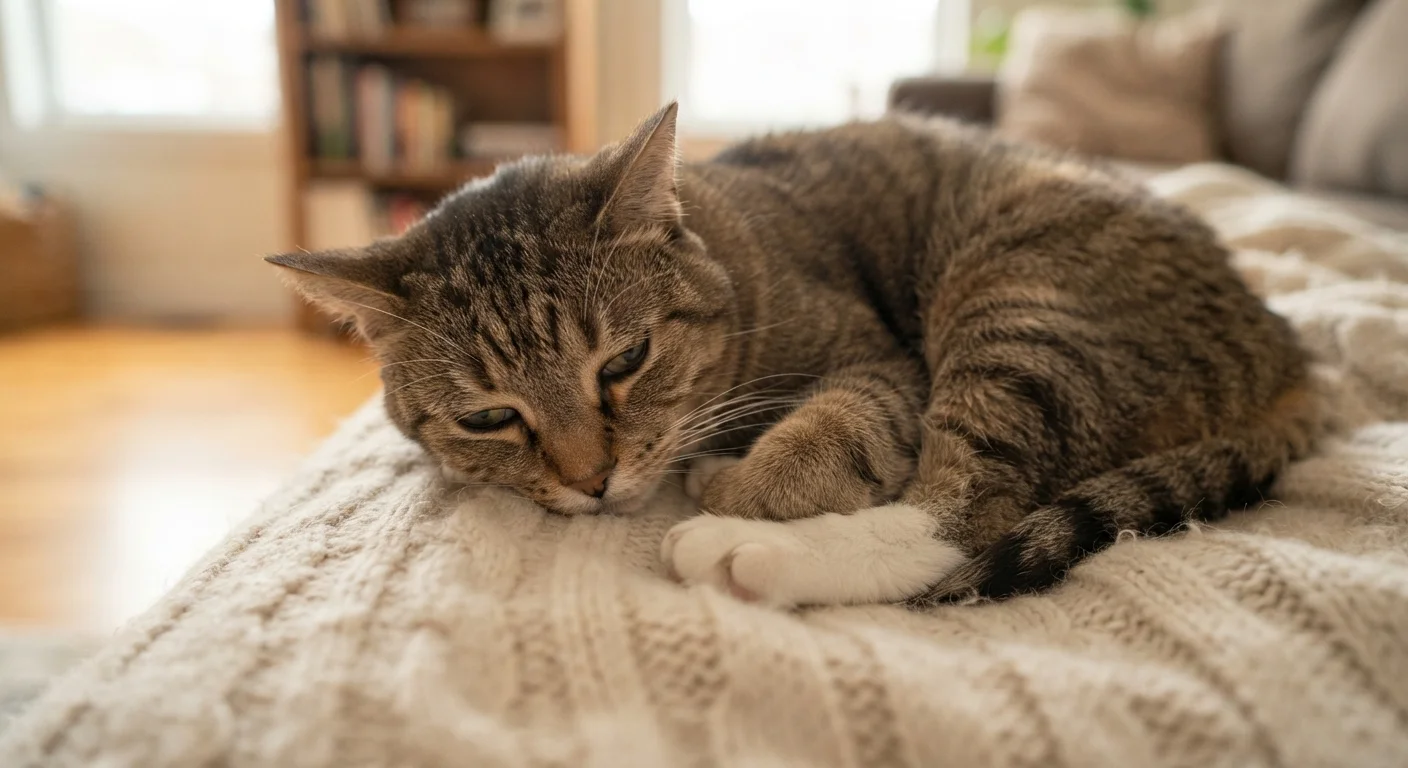
- Squinting or half-closed eyes: This is a documented pain signal in cats - researchers have validated the Feline Grimace Scale, which includes orbital tightening as a key indicator.
- Ears flattened or rotated back: Combined with other signs, this facial change can signal distress.
- Lameness or stiffness: Hesitating before jumping, missing a landing that was previously easy, or favoring one limb.
- Coat changes: Dull, unkempt fur in a cat that was previously well-groomed often reflects that grooming has become uncomfortable.
These physical signs can look similar across different health issues, so a veterinary exam is always the right next step rather than attempting to diagnose at home.
When to Call the Vet - and When to Go Immediately
Not every concern requires an emergency trip, but some signs should prompt a same-day call to your veterinarian:
- New hiding behavior paired with skipped meals or litter box changes
- Limping or reluctance to bear weight on a limb
- Visible wounds, swelling, or a lump that wasn't there before
- Persistent squinting or eye discharge
- Frequent attempts to urinate with little or no output
Go to an emergency clinic immediately if your cat is breathing with an open mouth or labored breathing, cannot use its hind legs, is unresponsive or collapsed, or has been vomiting repeatedly. Urinary blockages - more common in male cats - can be fatal within 24-48 hours and are a true emergency.
When in doubt, call your vet. A brief phone conversation can help you triage the situation and decide how urgently your cat needs to be seen.
Pain Versus Normal Behavioral Quirks
Some cat behaviors that look alarming - occasional hiding, brief food refusal after a stressful event, temporary grumpiness - are not necessarily pain signals. Context and duration matter. A one-time change is less concerning than a pattern that persists over several days or worsens over time. When uncertain, your veterinarian is the right resource.
Building a Habit of Observation
The owners who catch pain early are usually those who know what's normal for their individual cat. Spend a few minutes each day noticing how your cat moves, eats, grooms, and interacts. Keep loose mental notes - or even a short log - of any changes, including the date they started. This information is genuinely useful to your vet.
Routine wellness visits are also a core tool. Veterinarians can detect signs of conditions like arthritis, dental disease, or internal problems long before they become visible at home. Older cats especially benefit from more frequent checkups, since age-related pain conditions are common and often go unnoticed until they're advanced.
Good pain awareness isn't about anxious hovering - it's about being the informed advocate your cat can't be for itself. That's one of the most practical things any owner can do.
This article is for general informational purposes only and is not a substitute for professional veterinary advice, diagnosis, or treatment. Always consult a licensed veterinarian for concerns about your pet's health.