

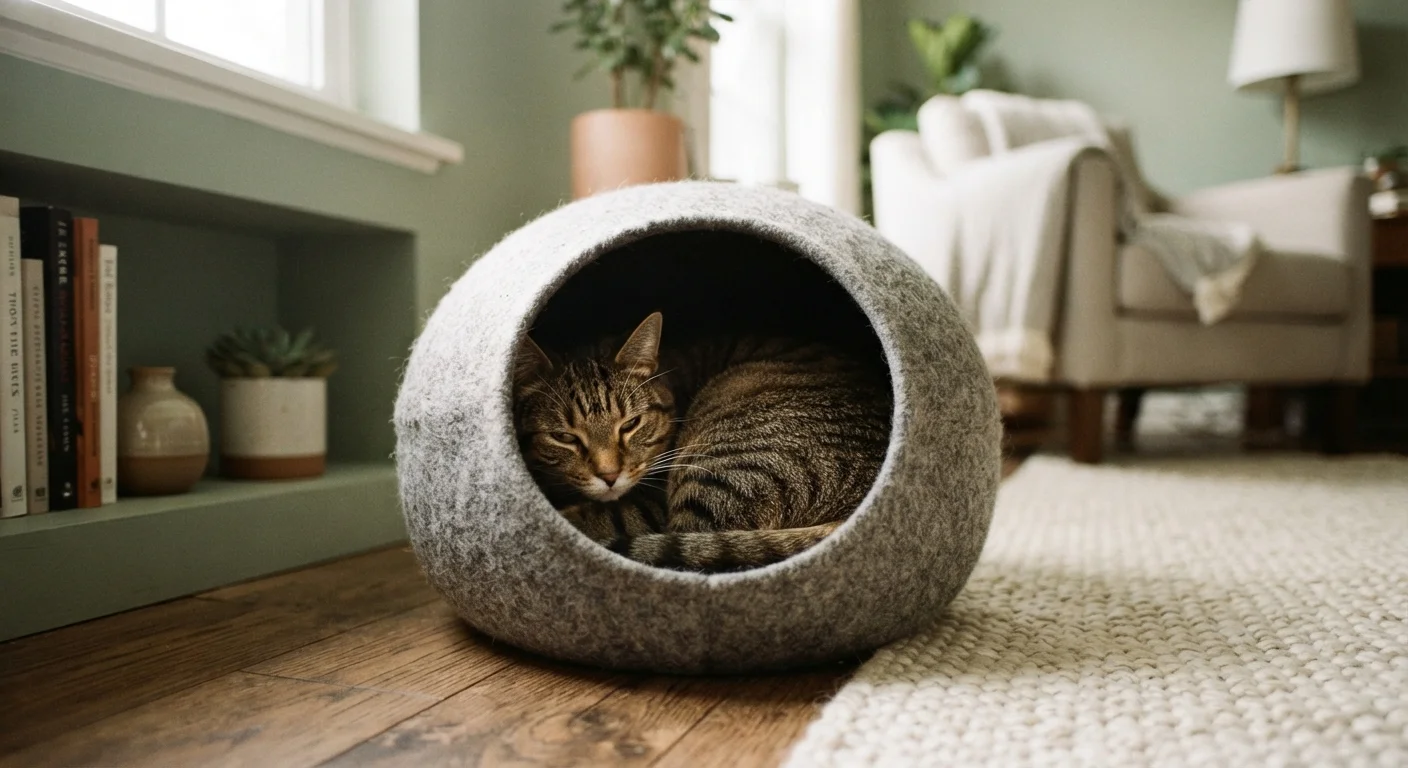
Key Takeaways
- Anxious cats need consistent routines, safe hiding spots, and clearly defined territory to feel secure.
- Vertical space like cat trees and shelves lets shy cats observe their surroundings from a safe distance.
- Scent management - including pheromone diffusers and familiar bedding - can meaningfully reduce feline stress.
- Sudden changes to layout, noise, or household members are among the most common triggers for cat anxiety.
- Most environmental changes cost little or nothing, making low-stress cat care accessible for families on any budget.
Understanding What Makes Cats Anxious
Cats are territorial animals wired to notice every change in their environment. A new piece of furniture, a stranger's visit, or even a shift in your daily schedule can send a sensitive cat into hiding for hours. That's not dramatic behavior - it's deeply instinctive.
Anxiety in cats tends to show up as hiding, reduced appetite, over-grooming, or eliminating outside the litter box. If you're seeing those signs, the first step is ruling out a medical cause. Physical discomfort can look a lot like anxiety, so a vet visit is always a reasonable starting point before focusing on environmental fixes.
Once health concerns are addressed, the good news is that thoughtful adjustments to your home setup can make a genuinely significant difference - and most of them don't require spending much at all.
Best Practices for a Low-Stress Cat Environment
The following practices draw on veterinary behavioral guidance and are designed to help your cat feel in control, which is the foundation of feline confidence.
Provide multiple dedicated hiding spots at different heights throughout your home.
When a cat can retreat on their own terms, they feel in control rather than cornered. Having options at floor level and elevated positions gives them the ability to regulate how exposed they feel at any given moment.
Add vertical space with cat trees, shelves, or window perches.
Height is a comfort mechanism for cats. Being able to observe a room from above reduces the startle response and allows shy cats to stay engaged with their environment without feeling exposed at ground level.
Establish and protect a predictable daily routine.
Cats are acutely sensitive to schedule disruptions. Feeding, play, and quiet time at roughly the same times each day signals to an anxious cat that their environment is stable and safe. Unpredictability is itself a stressor.
Use synthetic feline facial pheromone products in areas where your cat spends most of their time.
Synthetic analogues of the pheromones cats naturally deposit when they rub their face on objects mimic the chemical signal that an area is familiar and safe. Research supports their use as part of a broader stress-reduction strategy.
Separate key resources so cats are never forced to compete or feel exposed while meeting basic needs.
Litter boxes, food bowls, and water sources placed in high-traffic or open areas create ongoing low-level stress. Anxious cats may avoid these resources rather than risk an uncomfortable encounter, leading to health and litter box problems.
Minimize sudden loud noises and manage visitor introductions gradually.
Loud, unpredictable sound is one of the most consistent anxiety triggers for cats. While you can't eliminate all noise, you can create soundproofed retreats and establish protocols for visitors that give your cat the choice to engage or withdraw.
Quick Wins You Can Act On Today
You don't have to overhaul your home all at once. Start with one or two of these low-effort, high-impact changes and give your cat a few days to respond before adding more.
Let Your Cat Set the Pace
The single most common mistake owners make with shy cats is trying to accelerate the bonding process. Reaching for a hiding cat, carrying them out of their safe spot, or forcing interaction - even with good intentions - can set trust-building back significantly. Let every positive interaction be the cat's idea. Progress may feel slow, but it tends to be lasting.
For households introducing a shy cat for the first time, our guide on bringing your first cat home without the guesswork walks through the full setup process room by room.
Keeping Stress Low Over the Long Term
Environmental enrichment isn't a one-time project - it's an ongoing part of responsible cat ownership. As your cat ages, their needs will shift. What cats need at each life stage changes in meaningful ways, and a setup that worked for a bold two-year-old may need adjusting for a more cautious senior.
If your household includes a dog, managing interspecies stress is its own layer of the puzzle. Helping a cat and dog share a home peacefully requires patience and careful spatial planning, but it's very achievable.
Finally, remember that regular, low-key handling - like calm grooming sessions - builds trust over time. Grooming your cat at home without a struggle offers practical tips for keeping those moments relaxed rather than stressful for both of you.
When Environmental Changes Aren't Enough
Some cats have anxiety rooted in early socialization gaps, trauma, or genetic temperament that environmental adjustments alone won't resolve. If your cat's stress signs are severe - persistent hiding for days, not eating, self-injurious over-grooming - please consult a veterinarian. In some cases, a referral to a board-certified veterinary behaviorist or a short-term medical intervention may be part of an appropriate care plan. This is general education, not a substitute for professional assessment.
This article is for general informational purposes and is not a substitute for professional veterinary advice. If your cat's anxiety is severe or sudden, consult a licensed veterinarian or a certified feline behaviorist.