

Key Takeaways
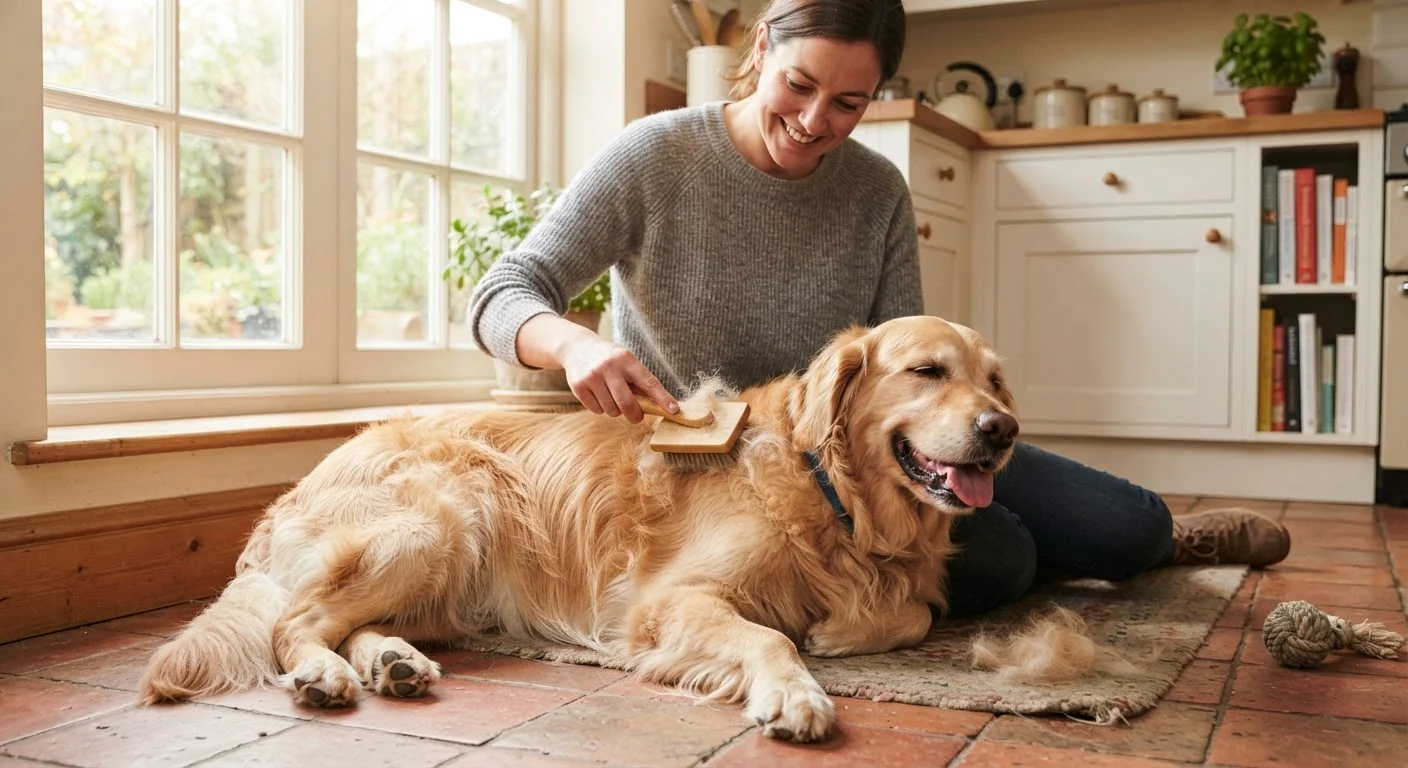
- At-home grooming saves money but requires an upfront investment in tools and time to learn.
- Professional groomers bring expertise, specialized equipment, and experience handling difficult coats.
- Many families use a hybrid approach - routine brushing at home with occasional professional sessions.
- Your dog's breed, coat type, and temperament are the biggest factors in deciding what works.
- Either path can keep your dog healthy and comfortable when done consistently.
Saves significant money over time
Professional grooming can run $50-$100 or more per session depending on breed and location. Handling basics at home cuts that recurring cost considerably, even after buying quality tools.
Strengthens your bond with your dog
Regular handling - brushing, nail checks, ear inspections - builds trust and helps your dog grow comfortable being touched, which also makes vet visits easier.
Flexible scheduling, no drop-off wait
You can groom on your own timeline without coordinating appointments, driving across town, or leaving your dog in an unfamiliar environment for hours.
Early detection of skin or coat issues
Frequent hands-on grooming makes it easier to notice lumps, irritation, or parasites early. Catching changes sooner means quicker action - and potentially lower vet bills.
Steep learning curve for complex coats
Double-coated, curly, or silky breeds require specific techniques. Mistakes like over-brushing, incorrect dematting, or improper scissor use can damage the coat or cause skin irritation.
Upfront tool costs add up
A decent set of brushes, nail clippers, a dryer, and possibly clippers can easily run $100-$200 before you've groomed your dog once.
Nail trimming carries real risk of injury
Cutting the quick - the blood vessel inside the nail - is painful for your dog and can cause bleeding. Anxious dogs make this task even harder to do safely at home.
Time-consuming and physically demanding
Bathing, drying, brushing, and trimming a large or thick-coated dog can take two or more hours, which isn't always realistic for families with packed schedules.
Our Verdict
Neither home grooming nor professional grooming is universally better - the right choice depends on your dog's coat type, your available time, and your household budget. For short-coated, easy-going dogs, a confident home groomer can handle most tasks with minimal fuss. For high-maintenance breeds or anxious dogs, regular professional appointments often deliver better results and less stress for everyone involved.
A hybrid approach works well for most busy families: handle between-appointment brushing and basic maintenance at home, and book a professional for full grooms every six to ten weeks.
What You're Actually Comparing
Grooming covers a wider range of tasks than most people realize: brushing, bathing, drying, nail trimming, ear cleaning, eye area tidying, and - for many breeds - haircuts. At-home grooming means handling some or all of these yourself. Professional grooming means handing your dog off to a trained technician with commercial equipment, product knowledge, and hands-on experience across dozens of coat types.
The honest truth is that most families end up doing both. A consistent dog care routine often includes daily or weekly brushing at home, with professional appointments filling in the gaps every six to ten weeks. How you divide those responsibilities comes down to your dog, your schedule, and your comfort level with the hands-on work.
The Case for Grooming at Home
The most compelling reason families groom at home is cost. A professional session can run $50-$100 or more per visit, and high-maintenance breeds may need one every six to eight weeks. Over a year, that adds up fast. Investing in quality tools and learning the basics can meaningfully reduce that spend - though it won't eliminate it entirely for most dogs.
Saves significant money over time
Professional grooming can run $50-$100 or more per session depending on breed and location. Handling basics at home cuts that recurring cost considerably, even after buying quality tools.
Strengthens your bond with your dog
Regular handling - brushing, nail checks, ear inspections - builds trust and helps your dog grow comfortable being touched, which also makes vet visits easier.
Flexible scheduling, no drop-off wait
You can groom on your own timeline without coordinating appointments, driving across town, or leaving your dog in an unfamiliar environment for hours.
Early detection of skin or coat issues
Frequent hands-on grooming makes it easier to notice lumps, irritation, or parasites early. Catching changes sooner means quicker action - and potentially lower vet bills.
Beyond money, there's a real care benefit. Frequent handling keeps your dog accustomed to being touched on paws, ears, and around the face. That familiarity makes vet exams less stressful and can surface early signs of skin changes, parasites, or unusual lumps. For budget-conscious households, the combination of lower costs and better health awareness makes at-home grooming genuinely attractive.
Where Professional Grooming Has the Edge
Professional groomers bring training, commercial-grade equipment, and breed-specific knowledge that's hard to replicate at home. A stand dryer, a hydraulic table, and a groomer who has worked on hundreds of doodles, poodles, or shih tzus will almost always produce a cleaner, more even result than a first-time home groomer - and in less time.
Steep learning curve for complex coats
Double-coated, curly, or silky breeds require specific techniques. Mistakes like over-brushing, incorrect dematting, or improper scissor use can damage the coat or cause skin irritation.
Upfront tool costs add up
A decent set of brushes, nail clippers, a dryer, and possibly clippers can easily run $100-$200 before you've groomed your dog once.
Nail trimming carries real risk of injury
Cutting the quick - the blood vessel inside the nail - is painful for your dog and can cause bleeding. Anxious dogs make this task even harder to do safely at home.
Time-consuming and physically demanding
Bathing, drying, brushing, and trimming a large or thick-coated dog can take two or more hours, which isn't always realistic for families with packed schedules.
There's also a safety dimension. Severely matted coats, nail trims on a dog that won't hold still, and certain hygiene tasks like anal gland expression are genuinely risky without proper training. The same logic applies to other household tasks: just as some home repairs clearly call for a licensed contractor, some grooming jobs are better left to someone with the right skills and tools.
When Professional Help Is Worth It
Some tasks carry enough risk that a professional is genuinely the safer choice - especially anal gland expression, severe matting removal, and first-time nail trims for reactive dogs. If your dog's skin is persistently red, flaky, or irritated, check out what might be causing the scratching before assuming it's a grooming issue alone.
Finding the Right Balance for Your Household
Your dog's breed and coat type should drive most of your decision. Short-coated breeds like beagles or labs need minimal professional attention - regular brushing and an occasional bath at home covers most of their needs. Long-coated, double-coated, or curly-haired breeds like golden retrievers, huskies, or poodle mixes generally benefit from professional grooming at least every six to ten weeks, with home maintenance in between.
Temperament matters too. An anxious or reactive dog may find the grooming salon stressful, but might also resist handling at home - in which case working with a professional who has experience with nervous dogs is often the kinder choice. For a broader look at how environment shapes your dog's needs, indoor vs. outdoor living arrangements can also influence how quickly coats get dirty or tangled.
The hybrid approach most families land on looks something like this: brush several times a week at home, handle baths when needed, and schedule professional grooms for the full treatment - cut, nails, ears, and finish - every couple of months. That split keeps your dog looking and feeling good without breaking the budget or consuming entire weekends.
This article is for general informational purposes only and does not constitute veterinary advice. Consult a licensed veterinarian for guidance specific to your dog's health and care needs.