

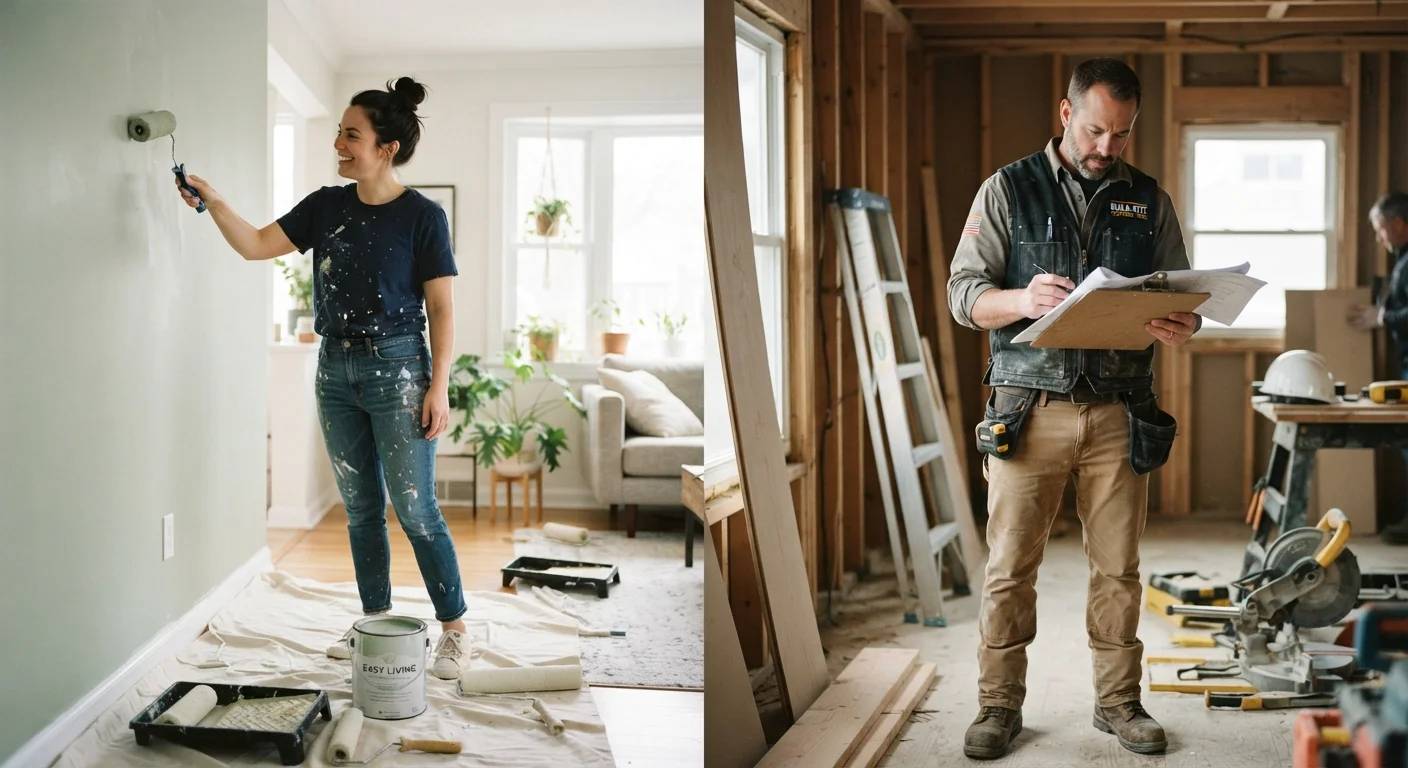
Key Takeaways
- Safety risk and permit requirements are the two non-negotiable reasons to hire a licensed professional.
- Your true DIY cost includes tools, materials, time, and the potential expense of fixing mistakes.
- Routine cosmetic tasks are generally safe to DIY; electrical, gas, and structural work rarely are.
- A failed DIY repair can void home insurance coverage or complicate a future home sale.
- Getting at least one professional estimate clarifies whether DIY savings are actually worth it.
Our Verdict
Neither approach wins universally - the right choice depends on the specific task, your skill level, and the consequences of getting it wrong. Low-stakes cosmetic projects favor DIY, while work involving safety systems, permits, or structural integrity almost always calls for a licensed professional. Matching the job to the right approach protects both your budget and your home.
| Best for | Recommended |
|---|---|
| Budget-conscious homeowners with basic hands-on skills | DIY |
| Projects involving electrical, gas, plumbing, or structural work | Hire a Contractor |
| Repairs where a permit or inspection is legally required | Hire a Contractor |
| Cosmetic fixes like painting, caulking, or minor patching | DIY |
Why This Decision Matters More Than You Think
Every home repair sits somewhere on a spectrum - from a simple weekend project any motivated homeowner can handle, to work that's dangerous, code-regulated, or both. Choosing wrong in either direction costs money. Hiring a contractor for a job you could do safely yourself drains your budget unnecessarily. Attempting work beyond your skill level can result in failed inspections, voided insurance claims, or repairs that make the original problem worse.
Before picking up a tool or calling a pro, run the job through four filters: skill level required, safety risk, permit and code requirements, and true total cost. These four questions cut through the guesswork and give you a defensible answer every time. For a broader look at what separates smooth DIY projects from expensive redos, see what every homeowner should know before starting a DIY project.
The Four Filters: A Decision Framework
1. Skill Level Required
Be honest about your experience - not your confidence. Painting a room, patching a small drywall hole, replacing a faucet, or re-caulking a tub are tasks most homeowners can learn with a reliable tutorial and basic tools. Work involving load-bearing structures, panel wiring, or gas lines requires professional training that a YouTube video cannot adequately replace. Our guide on understanding load-bearing walls illustrates exactly how quickly structural misjudgments can become expensive.
2. Safety Risk
If a mistake could injure you, damage adjacent systems, or create a fire or flood hazard, lean strongly toward a licensed professional. Electrical wiring, gas appliance connections, and main plumbing line work all fall into this category. The cost of a hospital visit or a house fire far exceeds any contractor fee.
3. Permit and Code Requirements
Many jurisdictions require permits for electrical panel work, HVAC installation, structural changes, and plumbing that connects to the main line. Unpermitted work can cause problems when you sell your home, trigger fines, or affect your homeowner's insurance. Always check with your local building department before starting - a quick call costs nothing.
4. True Total Cost
DIY is rarely as cheap as it first appears. Add up the cost of tools you don't already own, materials (including what you'll waste while learning), your time at a realistic hourly value, and the potential cost of fixing a mistake. Then compare that figure to a professional estimate. The gap is sometimes smaller than expected - and occasionally the contractor is cheaper when all factors are counted.
| DIY | Hire a Contractor | |
|---|---|---|
| Upfront cost | Lower (materials + tools) | Higher (labor included) |
| Hidden costs | Tools, mistakes, your time | Generally predictable with a quote |
| Safety risk management | Entirely on homeowner | Contractor licensed and insured |
| Permit handling | Homeowner's responsibility | Usually managed by contractor |
| Quality assurance | Depends on skill and research | Backed by professional accountability |
| Best suited for | Cosmetic, low-risk tasks | Structural, electrical, gas, plumbing |
Tasks That Generally Favor DIY
Cosmetic and low-stakes maintenance tasks are where DIY saves real money without meaningful risk. Painting interior walls, replacing light switch covers, installing ceiling fans (where wiring is already in place and the circuit is off), sealing drafts around doors and windows, refreshing caulk in bathrooms, and basic landscaping all sit comfortably in DIY territory for most homeowners.
For these jobs, the learning curve is manageable, the cost of a mistake is limited, and no permit is typically required. Matching yourself to the right tools helps too - see our overview of hand tools vs. power tools to avoid over-buying equipment you won't use again. You can find step-by-step guidance across a wide range of home projects in our DIY Projects hub.
Start Small to Build Confidence
If you're new to DIY, begin with genuinely low-stakes tasks like painting or caulking before attempting anything involving utilities or structure. Completing a small project correctly teaches you to read instructions carefully, measure twice, and recognize when something isn't going to plan - skills that transfer directly to more complex jobs.
Tasks That Typically Require a Professional
Certain categories of home work should default to licensed contractors regardless of how handy you are. These include: main electrical panel upgrades or new circuit installation; gas line connections or gas appliance installation; structural wall removal or modification; roofing (beyond minor patching); main sewer line work; and HVAC system installation or major repair.
Beyond safety, these tasks often require a licensed contractor to pull permits legally, and inspectors will check the work. A contractor's license and liability insurance also protect you if something goes wrong after the job is done - protection you don't have when you DIY.
Even well-intentioned DIYers can run into trouble on more straightforward tasks. Our article on DIY repairs homeowners often get wrong the first time walks through the most common failure points worth knowing before you start.
Unpermitted Work Can Cost You Later
Work done without a required permit can complicate a home sale, trigger code-violation fines, and potentially void your homeowner's insurance for related claims. Before starting any project involving electrical, plumbing, HVAC, or structural changes, contact your local building department to confirm whether a permit is needed. This step takes minutes and can prevent significant legal and financial headaches.
Making the Final Call
Once you've run a job through the four filters, you'll usually have a clear answer. When you're still on the fence, get at least one professional estimate - it costs nothing in most cases and gives you a real number to weigh against your DIY plan. You may also find a middle path: hiring a contractor for the technical portion of a project (rough plumbing, for example) while handling the finish work - painting, trim, cleanup - yourself.
The same decision logic applies beyond home repair. Similar trade-offs between cost, skill, and risk show up in car maintenance (see DIY vs. shop for car tasks) and even pet care. Keeping a clear head about what you're actually qualified to do - and what the stakes are if you're wrong - is ultimately the most budget-friendly approach there is. For broader money-saving strategies around the home, our Smart Budgeting hub has practical frameworks to help you prioritize spending.