

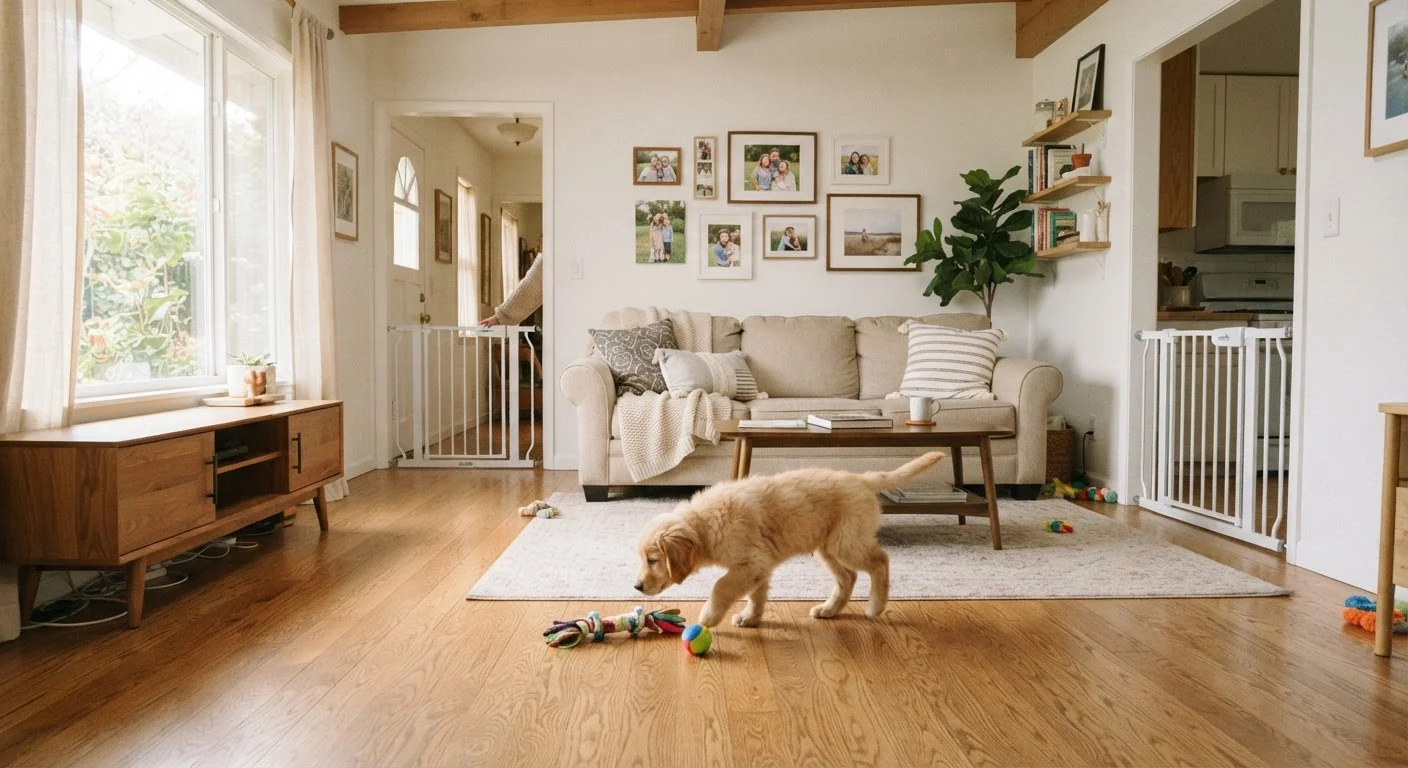
Key Takeaways
- Puppies explore with their mouths, so securing loose wires and small objects is the single highest-impact step.
- Toxic plants, household cleaners, and human foods are among the most common causes of puppy emergencies.
- A designated safe zone - such as a crate or gated room - helps puppies adjust and reduces accidents.
- Puppy-proofing costs very little; most hazards are addressed with rearranging or inexpensive barriers.
- A room-by-room walk-through catches dangers you might otherwise overlook until it's too late.
Summary
28 items · 1-3 hours
Why Puppy-Proofing Is Worth the Effort
Bringing a new dog home is one of the most exciting things a family can do - and also one of the most important moments to slow down and think like a puppy. Young dogs are hardwired to explore with their mouths, squeeze into tight spaces, and investigate anything at floor level. That curiosity is part of their charm, but it also means an unprepared home is full of invisible risks.
The good news: most puppy-proofing requires no special skills and very little money. It's mostly a matter of moving things, securing a few cabinets, and adding some basic barriers. The checklist below walks you room by room so nothing gets missed. If you're still deciding how your dog will divide their time between indoors and out, our guide to indoor vs. outdoor arrangements covers the care considerations for each setup.
Toxic Foods Can Be Rapidly Lethal
Several everyday human foods are seriously dangerous to dogs - including grapes, raisins, xylitol (found in some peanut butters and sugar-free gum), chocolate, onions, and macadamia nuts. Even small amounts of some of these can cause kidney failure or neurological damage. If you suspect your dog has ingested a toxic substance, contact a veterinarian or the ASPCA Animal Poison Control Center immediately - do not wait for symptoms to appear.
What You'll Need Before You Start
Before walking through the checklist, gather the tools that make puppy-proofing effective. A few inexpensive purchases now can prevent costly vet visits later. See the full list below, then work through the room-by-room checks.
Baby gates or pet gates
Block access to stairs, hazardous rooms, or areas not yet fully puppy-proofed.
Child-proof cabinet latches
Prevent puppies from nosing open lower cabinets containing food, chemicals, or trash.
Cord management sleeves or zip ties
Bundle and conceal electrical cords so curious mouths can't chew on them.
Crate or exercise pen
Provides a safe, contained space for your puppy when unsupervised or settling in.
Lidded trash cans
Stop puppies from raiding the garbage, which can lead to ingesting toxic or sharp items.
Assorted chew toys
Redirect chewing instincts away from furniture, cords, and household items.
Pet first-aid kit
Provides basic supplies for minor injuries while you arrange veterinary care.
Once your supplies are ready, do a single focused walk-through of your home - ideally before the puppy arrives, when you can work without distraction.
The Room-by-Room Puppy-Proofing Checklist
Work through each group below, ticking items off as you go. Priority labels tell you which steps are non-negotiable (must), strongly recommended (should), or helpful if you have time and budget (nice to have).
Whole-Home Essentials
Kitchen & Dining Areas
Bathrooms & Laundry
Living Room & Bedrooms
Outdoor & Garage Areas
Supplies to Have Ready
Don't Rely on Supervision Alone
Even attentive owners can't watch a puppy every single second. Physical barriers - gates, latches, crates - are your safety net when you're cooking, on a call, or asleep. Puppies can find and swallow small objects surprisingly fast, so environmental management is more reliable than constant watchfulness alone.
Garage Hazards Are Easily Overlooked
Garages often contain a concentration of the most dangerous substances for dogs: antifreeze, engine oil, fertilizers, and sharp tools. Even a small puddle of antifreeze on a garage floor can be fatal. Keep garage doors closed and ensure any chemicals are stored well out of paw's reach before your dog ever explores that space.
Setting Up Your Puppy's Safe Zone
Even after the whole house is addressed, your puppy will benefit enormously from having one clearly defined space that is 100% theirs: a crate, a playpen, or a gated corner of a quiet room. This isn't about confining them - it's about giving them a calm retreat to decompress in, especially during the first few overwhelming days.
Place their crate or pen away from high-traffic areas and drafts, add a soft blanket and a couple of chew toys, and let them explore it at their own pace before the first night. A settled puppy is a safer puppy. For families bringing home other small companions as well, see how the preparation compares in our first-week checklist for small pets.
This article provides general information for educational purposes and is not a substitute for professional veterinary advice. Always consult a licensed veterinarian for guidance specific to your pet's health and safety.