

Key Takeaways
- Rabbits need far more space than most starter cages provide - aim for at least 12 square feet of living area.
- Flooring matters: bare wire or slippery surfaces can injure rabbit feet and cause stress.
- Hiding spots, foraging opportunities, and enrichment are essential for rabbit mental health.
- Cable management and toxic plant removal are critical safety steps before your rabbit moves in.
- A proper enclosure setup reduces vet visits and supports healthier, happier rabbits long-term.
What you will need
Why Indoor Enclosure Setup Really Matters
Rabbits are intelligent, curious animals with strong behavioral needs that a bare cage simply can't meet. Common housing errors - too-small enclosures, slippery flooring, zero enrichment - are among the leading causes of stress-related health issues in pet rabbits. Our companion article Why Your Small Pet's Cage Setup May Be Working Against Them breaks down these pitfalls in detail.
The good news is that setting up a safe, enriching indoor space doesn't require a large budget. With the right structure, materials, and a little forethought, you can build an environment where your rabbit genuinely thrives. Before you begin, gather your tools and review the prerequisites below.
What you will need
Once you have everything ready, work through the steps in order. Each one builds on the last, and skipping steps - especially flooring and safety-proofing - is where most problems start.
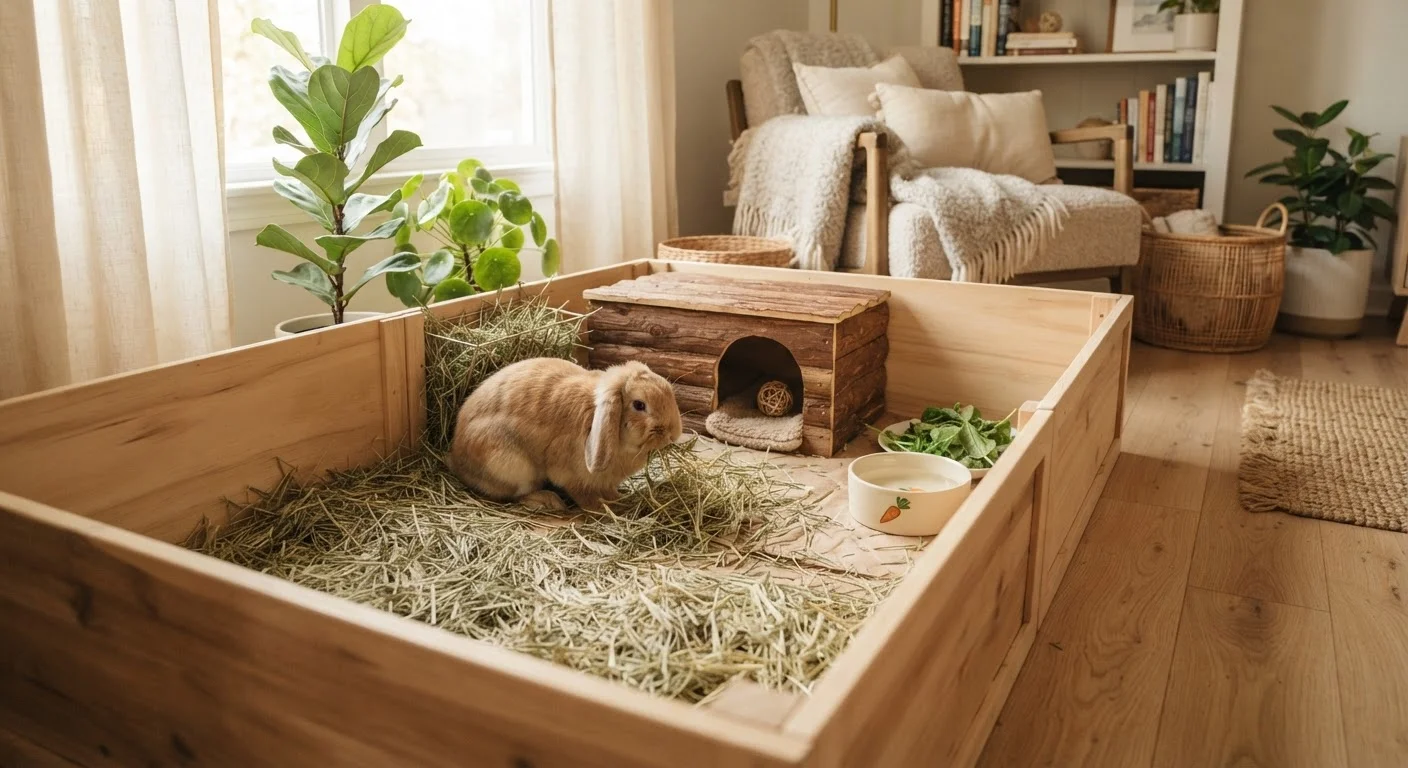
Exercise pen or large enclosure
Provides the minimum square footage rabbits need to move, stretch, and binky comfortably.
Solid floor covering (fleece, foam mat, or rug squares)
Protects rabbit feet from hard or slippery surfaces and prevents sore hocks.
Hay rack or hay area
Keeps unlimited timothy hay accessible, which should make up the bulk of a rabbit's diet.
Litter box with paper-based litter
Supports litter training and keeps the enclosure sanitary.
Ceramic or heavy food bowl
Stable bowls resist tipping and are easy to clean.
Hide box or tunnel
Gives rabbits a secure retreat - essential for reducing stress and enabling natural sheltering behavior.
Cardboard boxes or chew toys
Provides safe enrichment and satisfies the natural urge to chew and dig.
Cable management clips or cord covers
Keeps electrical cables out of reach, protecting both your rabbit and your home.
Getting the Most Out of Your Setup
Once your enclosure is in place, a little routine maintenance goes a long way. Spot-clean the litter box daily and do a full litter change every two to three days. Shake out or replace floor coverings weekly, and wash them as needed to control odor and bacteria.
Budget-Friendly Enclosure Ideas
Modular wire cube grids (sometimes called NIC grids) can be connected and configured to create a large, affordable exercise pen or enclosure. Many families find these more cost-effective than purpose-built hutches. Repurposing a bathroom mat or yoga mat as flooring cover is another wallet-friendly option that still protects rabbit feet.
Rabbits benefit from daily interaction and at least several hours of exercise time outside the enclosure, ideally in a rabbit-proofed space. Think of the enclosure as their safe home base, not their entire world. As your rabbit becomes more comfortable and litter-trained, expanding their free-roam time is a natural next step that enriches their daily life considerably.
If you're managing household expenses while caring for a new pet, the Saving Strategies hub has practical ideas for stretching your budget without cutting corners on care.
This article is for general informational purposes only and is not a substitute for advice from a qualified veterinarian familiar with your specific rabbit's needs.