

Key Takeaways
- Enclosure size is one of the most commonly underestimated factors in small pet health.
- Wrong bedding materials can cause respiratory problems and skin irritation in small animals.
- Placement of the cage - temperature, light, and noise - matters as much as what's inside it.
- Lack of enrichment and hiding spaces causes chronic stress, even in seemingly calm pets.
- Many housing mistakes stem from outdated packaging advice rather than current veterinary guidance.
Why the Cage Setup Matters More Than You Think
Small pets - hamsters, guinea pigs, gerbils, rabbits, rats, and similar animals - spend the vast majority of their lives inside their enclosures. That makes the setup not just a convenience, but a direct determinant of physical health and emotional wellbeing. Yet housing mistakes are among the most common issues exotic veterinarians and shelter workers see.
Many of these errors aren't due to neglect. They stem from outdated advice, misleading product labeling, or myths that get passed along without scrutiny. Our guide to common small pet misconceptions covers a number of these beliefs in depth - but the cage setup is where good intentions can quietly go wrong from day one.
The good news: most of these mistakes are easy to correct once you know what to look for.
The Most Common Cage Setup Mistakes
The following errors show up repeatedly across species. Whether you're a first-time owner or just doing a welfare check on a long-established setup, it's worth running through each one.
Choosing an enclosure that's too small based on pet store cage sizing.
Why it happens: Packaging on pet store cages often lists a species name without reflecting current welfare standards, leaving buyers trusting marketing over science.
Using aromatic wood shavings like cedar or untreated pine as bedding.
Why it happens: These materials are widely available, affordable, and smell pleasant to humans - so they seem like a logical choice for odor control.
Placing the cage in a high-traffic, noisy, or drafty location.
Why it happens: Families often set up enclosures where it's convenient for humans to watch the pet - near TVs, in busy hallways, or by windows.
Leaving the cage bare with no hiding spots or enrichment.
Why it happens: New owners may think a wheel and food bowl are sufficient, or worry that adding objects will make cleaning harder.
Cleaning the entire enclosure at once, removing all familiar scent.
Why it happens: A thorough, complete clean seems like the hygienic thing to do, and owners often don't realize scent is how small animals orient themselves.
If you're still in the planning stage, our first-week checklist for new small pet owners can help you build the right setup before your pet even arrives home.
The Enrichment Gap: What's Missing From Most Enclosures
Cedar and Pine Bedding Can Be Harmful
Aromatic wood shavings - particularly cedar and untreated pine - release volatile compounds called phenols that can irritate the respiratory tracts of small mammals. Veterinary and small animal care organizations generally advise against these materials. Stick to paper-based bedding or kiln-dried aspen shavings, and watch for any sneezing or labored breathing after a bedding change.
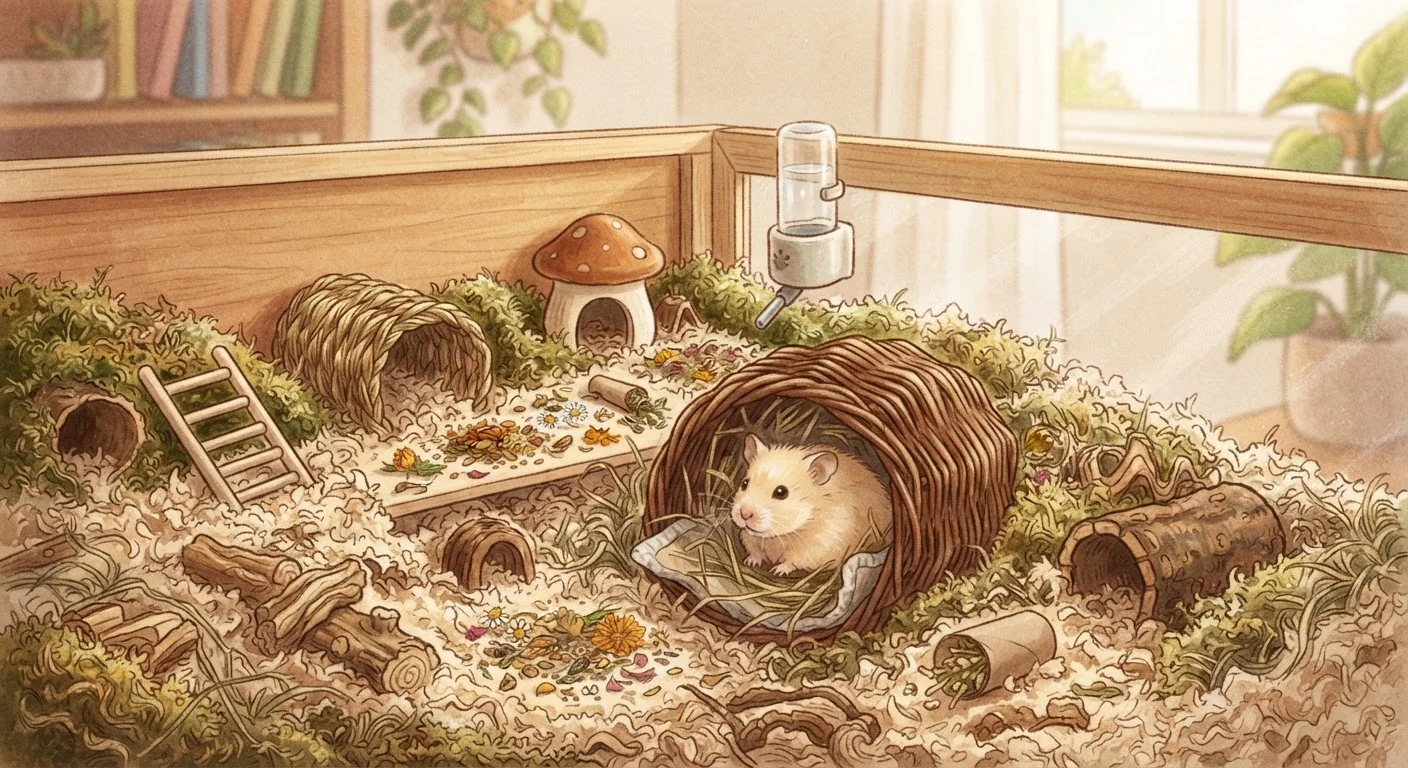
Beyond the basics of space and bedding, enrichment is one of the most overlooked elements of a healthy small pet habitat. Boredom and chronic low-level stress are real welfare concerns - animals may appear calm while actually being understimulated or anxious. Behavioral signs like repetitive pacing, bar-chewing, or over-grooming often point to an environment that isn't meeting the animal's needs.
Species-appropriate enrichment doesn't have to be expensive. Cardboard tubes, safe wooden chews, DIY foraging boxes, and rearranged cage furniture all count. The key is variety and rotation. For more structured ideas, see our guide on building enrichment into your small pet's daily routine.
40+ sq ft
Recommended minimum indoor space for a pair of guinea pigs
The Humane Society of the United States notes that many commercially sold guinea pig cages fall far below adequate size requirements for even a single animal.
8-12 hrs
Daily active exploration time for hamsters in the wild
Research published in animal behavior literature suggests wild hamsters travel several miles nightly, a fact that underscores how critical large, enriched enclosures are.
For social species like guinea pigs, the enclosure setup also needs to account for companionship. A lone guinea pig in an otherwise perfect habitat is still missing something essential - for more on that, see why guinea pigs need a companion.
If you notice behavioral changes after adjusting your pet's housing, or if symptoms like sneezing, lethargy, or weight loss appear, don't wait. Signs your small pet may be sick can help you decide when a vet visit is warranted.
Small Pets Still Need a Vet
If your pet is showing signs of stress, respiratory issues, or unusual behavior, a housing change alone may not be enough. Small animals hide illness well and can decline quickly. Always consult a qualified exotic or small animal veterinarian - this article provides general educational information, not medical advice.