

Key Takeaways
- Most price-match policies exclude marketplace sellers, membership clubs, and limited-time flash sales.
- You need documented proof of the competitor's current in-stock price at the time of your request.
- Policies differ significantly between retailers - reading the fine print before you shop saves frustration.
- Requesting a price match in-store often has a higher success rate than doing so online.
- Knowing the exclusions upfront helps you decide whether a price match or switching stores is smarter.
What you will need
What Price Matching Actually Promises
A price-match guarantee sounds simple: if a competitor sells the same item for less, the retailer will match that price. In practice, the policy is surrounded by conditions that significantly narrow when it actually applies.
Most retailers require the competitor to be an authorized retailer selling a genuinely identical product - same brand, model number, color, and configuration. A slightly different SKU, a bundle that includes accessories, or a refurbished unit usually disqualifies the match. Third-party marketplace listings (think individual sellers on large platforms) are almost universally excluded, even if the platform itself is well-known.
Flash sales, doorbuster promotions, clearance items, and "limited quantity" offers are also routinely carved out. The logic is that those prices aren't sustainable and don't reflect a competitor's everyday pricing. Similarly, prices tied to membership programs - warehouse clubs, loyalty tiers, or subscription discounts - typically don't qualify unless the requesting customer holds that same membership.
For a broader look at how to tell whether any price is genuinely lower, see our guide to spotting a genuine deal before you buy.
When Switching Stores Is Smarter
If a competitor's price is significantly lower and their return policy is comparable, simply buying from them may save more time than negotiating a match. Price matching is most valuable when you have a strong reason to buy from a specific retailer - loyalty points, a known return process, or proximity. Otherwise, the lower price without the friction is often the better choice.
Common Exclusions Worth Knowing Before You Ask
Beyond the structural exclusions, a few specific scenarios trip up shoppers repeatedly:
- Out-of-stock items: Most policies require the competitor to have the item in stock and available for immediate purchase. A sold-out listing won't qualify.
- Different geographic markets: Some retailers only match prices from competitors operating in the same local market or within a defined radius. An online-only competitor may not count for in-store matching.
- Post-purchase windows: Many retailers offer a price-match period after purchase - commonly 7 to 30 days - but this window is often shorter than customers expect, and proof of the lower price must still be current.
- Digital vs. physical prices: A retailer's own online price may differ from its in-store price, and not all retailers will cross-match between their own channels.
These exclusions aren't accidental - they're structural features of the policy. Understanding them helps you assess realistically whether a match is possible, or whether you'd be better off simply purchasing from the lower-priced retailer directly. For a broader decision framework, the deal-finding strategies that hold up across categories article is worth reviewing.
Policies Change Without Notice
Retailers revise their price-match terms regularly, sometimes narrowing eligibility during high-demand periods like major sale events. Always read the current policy on the retailer's official site the same day you plan to make a request. Relying on a policy you read weeks ago - or read about on a third-party site - can lead to a denied request you weren't expecting.
How to Request a Price Match Effectively
Preparation is the most important factor in a successful price-match request. Follow these steps before and during the interaction.
What you will need
Read the Retailer's Policy Before You Shop
Locate the official price-match policy on the retailer's website - not a summary or third-party description. Note which competitors qualify, what item conditions apply, and any time limits. If the policy is ambiguous, call customer service and document the response.
Verify the Competing Price Independently
Go directly to the competitor's website or physical store and confirm the price is current, the item is in stock, and the listing is from the authorized retailer - not a third-party seller. Check that the model number matches exactly, including any suffixes that indicate regional variants or bundle configurations.
Document Your Evidence Clearly
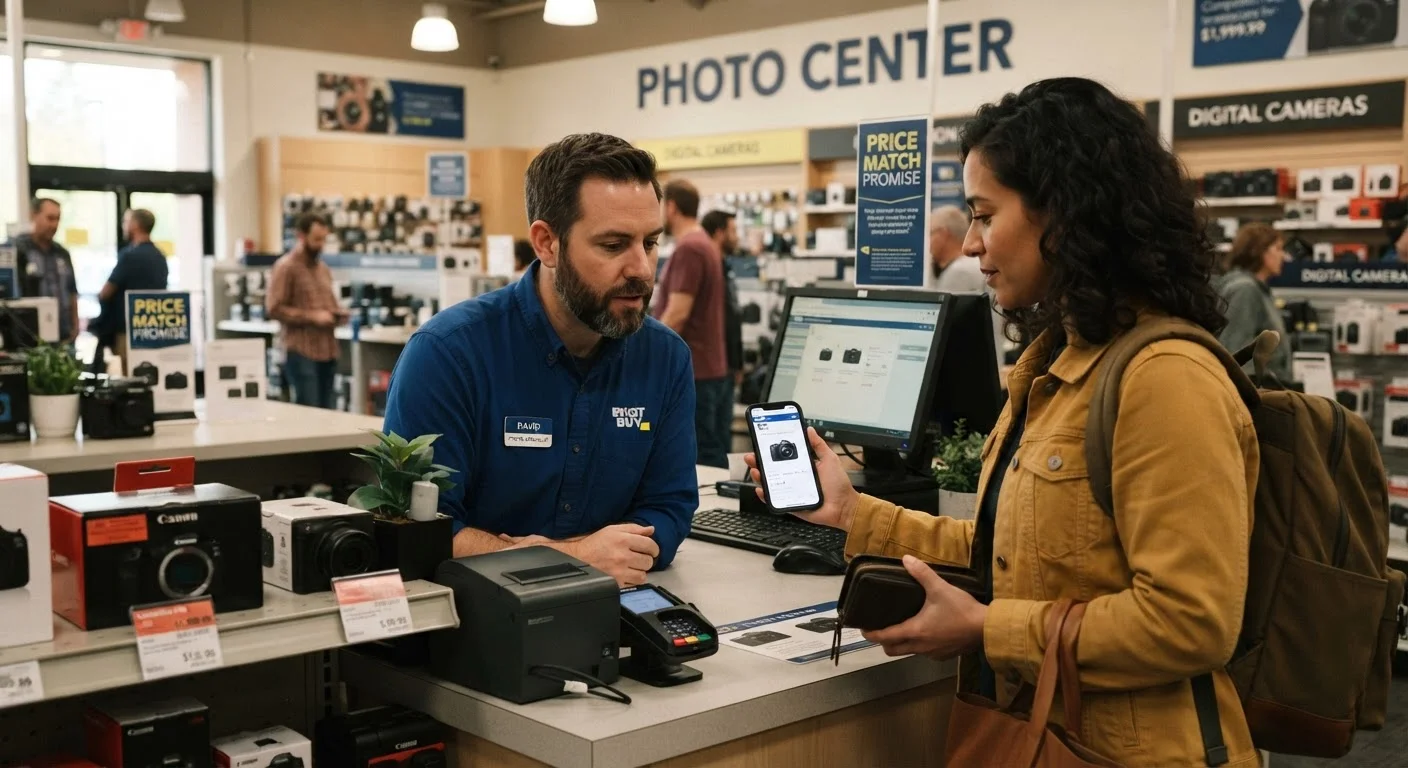
Take a screenshot that shows the competitor's name, the item name and model number, the listed price, and the current date if visible in the browser. For in-store requests, having the competitor's website pulled up live on your phone alongside the screenshot adds credibility.
Make the Request at the Right Point in the Transaction
For in-store purchases, ask at the point of sale - before the transaction is completed - or at the customer service desk. For online purchases, contact customer service via chat or phone before placing the order; some retailers won't apply a price match retroactively. Clearly state the competitor, the price, and the item, and have your documentation ready to share immediately.
Confirm the Adjustment Before You Leave
Ask for written confirmation - a revised receipt, an email, or an order confirmation showing the matched price. Check that any taxes or fees are calculated on the adjusted amount, not the original price. If something looks incorrect, raise it before the transaction closes.
Once you've completed the request, verify that the adjusted price appears correctly on your receipt or order confirmation before leaving the store or closing the browser session. If you're shopping online, use our deal-verification checklist before finalizing checkout to confirm every element of the transaction.
Price-tracking tools can help you build evidence for a match request, though they come with real limitations - our overview of what price-tracking tools actually do explains where they help and where they fall short.