

Key Takeaways
- Price-tracking tools record publicly listed prices at intervals, so they can miss short-lived price changes.
- Personalized prices, seller-specific pricing, and account-based discounts are invisible to most trackers.
- A long price history helps reveal artificial "sale" pricing - when a retailer inflates a price before discounting it.
- These tools work best as one input among several, not as a definitive verdict on whether a deal is real.
- Understanding a tracker's data gaps helps you avoid overconfidence when making purchasing decisions.
Price-Tracking Tools
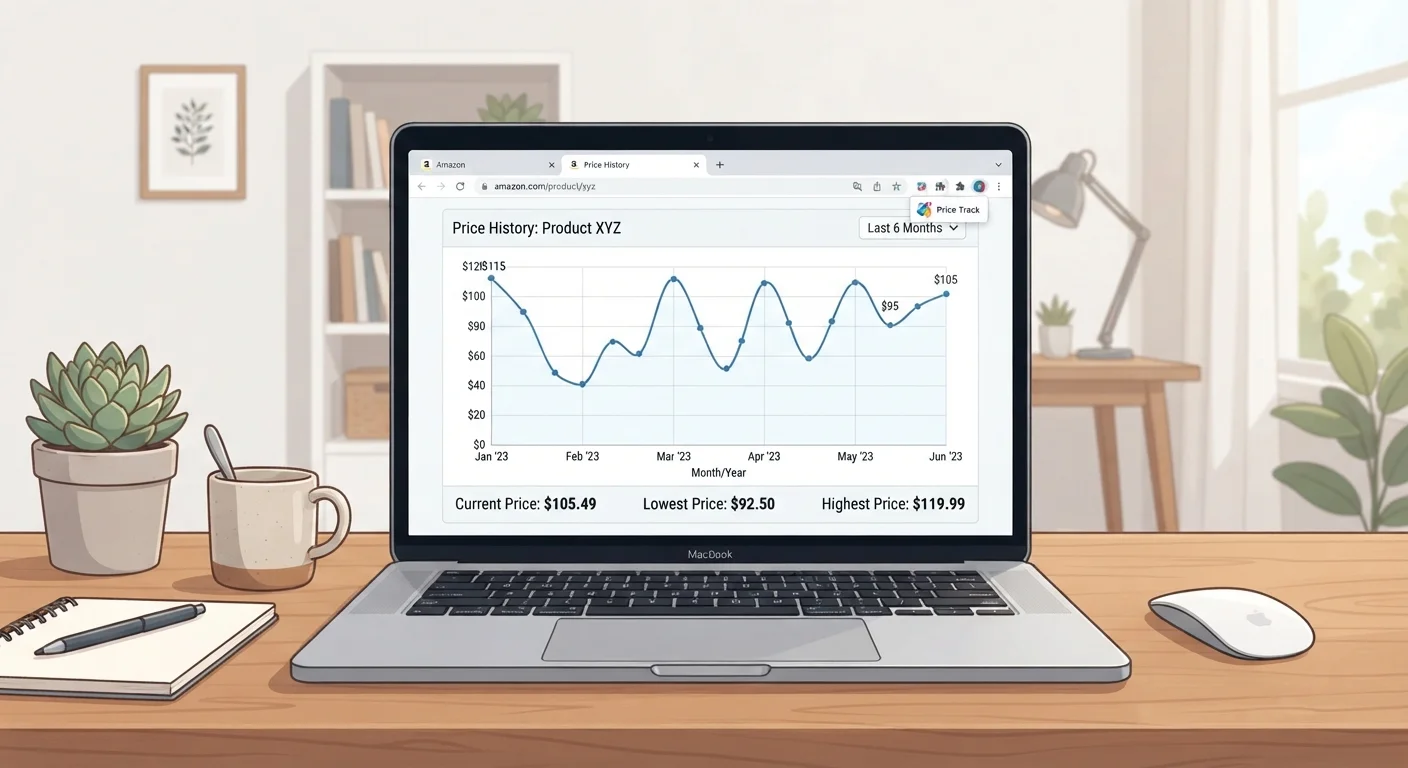
Price-tracking tools are browser extensions or websites that monitor and record the listed price of products on e-commerce platforms over time. They present this history as a chart or table so shoppers can see whether a current price is genuinely low or simply appears that way. Most work by logging publicly visible prices at regular intervals.
These tools typically rely on web scraping or retailer APIs, meaning they only capture the price at the moment they check - not every price fluctuation in between.
How Price-Tracking Tools Actually Work
When you install a price-tracking browser extension, it runs in the background and checks the listed price of products on supported retailer websites. At regular intervals - sometimes a few times a day, sometimes less - it logs that price. Over weeks and months, those data points form a chart you can consult when deciding whether a deal is worth taking.
Some tools also send alerts when a product you're watching drops below a threshold you set. Others provide an inline summary while you browse, showing a product's 30-day low or average directly on the product page.
The core value is straightforward: without a price history, a "40% off" label is almost meaningless. With one, you can see whether that discount reflects a genuine reduction or a price that was quietly inflated beforehand. This practice - raising a price before a sale to make the markdown look larger - is more common than most shoppers expect. For a deeper look at how retailers use reference prices to shape perception, see our piece on anchor pricing.
~1 in 3
Online prices change daily on major platforms
Research from pricing intelligence firms has found that a significant share of product prices on large e-commerce sites change at least once per day, underscoring how quickly tracker data can become outdated.
Up to 25%
Price difference based on user profile
Consumer advocacy studies have documented cases where the same product was shown at meaningfully different prices to different users on the same platform, a practice price trackers generally cannot detect.
The Limitations You Need to Know
Price-tracking tools are genuinely useful, but treating them as a complete picture can lead to overconfidence. Here are the most significant gaps:
- Sampling intervals miss flash sales. If a price drops and recovers within a few hours, a tracker checking once per day may never log it - or may log it at the wrong time.
- Personalized pricing is invisible. Retailers increasingly show different prices based on your account history, location, or browsing behavior. Trackers capture the public-facing price, not what you're actually seeing.
- Third-party sellers muddy the data. On marketplace platforms, multiple sellers may list the same product at different prices. A tracker may log one seller's price while you're looking at another's.
- Historical data doesn't predict future prices. A product that hit a low three months ago may never reach that price again - or may go lower next week. Trackers describe the past; they can't forecast.
- Coverage varies widely. Most tools are built around a small number of major retailers. Data for smaller or regional stores is often sparse or absent entirely.
Look Beyond the 30-Day Window
Many trackers default to showing a 30-day price history, which is often too short to reveal seasonal patterns or pre-sale inflation. Where available, switch to a 6-month or 12-month view before making a judgment call. Major sale events like back-to-school or holiday seasons often distort the shorter windows significantly.
These limitations don't make trackers useless - they make context essential. When you see a price history chart, ask what it isn't showing as much as what it is. For a practical walkthrough on validating whether a price is genuinely lower than normal, see our guide on spotting a genuine deal.
Using Price Data as Part of a Broader Strategy
Price-tracking tools are most effective when they're one input in a broader decision process rather than the final word. A few practical ways to get more from them:
- Check the full history range. A 30-day low can be misleading if the product launched 29 days ago. Look at 6-month or 12-month charts where available.
- Cross-reference across retailers. A product may be at its historical low on one platform but cheaper elsewhere at full price. Price-tracking data from a single retailer doesn't tell you that.
- Combine with price-match research. Some retailers will match a competitor's lower price. Understanding how price-matching policies work can let you use tracker data to negotiate rather than just observe.
- Factor in your actual budget. Even a genuine all-time low is only a good deal if the purchase fits your financial plan. For help keeping spending decisions connected to a broader budget, our comparison of budgeting apps vs. spreadsheets offers a useful framework.
This article is for general informational purposes only and does not constitute financial or purchasing advice tailored to your specific situation.