
Digital Wallets, Credit Cards, and Debit Cards: Choosing the Safest Way to Pay Online

Key Takeaways
- Credit cards offer the strongest federal fraud protections for online purchases under US law.
- Digital wallets add a layer of security by masking your actual card number from merchants.
- Debit cards carry higher personal financial risk because fraud losses come directly from your bank account.
- No payment method is completely fraud-proof - layering good habits with strong payment choices matters.
- Reviewing your statements regularly is one of the most effective ways to catch unauthorized charges early.
Our Verdict
Credit cards provide the broadest legal protections and the least direct financial exposure when something goes wrong online. Digital wallets that tokenize your card data are a close second, especially for repeat purchases. Debit cards are the riskiest option for e-commerce and are best reserved for in-person transactions where risks are lower.
| Best for | Recommended |
|---|---|
| Families making frequent online purchases | Credit card |
| Those who prefer not to share card details with every merchant | Digital wallet |
| Occasional shoppers on familiar, well-established sites | Digital wallet or credit card |
| Shoppers who want to avoid overspending | Prepaid card loaded to a set amount |
Why Your Payment Method Matters More Than You Think
Most families focus on finding a good price or a trustworthy seller when shopping online - but the payment method you choose determines how much protection you have if something goes wrong. Fraud, data breaches, and unauthorized charges are consistent risks in e-commerce, and each payment type responds to those events very differently.
For a broader look at how to protect yourself before you even reach the checkout screen, see our guide to online shopping safety. This article zeroes in specifically on the payment decision itself.
| Credit Card | Debit Card | Digital Wallet | |
|---|---|---|---|
| Fraud liability limit | $0-$50 (FCBA) | Up to $500+ (EFTA, time-dependent) | Depends on linked card type |
| Funds at immediate risk | No (credit extended) | Yes (checking account) | No, if linked to credit card |
| Chargeback rights | Strong, statutory | Limited, time-sensitive | Inherited from linked card |
| Card number exposed to merchant | Yes | Yes | No (tokenized) |
| Authentication options | PIN or signature | PIN or signature | Biometric + device PIN |
| Risk if account compromised | Moderate - credit affected | High - cash directly lost | Low to moderate |
Credit Cards: The Strongest Consumer Protections
Under the Fair Credit Billing Act (FCBA), credit card holders in the US are liable for a maximum of $50 in unauthorized charges - and most major card networks voluntarily offer $0 liability as a policy. Critically, fraudulent charges are placed on credit extended to you, not money already in your account. This means your household cash flow is not directly affected while a dispute is investigated.
Chargebacks - the process of reversing a charge through your card issuer - are a meaningful consumer lever. If a merchant ships the wrong item, fails to deliver, or turns out to be fraudulent, your card issuer can often recover your money in ways that other payment types cannot match.
Use a Dedicated Card for Online Shopping
Consider designating one credit card exclusively for online purchases. This keeps your primary account isolated from e-commerce risk and makes it easier to spot unauthorized charges at a glance. A lower credit limit on that card also caps your potential exposure if fraud does occur.
One practical consideration: using a credit card responsibly requires paying the balance in full each month to avoid interest. For families managing debt, this trade-off is worth thinking through carefully. Our debt and credit hub covers strategies for keeping credit use in check.
Debit Cards: Convenient but Riskier Online
Debit cards draw directly from your checking account, which is their key weakness in fraud scenarios. Under the Electronic Fund Transfer Act (EFTA), your liability depends on how quickly you report the problem. If you report within two business days, you're capped at $50 in losses. Wait up to 60 days after a statement is sent, and liability rises to $500. Beyond 60 days, you could lose everything taken from the account.
Even when a bank investigates and eventually returns funds, your money is inaccessible during that window - meaning rent, groceries, and bills could be disrupted. For this reason, financial educators commonly recommend limiting debit card use to ATM withdrawals or in-person purchases rather than online transactions.
Don't Use a Debit Card on Unfamiliar Sites
If you're shopping on a site you haven't used before or can't fully verify, avoid entering your debit card number. A fraudulent charge on a debit card can freeze the cash your household needs for immediate expenses while the bank investigates - a disruption that credit card fraud typically does not cause. Stick to a credit card or digital wallet on any site that isn't well-established.
Digital Wallets: Security Through Tokenization
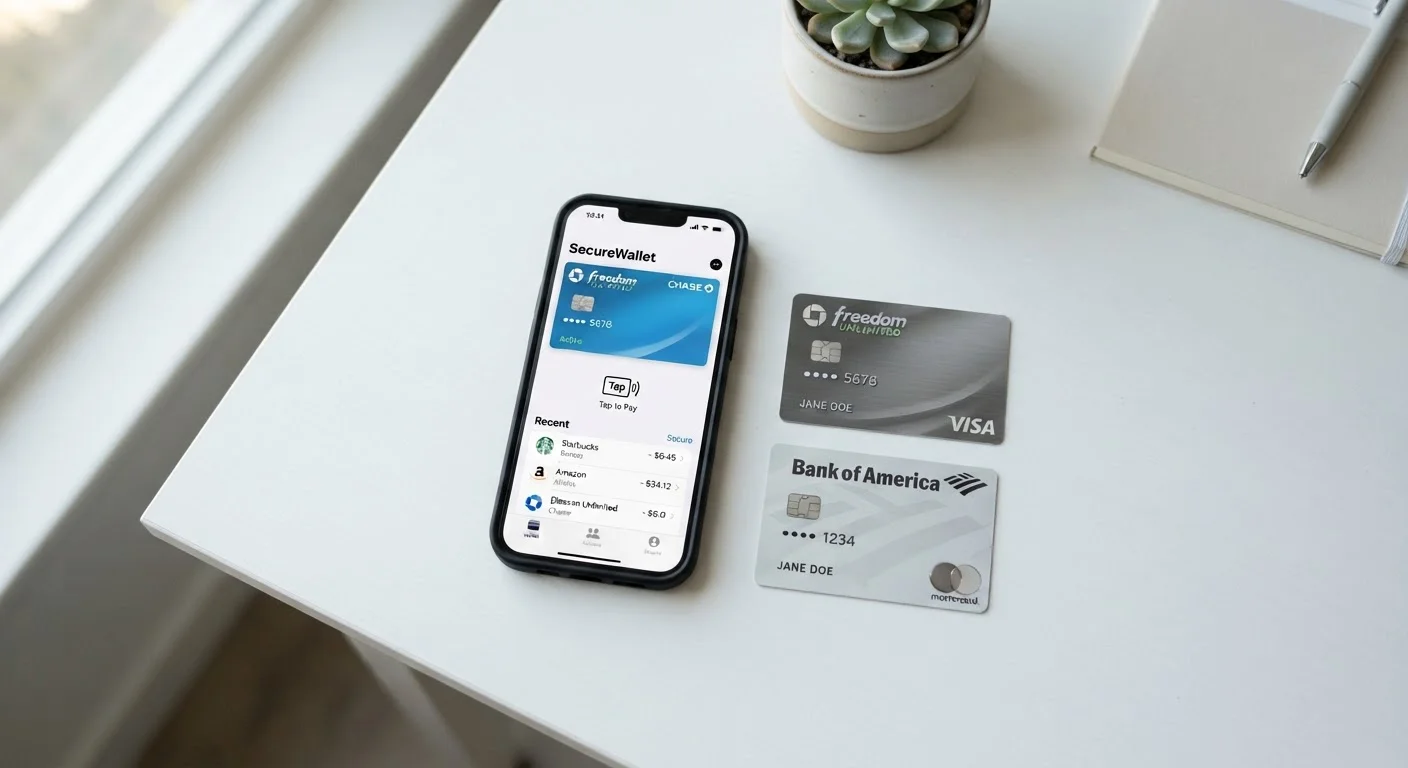
Digital wallets - apps that store payment credentials on your device - use a technology called tokenization. When you pay, the merchant receives a single-use token rather than your actual card number. Even if a merchant's database is breached, your real account details are not exposed.
The underlying protection still depends on the card linked to the wallet. A wallet backed by a credit card carries credit card-level FCBA protections. A wallet backed by a debit card carries EFTA-level protections. Choosing what you link matters as much as choosing the wallet itself.
Biometric authentication - fingerprint or face recognition - adds another barrier that makes it harder for someone who steals your phone to complete a purchase. That said, if your device is compromised or your wallet account credentials are phished, that security layer can be bypassed. Pairing wallet use with strong, unique passwords and two-factor authentication closes most of that gap.
Before you enter any payment information, it also pays to confirm you're on a legitimate site. Our article on spotting fake online stores explains the warning signs to check first.
Practical Steps to Pay More Safely
Regardless of which method you choose, consistent habits significantly reduce your exposure. A few evidence-based practices:
- Review statements weekly, not just monthly. Early detection limits losses and simplifies dispute timelines.
- Use virtual card numbers when your card issuer offers them - these are single-use or merchant-specific numbers tied to your real account but useless if stolen.
- Avoid saving payment details on merchant sites you use infrequently. Our comparison of guest checkout versus account creation explains the data trade-offs involved.
- Enable transaction alerts on all accounts so unauthorized charges surface immediately.
- Never pay via wire transfer, gift cards, or cryptocurrency for retail purchases - these offer essentially no fraud recourse.
For a full pre-purchase checklist you can run through in under a minute, see our pre-purchase checklist. And if you want to build these practices into lasting habits, our article on building safer online shopping habits offers a long-term framework for families.
This article provides general financial information for educational purposes only and does not constitute personalized financial or legal advice. Consult a qualified financial professional for guidance specific to your situation.