

Key Takeaways
- Credit counseling helps you repay debt in full through a structured plan, usually preserving your credit standing.
- Debt settlement involves negotiating to pay less than you owe, but typically causes serious credit damage.
- Nonprofit credit counseling agencies are generally safer and more transparent than for-profit debt settlement companies.
- Forgiven debt in a settlement may be treated as taxable income by the IRS - a cost many families overlook.
- Neither approach is universally right; your debt level, income stability, and credit goals should guide the choice.
Our Verdict
Credit counseling is a lower-risk path for households with steady income who want to repay what they owe and protect their credit over time. Debt settlement may reduce the total amount owed, but it carries significant credit, tax, and legal risks that make it a last resort rather than a first step. Always consult a licensed financial professional before committing to either path.
| Best for | Recommended |
|---|---|
| Families with steady income struggling with high-interest debt | Credit Counseling |
| Those facing severe financial hardship who cannot repay full balances | Debt Settlement (with caution) |
| Anyone prioritizing credit score preservation | Credit Counseling |
| Households already considering bankruptcy as an alternative | Consult a licensed attorney or financial adviser first |
Why These Two Options Get Confused
When debt feels overwhelming, it's easy to reach for any solution that promises relief. Credit counseling and debt settlement both market themselves as answers to debt problems, which is why they're often lumped together. In practice, they operate on fundamentally different principles and carry very different consequences.
If you're new to how debt and credit interact, the foundational overview of debt and credit is a useful starting point before weighing these options. And if you're navigating a job loss, health crisis, or other major life event that's driving the debt problem, managing debt through major life changes addresses how financial stress intersects with those transitions.
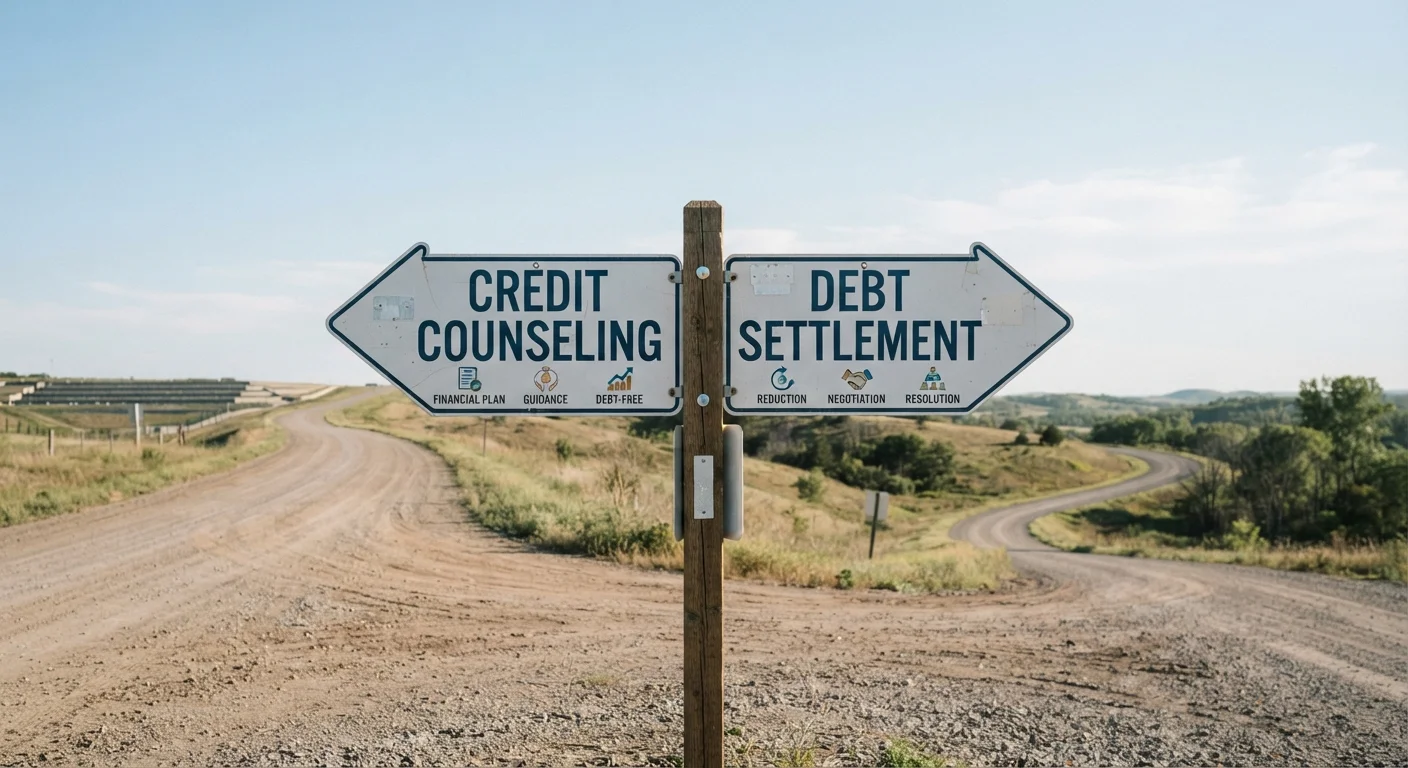
The core distinction: credit counseling helps you repay what you owe under better terms, while debt settlement attempts to reduce what you owe by negotiating with creditors. That difference shapes everything - fees, credit impact, tax consequences, and risk.
How Credit Counseling Works
Nonprofit credit counseling agencies - many affiliated with the National Foundation for Credit Counseling (NFCC) - offer budget reviews, financial education, and, when appropriate, a Debt Management Plan (DMP). Under a DMP, the agency negotiates reduced interest rates with your creditors. You make one monthly payment to the agency, which distributes funds to each creditor on your behalf.
Key characteristics of credit counseling:
- You repay the full principal - no debt is forgiven.
- Creditors often agree to waive late fees and reduce interest rates, sometimes significantly.
- Monthly fees are modest, typically $25-$50 through nonprofit agencies.
- Plans generally run three to five years.
- Your credit accounts enrolled in the DMP are usually closed, which can affect your credit mix and utilization - but consistent on-time payments tend to improve credit health over time.
Verify Your Credit Counselor's Credentials
Legitimate nonprofit credit counselors are required to provide a free initial consultation and disclose all fees upfront. Look for agencies accredited by the NFCC or the Financial Counseling Association of America (FCAA). If an agency pressures you to enroll immediately or charges large upfront fees before any services are delivered, treat that as a serious red flag.
Legitimate nonprofit credit counselors are required to provide a free initial consultation and disclose all fees upfront. If an agency pressures you to enroll immediately or charges large upfront fees, treat that as a red flag.
How Debt Settlement Works
Debt settlement companies - almost all of which are for-profit - negotiate with creditors to accept a lump-sum payment that is less than the full balance owed. The typical process involves you stopping payments to creditors and instead depositing money into a dedicated account. Once enough has accumulated, the company contacts creditors to negotiate.
Key characteristics of debt settlement:
- You may pay less than the full balance - settlements of 40-60 cents on the dollar are sometimes reported, though outcomes vary widely and are not guaranteed.
- Stopping payments causes serious credit damage: missed payments, charge-offs, and collection accounts can all appear on your report.
- Fees for settlement companies are often 15-25% of the enrolled debt amount.
- The IRS generally treats forgiven debt as taxable income - a cost many families don't anticipate.
- Creditors are not required to negotiate, and some may pursue lawsuits or wage garnishment instead.
Debt Settlement Carries Serious Risks
The Consumer Financial Protection Bureau (CFPB) has consistently warned consumers about risks associated with for-profit debt settlement companies, including high fees, potential creditor lawsuits, and no guarantee of results. Stopping payments to creditors - a common requirement of settlement programs - will damage your credit significantly. Research any company thoroughly and verify its standing with your state attorney general's office before signing any agreement.
The Consumer Financial Protection Bureau (CFPB) has consistently warned consumers about risks associated with for-profit debt settlement companies, including high fees, potential lawsuits from creditors, and no guarantee of results. Research any company thoroughly and verify its standing with your state attorney general's office before signing anything.
Side-by-Side Comparison
The table below summarizes how the two approaches differ across the factors that matter most to most households.
| Credit Counseling | Debt Settlement | |
|---|---|---|
| Amount repaid | Full principal owed | Less than full balance (not guaranteed) |
| Credit score impact | Minimal to positive over time | Significant negative impact |
| Typical fees | $25-$50/month (nonprofit) | 15-25% of enrolled debt |
| Tax consequences | None | Forgiven debt may be taxable income |
| Creditor participation | Generally cooperative | Not guaranteed; lawsuits possible |
| Who it suits best | Steady income, credit-conscious households | Severe hardship, limited alternatives |
| Primary providers | Nonprofit agencies (e.g., NFCC-affiliated) | For-profit companies |
It's also worth understanding how these options relate to alternatives. Debt consolidation, for instance, works differently from both - the full explanation of what debt consolidation does and doesn't do clarifies where it fits. If you're managing balances across multiple accounts on your own, the avalanche and snowball payoff strategies may offer a self-directed path worth exploring first.
Choosing the Right Path for Your Situation
Neither option is right for every household. Here's a practical way to think through the choice:
- Consider credit counseling if:
- You have reliable income but are struggling with high interest rates; you want to protect your credit; you can commit to a multi-year repayment plan; you owe primarily to credit card companies willing to work with a DMP.
- Consider exploring debt settlement only if:
- You are in severe financial hardship with no realistic ability to repay full balances; you've already exhausted other options; you understand and accept the credit damage and potential tax bill; you've consulted a qualified financial counselor or attorney about alternatives including bankruptcy.
Whatever path you consider, get your credit reports first. If errors are dragging your score down, the process for disputing credit report errors is straightforward and costs nothing.
This article is for general informational and educational purposes only and does not constitute personalized financial, legal, or tax advice. Consult a licensed financial adviser, credit counselor, or attorney before making decisions about your specific debt situation.