

Key Takeaways
- Your credit score is calculated from five factors, not one single behavior.
- Payment history carries the most weight, accounting for roughly 35% of a FICO Score.
- Credit utilization - how much of your available credit you use - is the second most important factor.
- Checking your own credit score does not hurt it; only hard inquiries from lenders can cause a small, temporary dip.
- Improving your score is possible at any income level with consistent habits over time.
- A higher score typically means access to lower interest rates on loans and credit cards.
Credit Score
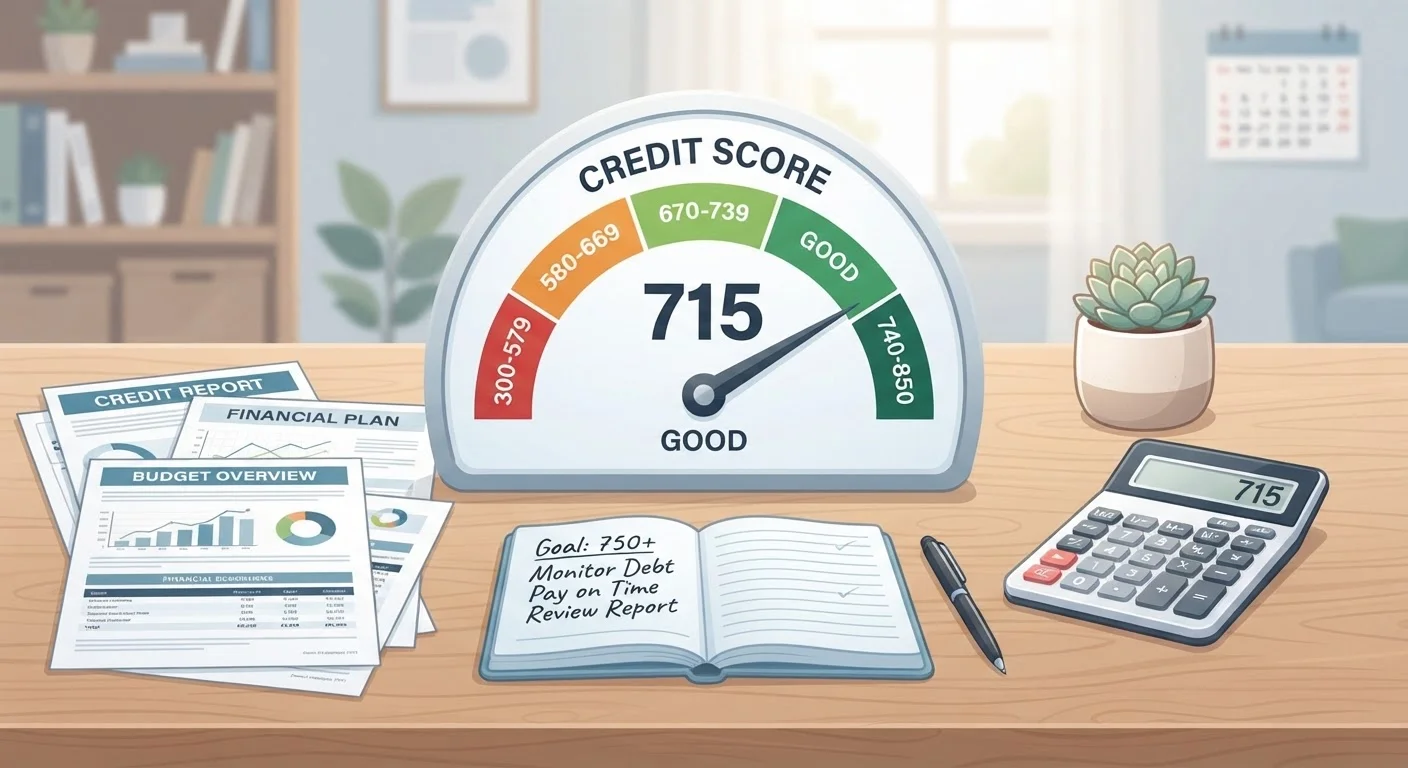
A credit score is a three-digit number, typically ranging from 300 to 850, that summarizes how reliably you've managed borrowed money over time. Lenders use it as a quick snapshot of credit risk - essentially, how likely you are to repay a new debt on time. The higher the number, the lower the perceived risk.
The most widely used scoring model in the US is the FICO Score, though VantageScore is also common. Both use similar underlying data from your credit reports but may weigh factors slightly differently.
Why a Three-Digit Number Has So Much Power
When you apply for a mortgage, car loan, or even an apartment lease, one of the first things most lenders look at is your credit score. It influences whether you're approved and, if you are, what interest rate you'll pay. A difference of 50 or 100 points on that scale can mean thousands of dollars more - or less - paid over the life of a loan.
Understanding how that number is calculated is the first step toward influencing it. For a broader foundation on how debt and credit interact, see our complete starting point for families new to debt and credit.
~35%
Weight of payment history in FICO Score
According to FICO's publicly published score factor breakdown, payment history is the single largest contributor to your credit score.
300-850
Standard FICO Score range
FICO Scores fall on a 300-to-850 scale; most lenders consider scores of 670 and above to be in the 'good' tier or better.
3
Major US credit bureaus
Equifax, Experian, and TransUnion each maintain separate credit files, and your score may vary slightly across all three.
The Five Factors That Build Your Score
Under the FICO model - the most common scoring system used by US lenders - your credit score is calculated from five specific factors. Each carries a different weight.
1. Payment History (approximately 35%)
This is the single biggest piece. It tracks whether you've paid your bills on time across all credit accounts - credit cards, mortgages, auto loans, student loans, and more. Even one late payment can cause a noticeable drop, and the effect is larger the more recent the missed payment.
2. Credit Utilization (approximately 30%)
This measures how much of your available revolving credit you're currently using. If you have a $10,000 credit limit and carry a $4,000 balance, your utilization is 40%. Most financial guidance suggests keeping this ratio below 30%, though lower is generally better for your score.
3. Length of Credit History (approximately 15%)
Older accounts help. This factor considers the age of your oldest account, your newest account, and the average age of all accounts. Closing old cards you rarely use can actually shorten your average history and nudge your score downward.
4. Credit Mix (approximately 10%)
Lenders like to see that you can handle different types of credit responsibly - revolving credit like cards alongside installment loans like a car payment. You don't need every type, but a healthy variety can work in your favor.
5. New Credit Inquiries (approximately 10%)
Each time you apply for new credit, a hard inquiry is recorded. Multiple applications in a short window can signal financial stress to lenders and cause a small, temporary score dip. Rate shopping for a mortgage or auto loan within a focused window (typically 14-45 days) is usually counted as a single inquiry under most scoring models.
What Your Score Doesn't Measure
Your credit score says nothing about your income, your savings, your job stability, or your net worth. A household earning $150,000 a year with poor payment habits can have a lower score than someone earning $40,000 who pays every bill on time. This is why lenders often look beyond the score itself.
One of the most important additional metrics is your debt-to-income ratio (DTI) - the share of your gross monthly income that goes toward debt payments. Lenders, especially mortgage lenders, weigh this heavily. Learn more about how it works in our article on the debt-to-income ratio and why lenders watch it closely.
Check Your Credit Reports Regularly
You're entitled to free credit reports from all three major bureaus through AnnualCreditReport.com, the federally authorized source. Reviewing them helps you catch errors or fraudulent accounts that could be hurting your score without your knowledge. If you find an error, you have the right to dispute it with the bureau directly.
This article provides general financial education and is not personalized financial advice. For guidance specific to your situation, consider speaking with a licensed financial professional or nonprofit credit counselor.