

Key Takeaways
- Secured debt is tied to a specific asset; missing payments puts that asset at direct risk of repossession or foreclosure.
- Unsecured debt carries no collateral, so lenders rely on your credit history and income to approve and price the loan.
- Interest rates on secured debt are generally lower because lenders have a concrete fallback if you default.
- When money is tight, secured debts typically demand priority attention to protect your home or vehicle.
- Understanding the difference helps you make smarter decisions about borrowing, budgeting, and managing a debt crisis.
Option A
Secured Debt
Debt backed by an asset the lender can claim.
Best for: Borrowers who need larger loan amounts or lower interest rates and are willing to pledge an asset as collateral.
Option B
Unsecured Debt
Debt backed only by the borrower's promise to repay.
Best for: Borrowers seeking flexible credit without pledging property, accepting that rates may be higher in exchange.
If you need to borrow a large sum at the lowest possible interest rate
Secured Debt
Pledging collateral gives lenders confidence, which generally translates into lower rates and longer repayment terms - reducing your monthly payment burden.
If you want to borrow without putting your home or car at direct risk
Unsecured Debt
No collateral means the lender cannot seize a specific asset if you fall behind, though they can pursue legal collection and your credit score will suffer.
If you're deciding which debts to prioritize during a financial hardship
Secured Debt
Defaulting on secured debt can trigger rapid loss of your home or vehicle, making those payments the most urgent to protect.
If you're evaluating debt consolidation options
Secured Debt
A secured consolidation loan (such as a home equity loan) may offer a lower rate, but it converts previously unsecured balances into debt backed by your home - a trade-off worth understanding carefully.
The Core Difference: Collateral
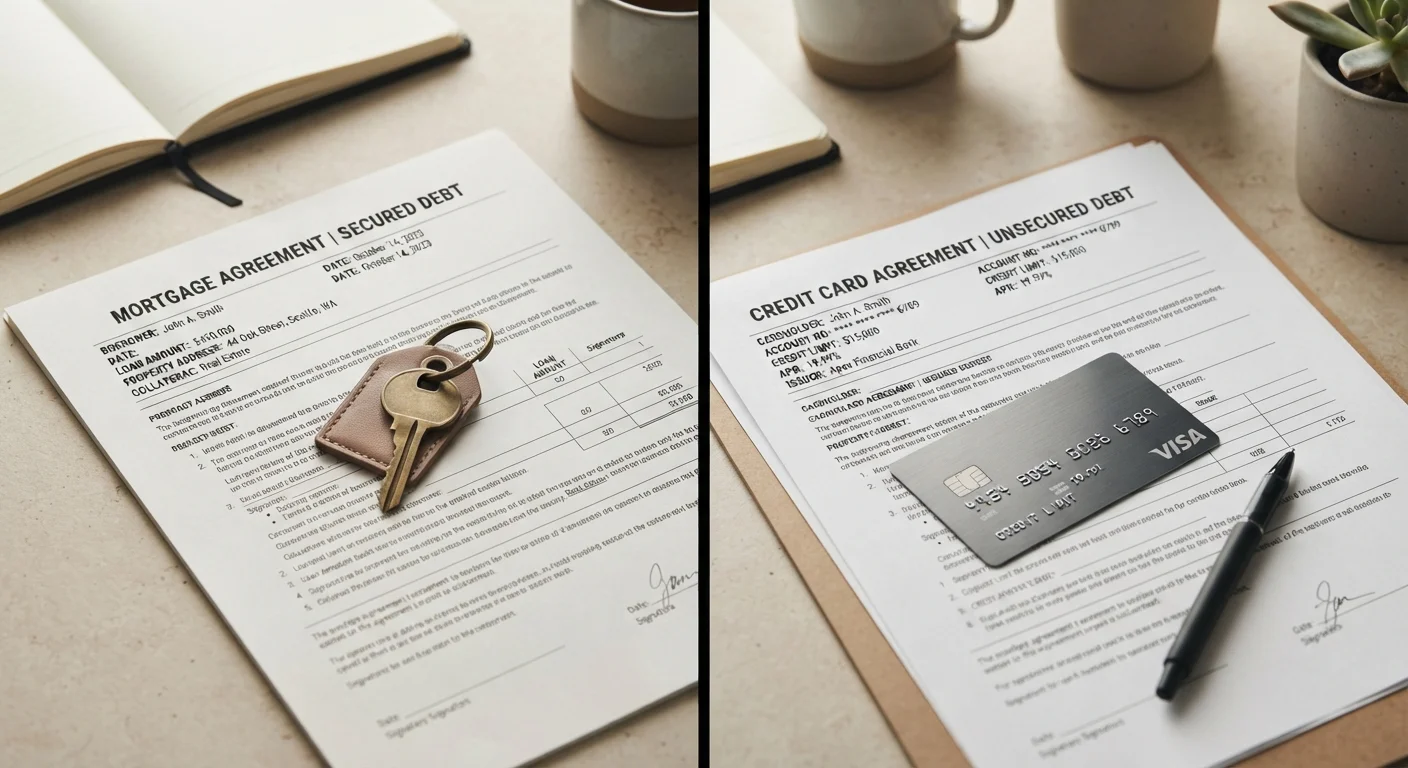
At its most basic, the distinction between secured and unsecured debt comes down to one word: collateral. Collateral is an asset - a home, a car, a savings account - that you pledge to a lender as a guarantee of repayment. If you stop paying, the lender has a legal right to take that asset.
Secured debt is always attached to a specific piece of collateral. A mortgage is secured by your home. An auto loan is secured by your vehicle. If payments stop, the lender can foreclose or repossess. Unsecured debt has no such attachment. Credit cards, personal loans, medical bills, and student loans (in most cases) are unsecured - the lender extended credit based on your creditworthiness, not a pledge of property.
This single structural difference creates a cascade of practical consequences that affect your interest rate, your options in a crisis, and how lenders treat you when you apply. For a broader grounding in how debt and credit interact, see our complete starting point for families new to debt and credit.
| Criterion | Secured Debt | Unsecured Debt |
|---|---|---|
| Collateral required | Yes - specific asset pledged | No - based on creditworthiness |
| Common examples | Mortgage, auto loan, HELOC | Credit cards, personal loans, medical bills |
| Typical interest rate | Generally lower | Generally higher |
| Lender's remedy if you default | Repossession or foreclosure | Collection, credit reporting, lawsuit |
| Speed of consequence after default | Relatively fast (months) | Slower (collection process, courts) |
| Priority during financial hardship | High - asset loss is immediate risk | Lower - no direct asset seizure |
| Loan amounts available | Often larger | Often smaller or credit-limited |
How Each Type Affects Your Interest Rate
Lenders price risk. When a lender holds collateral, their risk of total loss is lower - they can recover value by seizing and selling the asset. That reduced risk is passed to borrowers in the form of lower interest rates on secured debt.
Unsecured lenders have no such safety net. If you default, they must pursue collection through phone calls, credit reporting, and potentially a lawsuit and wage garnishment - a slower, costlier process with no guaranteed recovery. To compensate, they charge higher rates. A home equity loan might carry a fraction of the interest rate of a credit card carrying the same balance.
~$12T
US mortgage debt outstanding
The Federal Reserve reports total US household mortgage debt consistently exceeds $12 trillion, making it by far the largest category of secured household debt.
~$1.1T
US revolving credit (unsecured) outstanding
Federal Reserve data show revolving credit balances - predominantly credit cards - regularly exceed $1 trillion across US households.
15-30%
Typical credit card APR range
Credit card interest rates in the US have generally ranged from 15% to over 30% APR for most cardholders, far above typical secured loan rates.
This rate gap is why debt consolidation using a secured instrument - like a home equity loan - can look attractive on paper. But it also means you are converting debt that previously had no claim on your house into debt that does. Our article on what debt consolidation actually does walks through that trade-off in detail.
What Happens When You Can't Pay
Financial hardship reveals the stakes of this distinction most sharply. If you miss mortgage or auto loan payments, the consequences are fast and tangible: foreclosure proceedings or repossession can begin within months. That urgency is why most financial educators advise prioritizing secured debts first during a cash crunch - missing a credit card payment is painful, but missing three mortgage payments can cost you your home.
Unsecured creditors have fewer immediate tools. They can report the delinquency to credit bureaus (damaging your credit score), sell the debt to a collection agency, or eventually sue for a court judgment. A judgment can lead to wage garnishment or bank levies, but this process typically takes longer than the timeline for secured asset repossession.
Bankruptcy Treats These Debts Differently
In a Chapter 7 bankruptcy, many unsecured debts can be discharged (legally wiped out), while secured debts are generally not dischargeable without surrendering the collateral. Chapter 13 allows a repayment plan that may let you keep secured assets. Bankruptcy law is complex and situation-specific - always consult a licensed bankruptcy attorney before making any decisions.
Understanding this priority order is essential when building any debt payoff plan. If you're exploring structured payoff strategies, our comparison of the debt avalanche vs. debt snowball can help you decide how to sequence payments once secured obligations are covered. You may also want to understand your debt-to-income ratio - the figure lenders scrutinize when you apply for any new credit.
For families navigating a major disruption like job loss or a health crisis, the secured-vs-unsecured framework becomes even more critical. Our guide on managing debt through major life changes addresses how to triage debt when income suddenly drops.
This article is for general informational and educational purposes only and does not constitute personalized financial, legal, or tax advice. Consult a qualified financial professional for guidance specific to your situation.