

Key Takeaways
- Sinking funds cover predictable, irregular expenses; emergency funds cover true financial surprises.
- Both accounts work best when kept separate from your everyday checking account.
- You can — and should — build both funds simultaneously, even on a tight budget.
- Raiding your emergency fund for planned costs depletes the cushion you actually need in a crisis.
- A fully funded emergency fund typically holds three to six months of essential household expenses.
Option A
Sinking Fund
The planned savings account for expenses you can see coming.
Best for: Families who want to avoid budget-busting surprises on predictable, irregular costs like car registration, holiday gifts, or home repairs.
Option B
Emergency Fund
The financial safety net for life's true unknowns.
Best for: Any household that wants a dedicated buffer against sudden income loss, unexpected medical bills, or urgent repairs that can't be planned in advance.
If you're tired of irregular expenses derailing your monthly budget
Sinking Fund
Setting aside a fixed monthly amount toward known future costs — like annual insurance premiums or back-to-school shopping — prevents these from landing as emergencies.
If your household has no financial buffer against a job loss or major unexpected expense
Emergency Fund
An emergency fund should be your first priority before you tackle irregular planned costs, since unexpected income disruption is the most destabilizing financial event a family can face.
If you already have a starter emergency fund and want to stop going into debt for regular big-ticket costs
Sinking Fund
Once your emergency cushion is in place, sinking funds are the most effective way to eliminate reliance on credit cards for expenses you know will come around.
If you want a complete, resilient household savings strategy
Both
Neither account replaces the other. Running both in parallel — even with small contributions — creates a layered financial defense that handles planned and unplanned costs without stress.
What Each Account Actually Does
The terms are often used interchangeably, but they serve completely different functions. Confusing the two is one of the most common reasons families find themselves short on cash when something goes wrong.
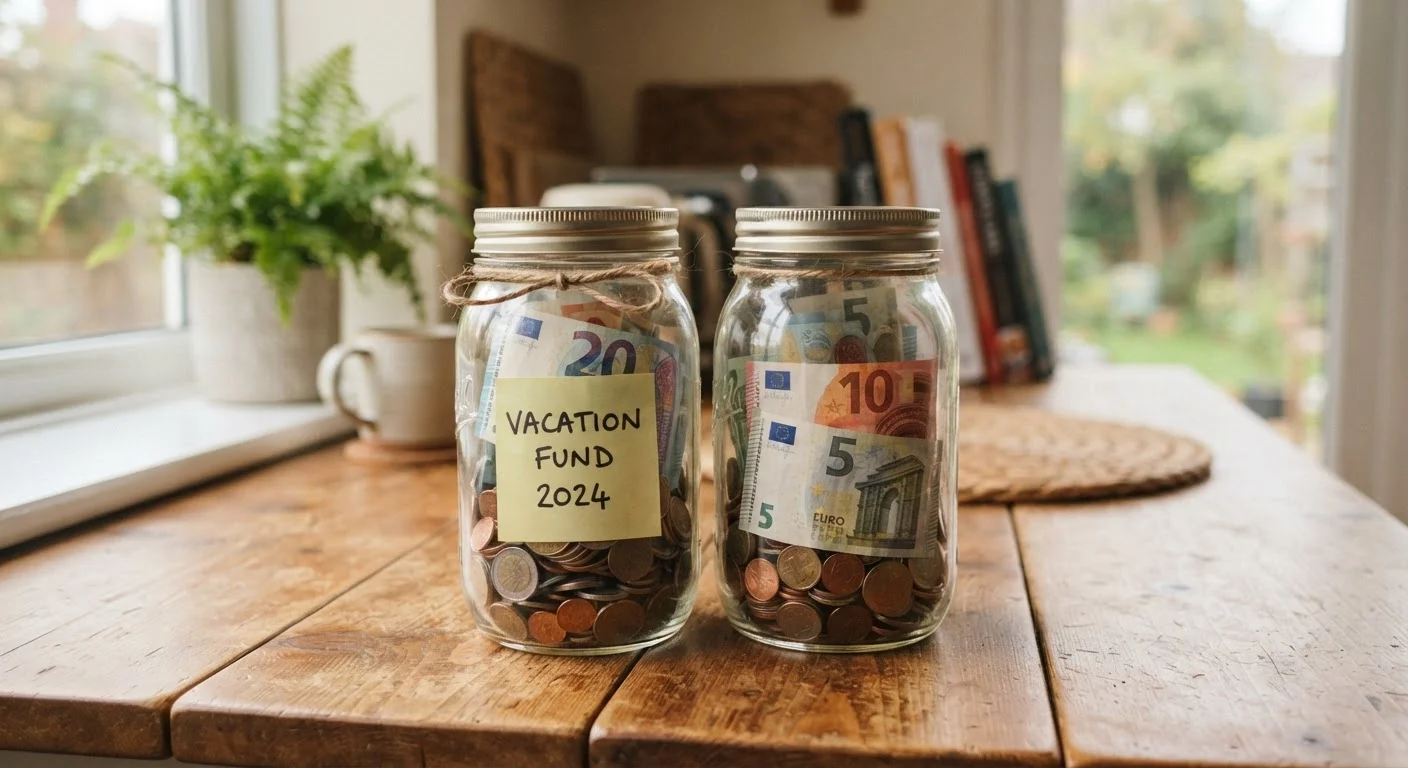
A sinking fund is a savings account — or a labelled portion of one — where you set aside money over time for a specific, anticipated expense. Think of it as pre-paying yourself before a bill arrives. You know your car registration costs $200 each year, so you set aside $17 a month and it's covered when due. The expense is not a surprise; the sinking fund simply smooths it into your monthly cash flow. For a deeper look at how these work in practice, see our guide to setting up sinking funds.
An emergency fund exists for the genuinely unforeseeable: a sudden job loss, a medical emergency, an urgent home repair you had no way to predict. It is not a spending account — it is insurance against financial catastrophe. To understand exactly what qualifies, learn what an emergency fund actually needs to cover.
The core distinction: sinking funds are planned and intentional; emergency funds are protective and reactive.
How They Compare Side by Side
Seeing the two accounts in direct contrast makes their separate roles much clearer.
| Criterion | Sinking Fund | Emergency Fund |
|---|---|---|
| Purpose | Planned, predictable expenses | Unforeseeable financial emergencies |
| Examples of use | Car registration, holiday gifts, appliance replacement | Job loss, sudden medical bill, urgent home repair |
| Funding approach | Fixed monthly amount toward a specific goal | Build to 3–6 months of essential expenses |
| How often accessed | Regularly, when the planned expense arrives | Rarely — only in a genuine crisis |
| Number of accounts needed | One per spending category (or labelled sub-accounts) | One dedicated account |
| Replaces the other? | No — serves a different purpose | No — serves a different purpose |
One practical note: both accounts benefit from being held in a high-yield savings account separate from your checking account. Separation reduces the temptation to spend the money and makes it easier to track balances by purpose.
How Much to Keep in Each
Sizing these accounts correctly is where many families get stuck.
For your emergency fund, a widely cited target is three to six months of essential household expenses — rent or mortgage, utilities, groceries, insurance, and minimum debt payments. If your income is variable or only one person in the household earns, leaning toward six months provides a stronger buffer. Starting with a $1,000 starter fund and building from there is a reasonable approach for households on a tight budget. Realistic step-by-step strategies for building that buffer are worth reviewing if you're starting from zero.
For sinking funds, the math is straightforward: divide the total cost of each anticipated expense by the number of months until it's due. If holiday spending typically runs $600 and you're saving from January, that's $50 per month. Common sinking fund categories for US families include:
- Vehicle maintenance and registration
- Home repairs and appliances
- Medical and dental costs not covered by insurance
- Annual insurance premiums
- School supplies and extracurricular fees
- Holiday and gift spending
~40%
Americans who can't cover a $400 emergency
Federal Reserve surveys have consistently found that a large share of US adults would need to borrow or sell something to cover an unexpected $400 expense.
3–6 months
Recommended emergency fund size
Most mainstream personal finance guidance targets three to six months of essential living expenses as a baseline emergency fund for a household.
You do not need to fully fund your emergency account before starting any sinking funds. A practical approach is to split any discretionary savings — say, 70% toward your emergency fund until it hits a starter goal, and 30% toward your most urgent sinking fund category.
Avoiding the Most Common Mistake
The mistake that undermines both accounts is using your emergency fund as a sinking fund. When a car registration bill arrives and the money isn't set aside, it feels like an emergency — but it isn't. Dipping into your emergency fund for predictable costs leaves you exposed when a real crisis hits.
The fix is discipline around definitions. Before withdrawing from your emergency fund, ask one question: Could I have planned for this? If the answer is yes, it belongs in a sinking fund going forward. If the answer is genuinely no — the expense was sudden, unforeseeable, and necessary — your emergency fund is doing exactly what it was built to do.
How you budget at the broader level also matters. The two-account approach fits naturally with both zero-based and envelope budgeting frameworks. Comparing those two methods can help you find the structure that makes maintaining both accounts easiest for your household. You can also explore additional strategies through the family budgeting hub and the smart budgeting hub.
This article is for general informational purposes only and does not constitute personalised financial advice. Consult a qualified financial professional for guidance specific to your situation.