

Key Takeaways
- A true financial emergency is unexpected, necessary, and urgent — not just an inconvenient expense.
- Most financial educators suggest three to six months of essential living expenses as a target.
- Keep emergency funds in a separate, liquid account that earns some interest but isn't easy to spend impulsively.
- Even small, consistent contributions build a meaningful cushion over time.
- Planned costs like car registration or holiday gifts belong in a sinking fund, not your emergency fund.
Start here
What Counts as a Real Financial Emergency
Next
How Much Should Your Emergency Fund Hold
Then
Where to Keep the Money
Build it
How to Build It Without Wrecking Your Budget
Use it wisely
When to Use It — and When Not To
What Counts as a Real Financial Emergency
Not every unexpected bill is a financial emergency. Before you reach into that fund, run the expense through three quick tests: Was it unplanned? Is it genuinely necessary? Does it demand immediate attention?
Expenses that pass all three — a sudden job loss, an unexpected medical bill, an urgent furnace failure in winter, or a car repair that gets you to work — are what your emergency fund exists to handle.
Expenses that fail the test include holiday gifts, a sale you don't want to miss, or a predictable annual cost like car registration. Those belong in a sinking fund, not an emergency fund. Keeping that distinction clear prevents you from depleting savings on costs you could have seen coming.
Emergency fund
A dedicated pool of savings set aside exclusively to cover unexpected, necessary financial crises — not routine or planned expenses.
Essential living expenses
The minimum monthly costs your household cannot function without, typically including housing, utilities, food, insurance, and minimum debt payments.
Sinking fund
A savings account built up gradually for a specific, anticipated future expense — such as a car repair or annual insurance premium — that you know is coming.
Liquid savings
Money kept in a form you can access quickly and without penalty, such as a savings account, rather than tied up in investments or long-term accounts.
High-yield savings account
A savings account, typically at an online bank or credit union, that pays a higher interest rate than a standard savings account while keeping your funds federally insured and accessible.
How Much Should Your Emergency Fund Hold
The most widely cited guidance is three to six months of essential living expenses. Essential means only the costs your household cannot function without: housing payments, utilities, groceries, insurance premiums, and minimum debt payments. Subscriptions, dining out, and entertainment do not count.
To find your number, add those non-negotiable monthly costs and multiply by three (for a starter target) or six (for a fuller cushion). A household spending $3,000 per month on essentials should aim for $9,000 to $18,000 over time.
Where you land on that range depends on your situation. Single-income families, freelancers, or anyone in an industry with volatile employment have good reason to aim for the higher end. Two-income households with stable jobs may be comfortable at three months.
If those numbers feel out of reach right now, that's fine. Many financial educators suggest an initial milestone of $500 to $1,000 — enough to handle a common setback without turning to a credit card. See our guide to building an emergency fund on a tight budget for a step-by-step starting point.
Where to Keep the Money
An emergency fund needs to be liquid (accessible quickly), safe (not subject to market loss), and separate from your day-to-day spending account.
A dedicated savings account meets all three criteria. High-yield savings accounts, which are offered by many federally insured banks and credit unions, allow the balance to earn more interest than a standard savings account without locking the money away. Keep it distinct from your checking account to reduce the temptation to tap it for non-emergencies.
Avoid placing emergency funds in investment accounts tied to the stock market. A market downturn could cut your balance precisely when a crisis hits — the worst possible time to absorb a loss.
Name your account to protect it
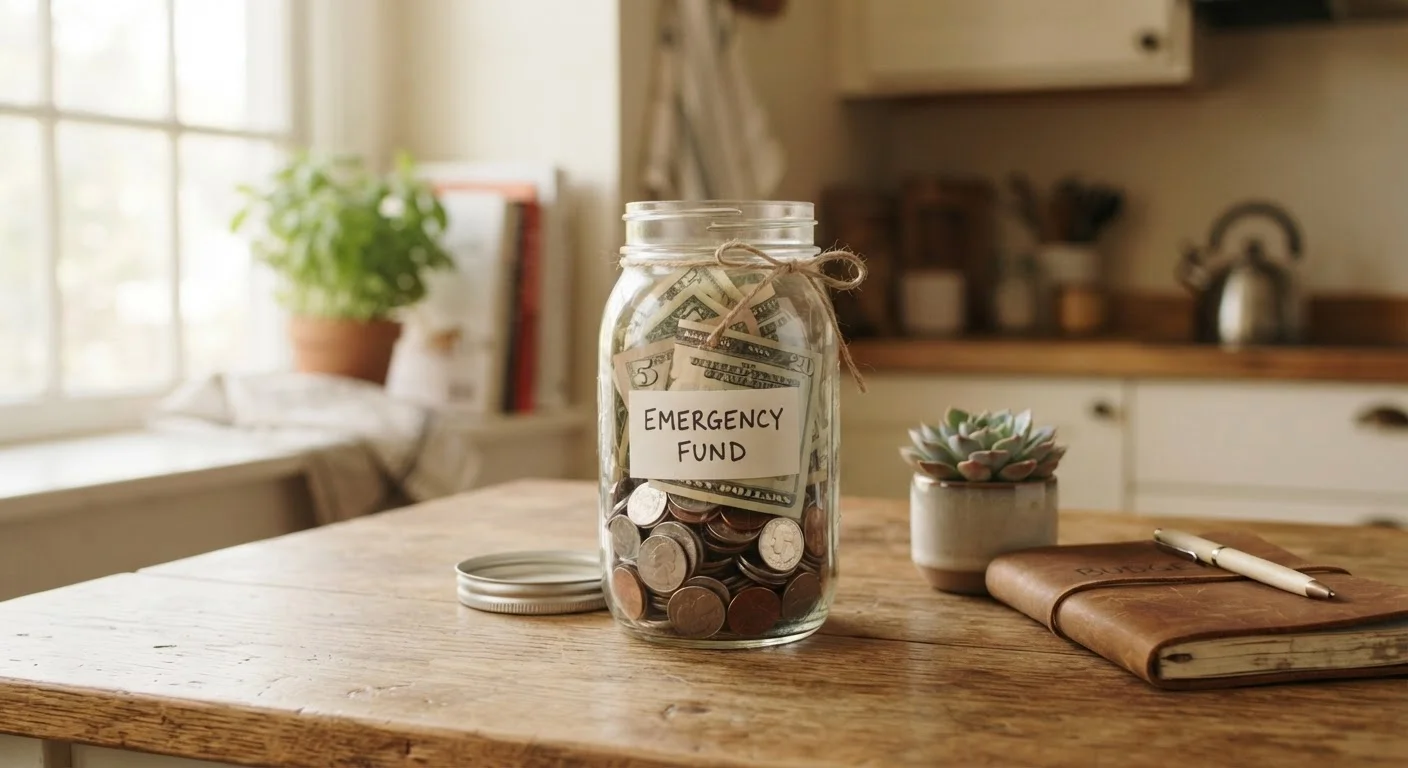
Labeling your savings account "Emergency Fund" — rather than leaving it as a generic savings account — creates a small psychological barrier that makes you think twice before withdrawing. Many banks let you rename accounts within their app or online portal. This simple step helps maintain the boundary between emergency savings and other goals.
How to Build It Without Wrecking Your Budget
Consistency beats size when you're starting out. Even $20 per paycheck adds up to over $500 in a year. A few practical approaches:
- Automate transfers. Schedule a recurring transfer to your savings account on payday, before you have a chance to spend the money elsewhere.
- Use windfalls. Direct a portion of tax refunds, work bonuses, or birthday cash to the fund rather than absorbing them into spending.
- Cut one temporary cost. A short-term reduction in a discretionary expense can accelerate early progress without requiring a permanent lifestyle change.
- Round-up savings. Some banks offer tools that round each purchase to the nearest dollar and transfer the difference to savings. Small amounts accumulate steadily.
If you're managing multiple savings goals at once, our guide on saving for multiple goals without paralysis can help you decide how to allocate each dollar.
When to Use It — and When Not To
When a genuine emergency arrives, use the fund without guilt — that's exactly what it's there for. Then treat replenishing it as your top savings priority once the crisis has passed.
The harder discipline is resisting the fund for costs that feel urgent but are not. A car repair you knew was coming, an annual insurance premium, or back-to-school shopping are all predictable expenses. When these costs keep hitting your emergency fund, it's a signal that you need a sinking fund strategy running alongside it.
An emergency fund is a last-resort buffer, not a rolling expense account. Protecting that boundary is what makes it reliable when you truly need it.
This article is for general informational purposes only and does not constitute personalized financial advice. Consult a qualified financial professional for guidance tailored to your household situation.