

Key Takeaways
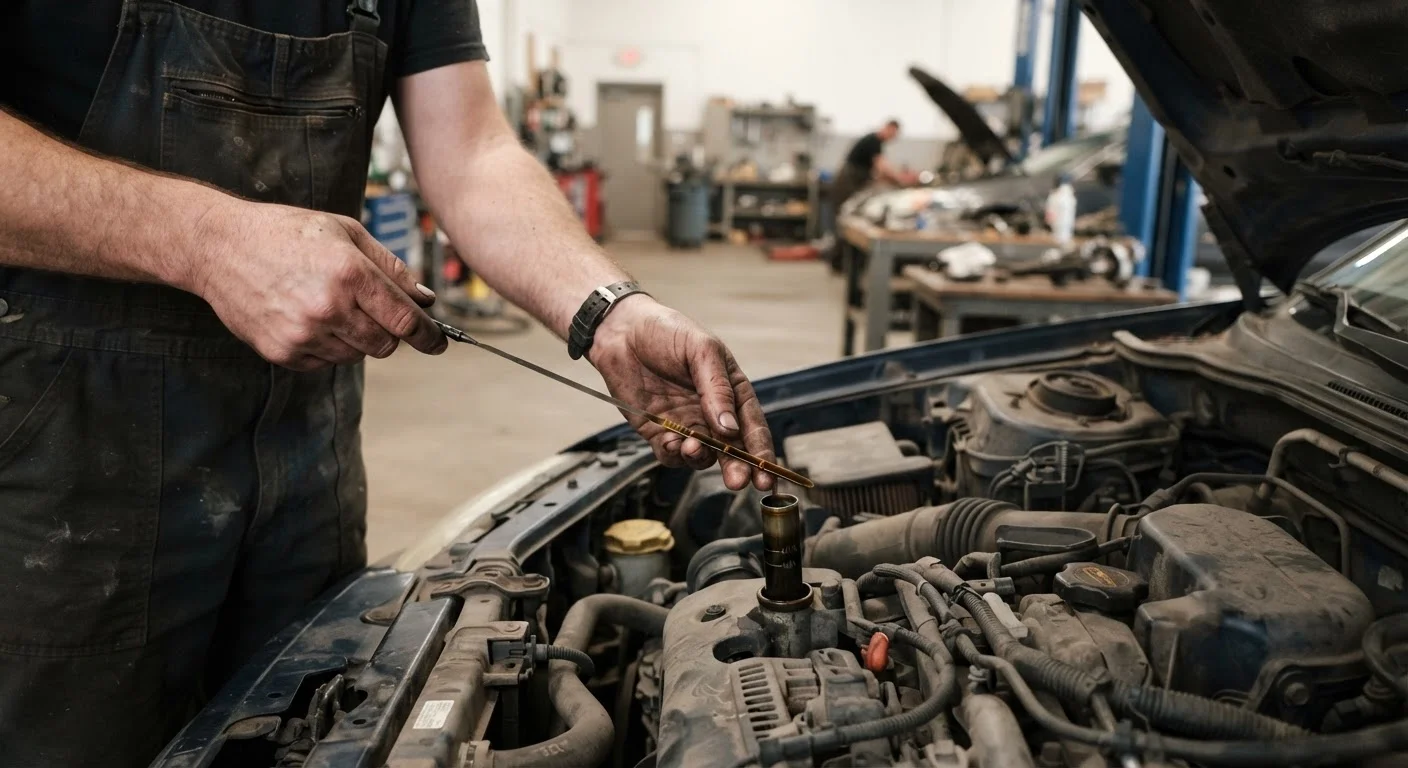
- The 3,000-mile oil change rule is outdated - most modern vehicles can go significantly longer between changes.
- Warming up your engine by idling in cold weather is unnecessary and wastes fuel with modern fuel-injected cars.
- Premium fuel only benefits engines specifically engineered to require it - it won't improve most vehicles' performance.
- Tire pressure should be set to your vehicle's door placard specification, not the maximum printed on the tire sidewall.
- Your owner's manual - not quick-lube shop recommendations - is the most reliable maintenance schedule for your car.
Why Old Maintenance Advice Keeps Costing Drivers
Car maintenance advice has a long shelf life - often longer than it deserves. Tips that made perfect sense for carbureted engines from the 1970s get passed down through generations and accepted as gospel, even though modern vehicles operate on fundamentally different technology. The result: many drivers spend money on services they don't need, skip ones that actually matter, and follow routines their cars never asked for.
This isn't about blaming mechanics or quick-lube shops. It's about understanding that the automotive landscape has shifted dramatically - and that the single most reliable source of guidance for your specific vehicle is the owner's manual sitting in your glove box. For a deeper look at how to use it effectively, see how to navigate your owner's manual's maintenance sections.
Below, we address the most persistent myths - and what the evidence actually supports.
Myth
You need to change your oil every 3,000 miles, no exceptions.
Fact
Most modern vehicles - especially those using full synthetic oil - can go 5,000 to 10,000 miles or more between oil changes, depending on the manufacturer's specification.
The 3,000-mile rule was appropriate for older engine technology and conventional motor oil formulations. Today's engines are built to tighter tolerances, and synthetic oils are engineered to maintain viscosity and protective properties far longer. Changing oil more frequently than your manufacturer recommends doesn't improve engine protection - it just costs you more money and generates unnecessary waste oil. Check your owner's manual for the actual interval your engine requires. If you're weighing oil types, what everyday drivers should know about synthetic vs. conventional oil provides a practical breakdown.
Myth
You should let your engine idle for several minutes to warm up in cold weather.
Fact
Modern fuel-injected engines reach operating temperature faster by being driven gently - prolonged idling is largely unnecessary and wastes fuel.
Idling to warm up the engine was sound advice for carbureted vehicles, which needed time to stabilize their fuel-air mixture in cold conditions. Fuel injection systems manage that process electronically and do it more effectively under light driving load. Sitting in your driveway idling for five minutes before every winter drive burns fuel, contributes to exhaust emissions, and doesn't meaningfully accelerate engine warm-up. A brief 30-second idle to allow oil to circulate, followed by gentle driving, is generally sufficient for most modern vehicles.
Myth
Premium fuel will make any car run better and last longer.
Fact
Premium fuel only provides a measurable benefit in engines specifically designed to require or recommend it. In most standard engines, it offers no performance or longevity advantage.
Premium gasoline has a higher octane rating, which helps prevent engine knock (premature ignition) in high-compression engines. If your owner's manual specifies "premium required," use it. If it says "premium recommended" or simply "regular unleaded," the higher-octane fuel typically provides no benefit that a driver would notice - and you'd be paying a meaningful premium at every fill-up for no return. Check the fuel door or manual rather than defaulting to premium out of habit. For more on related fuel costs, fuel economy terms every driver should understand can add useful context.
Myth
Inflate your tires to the pressure number printed on the sidewall of the tire.
Fact
The number on the tire sidewall is the maximum pressure the tire can hold - not the recommended operating pressure for your vehicle.
Inflating to the maximum sidewall pressure typically results in over-inflated tires, which reduces traction, creates a harsher ride, and causes uneven wear in the center of the tread. The correct inflation pressure for your vehicle is found on a sticker inside the driver's side door jamb (or in the owner's manual) and is set by the vehicle manufacturer based on weight, suspension, and handling characteristics - not by the tire manufacturer. Always use that specification, and check pressure when the tires are cold for an accurate reading.
Myth
If the check engine light comes on, you should pull over immediately - something is seriously wrong.
Fact
A steadily illuminated check engine light often indicates a non-emergency issue; a flashing light warrants more urgent attention, but either way, diagnosis is needed before assuming severity.
The check engine light is connected to your vehicle's onboard diagnostic system and can be triggered by hundreds of different fault codes - ranging from a loose gas cap to a misfiring cylinder. A steady light generally means you can continue driving and schedule a diagnostic scan soon. A flashing or blinking check engine light is a signal to reduce speed and load and get the vehicle inspected promptly, as it often indicates an active engine misfire that can damage the catalytic converter. understanding why your check engine light comes on and what to do covers common triggers in plain terms.
Myth
You should replace all four tires at once, even if only one or two are worn.
Fact
Whether you need to replace one, two, or all four tires depends on your vehicle's drivetrain and the condition of the remaining tires - blanket replacement isn't always necessary.
For all-wheel-drive (AWD) vehicles, replacing all four tires at once is often genuinely important, because significant differences in tread depth between tires can stress the drivetrain and cause mechanical damage. For front-wheel-drive and rear-wheel-drive vehicles, replacing tires in pairs (on the same axle) is typically the minimum recommendation to maintain balanced handling. If your remaining tires still have substantial tread, replacing only the worn or damaged tire(s) is often a reasonable approach. A trusted mechanic can measure tread depth and advise based on your specific drivetrain setup.
What You Can Do Right Now
Correcting these myths doesn't require a mechanical background. It starts with a few simple habits:
- Pull out your owner's manual and find the manufacturer's recommended oil change interval and fluid service schedule. That interval - not the sticker on your windshield - is what your engine is engineered around.
- Check your door placard (usually on the driver's side door jamb) for the correct tire pressure for your vehicle. Inflate to that number, not to whatever is printed on the tire sidewall.
- Verify what grade of fuel your car requires. If the manual says "regular unleaded," spending extra on premium provides no measurable benefit.
Consistently following manufacturer guidance rather than outdated conventions is one of the most straightforward ways to keep maintenance costs in check over a vehicle's life. For a broader look at that topic, strategies for managing maintenance costs throughout a vehicle's life is worth reviewing.
7,500-10,000 mi
Typical synthetic oil change interval
Many vehicle manufacturers now specify oil change intervals of 7,500 to 10,000 miles or more when using full synthetic oil, well above the old 3,000-mile convention.
~$0.10-$0.15/gal
Typical price premium for premium fuel
Drivers who use premium fuel in vehicles that only require regular can pay meaningfully more per fill-up with no engine benefit, according to general U.S. fuel pricing patterns.
And if you're wondering what happens when maintenance gets delayed or skipped entirely, the compounding cost of deferred car maintenance lays out the financial impact clearly.