

Key Takeaways
- The owner's manual is the most accurate maintenance reference for your specific vehicle model and year.
- Maintenance schedules are often split into normal and severe-duty driving conditions - most families qualify for severe.
- Following manufacturer intervals - not generic rules of thumb - can help you avoid both over-servicing and costly missed maintenance.
- Fluid specifications, tire pressure, and towing capacity are buried in the manual but critically important to safety.
- A digital copy of your manual is often available free from the manufacturer's website if you've lost the physical version.
What you will need
Why the Owner's Manual Is Worth Your Time
Most owner's manuals spend their lives in the glove box, untouched. That's a problem - because no service advisor, online forum, or well-meaning neighbor knows your specific vehicle better than the engineers who built it. The manual is the one document that accounts for your exact engine, transmission, and operating environment.
Generic maintenance advice is everywhere, but much of it is outdated or simply wrong for your situation. The vehicle maintenance myths that circulate widely - like the old 3,000-mile oil change rule - persist because drivers don't check what their manufacturer actually recommends. The manual cuts through that noise.
If your physical copy is missing, most automakers post free PDF versions on their official websites. Search for your model year and trim level. Once you have it, you don't need to read the entire document - just the sections below.
What you will need
The Sections That Carry the Most Weight
Owner's manuals vary in length and organization, but certain sections are universally important for keeping maintenance costs predictable and avoiding breakdowns.
Scheduled Maintenance Tables
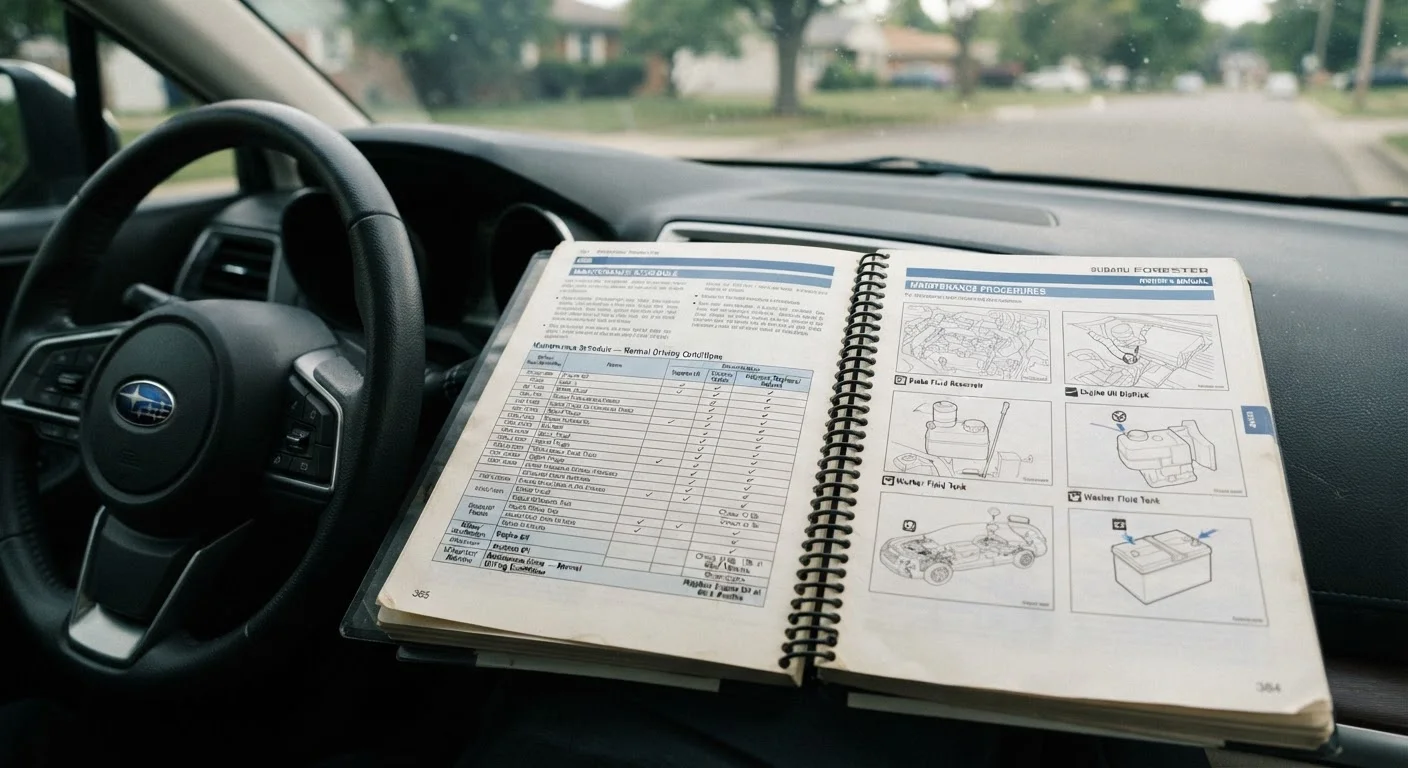
This is typically labeled something like "Maintenance Schedule" or "Scheduled Maintenance." It lists every service interval - oil changes, filter replacements, fluid checks, belt inspections - tied to mileage or time, whichever comes first. Pay close attention to whether your driving fits the normal or severe duty classification. Severe duty usually covers stop-and-go traffic, frequent short trips under five miles, towing, dusty environments, and extreme temperatures. A significant portion of everyday family drivers actually fall into the severe category, which calls for more frequent service. For a deeper look at how those intervals work, see our maintenance schedule breakdown.
Fluid Specifications
This section tells you exactly which oil viscosity, coolant type, brake fluid grade, and transmission fluid your vehicle requires. Using the wrong fluid - even a close substitute - can void warranties or cause premature wear. Our car fluid guide explains what each fluid does, but the specification for your vehicle lives in your manual.
Tire Information
Your manual lists the manufacturer-recommended tire size, load rating, and cold inflation pressure - which may differ from the maximum pressure stamped on the tire sidewall. The sidewall figure is the tire's maximum limit, not your target. The manual's figure is your target. Understanding the full string of numbers on your tires is covered in detail in what the numbers on your tires actually tell you.
Towing and Load Capacity
If you ever haul a trailer, a boat, or heavy cargo, the manual's towing and payload sections are non-negotiable reading. Exceeding rated capacity strains the drivetrain, brakes, and suspension in ways that can accelerate wear significantly - and create serious safety risks.
Bookmark the Pages You'll Use Most
Once you locate the maintenance schedule, fluid specs, and tire information sections, fold the corners or add sticky tabs. For a PDF, use your reader's bookmark feature. These are the three sections you'll return to most often - easy access means you'll actually use them.
How to Use the Manual Alongside Professional Service
The manual doesn't replace a qualified mechanic - it makes your conversations with one more productive. When a shop recommends a service, you can cross-reference the interval against what your manufacturer specifies. If a recommendation falls well outside those guidelines, that's worth a direct question. Our guide on talking to a mechanic walks through how to ask those questions without confrontation.
Some tasks in the manual are straightforward enough for capable home mechanics; others genuinely require professional equipment. See DIY vs. Shop for a practical breakdown of where that line falls. Either way, knowing what the manual says puts you in a stronger position - whether you're doing the work yourself or paying someone else to do it.
For drivers managing older vehicles, maintenance needs shift after 100,000 miles, and the manual's standard schedule may need to be supplemented with closer attention to specific wear items. Consistent engagement with your manual from day one - as outlined in car ownership basics for new drivers - is one of the simplest habits that pays off over the long run.
Generic Advice May Not Match Your Vehicle
Well-meaning advice from online communities, auto parts staff, or even service advisors may not align with your manufacturer's specifications. Always cross-reference recommendations against your own manual before authorizing service or purchasing fluids and parts. Your manual reflects the engineering decisions specific to your vehicle - generic guidance does not.