

Key Takeaways
- Reading your owner's manual reveals the exact service intervals your specific vehicle needs.
- Checking tires, fluids, and lights monthly takes under 15 minutes and prevents costly breakdowns.
- Keeping a maintenance log helps you track service history and supports resale value.
- Neglecting small issues like low tire pressure or dirty air filters shortens a vehicle's lifespan.
- Some tasks are genuinely DIY-friendly; others require a qualified mechanic for safety reasons.
Start here
Why Maintenance Habits Matter Early
Foundation
Your Owner's Manual: The Most Useful Tool You Already Have
Core skills
The Core Checks Every New Driver Should Know
Build a routine
Setting Up a Simple Maintenance Schedule
Know your limits
When to Call a Mechanic Instead of Going It Alone
Why Maintenance Habits Matter Early
The first year of car ownership sets the tone for everything that follows. New drivers who build consistent upkeep habits tend to spend significantly less on repairs over time - not because they're lucky, but because they catch small problems before those problems get expensive.
Think of it this way: a $12 bottle of coolant added when the reservoir runs low costs far less than an overheated engine. Replacing a $25 cabin air filter on schedule is a fraction of the cost of an HVAC repair caused by years of neglect. Maintenance isn't a burden - it's the cheapest form of car insurance you'll find.
If you're also thinking about the broader financial picture of ownership, understanding what car ownership really costs beyond the monthly payment is a smart starting point.
Your Owner's Manual: The Most Useful Tool You Already Have
Most new drivers never open the owner's manual. That's a mistake. It's the one document that tells you exactly what your specific vehicle needs - not what a neighbor thinks, not what a shop upsells you on, but what the manufacturer actually requires.
Your manual covers oil type and change intervals, tire pressure specifications, fluid capacities, scheduled service milestones (often at 30,000, 60,000, and 90,000 miles), and warning light explanations. If you bought a used car without a manual, most manufacturers provide digital versions on their official websites.
Use Your Manual Before You Search Online
When you have a maintenance question, check your owner's manual first. It contains specifications tailored to your exact vehicle - make, model, and engine. Generic online advice may not match what your car actually requires and could lead to unnecessary spending or incorrect service.
Be aware that some popular maintenance advice circulating online is outdated or simply wrong. Common car maintenance myths - like mandatory 3,000-mile oil changes or engine warm-up rituals - can lead new drivers to spend money unnecessarily.
The Core Checks Every New Driver Should Know
Dipstick
A long metal rod you pull from the engine to check the oil level. Markings on the end show whether the oil is at the right level.
Tire rotation
Moving tires from one wheel position to another (e.g., front to rear) on a regular schedule so they wear evenly and last longer.
Coolant
A liquid that circulates through the engine to regulate its temperature and prevent overheating or freezing. Also called antifreeze.
Service interval
The mileage or time period your manufacturer specifies between scheduled maintenance tasks, such as oil changes or filter replacements.
Cabin air filter
A replaceable filter that cleans the air flowing into the passenger compartment through the heating and air conditioning system.
These are the checks you can do yourself, on a regular basis, without any special tools:
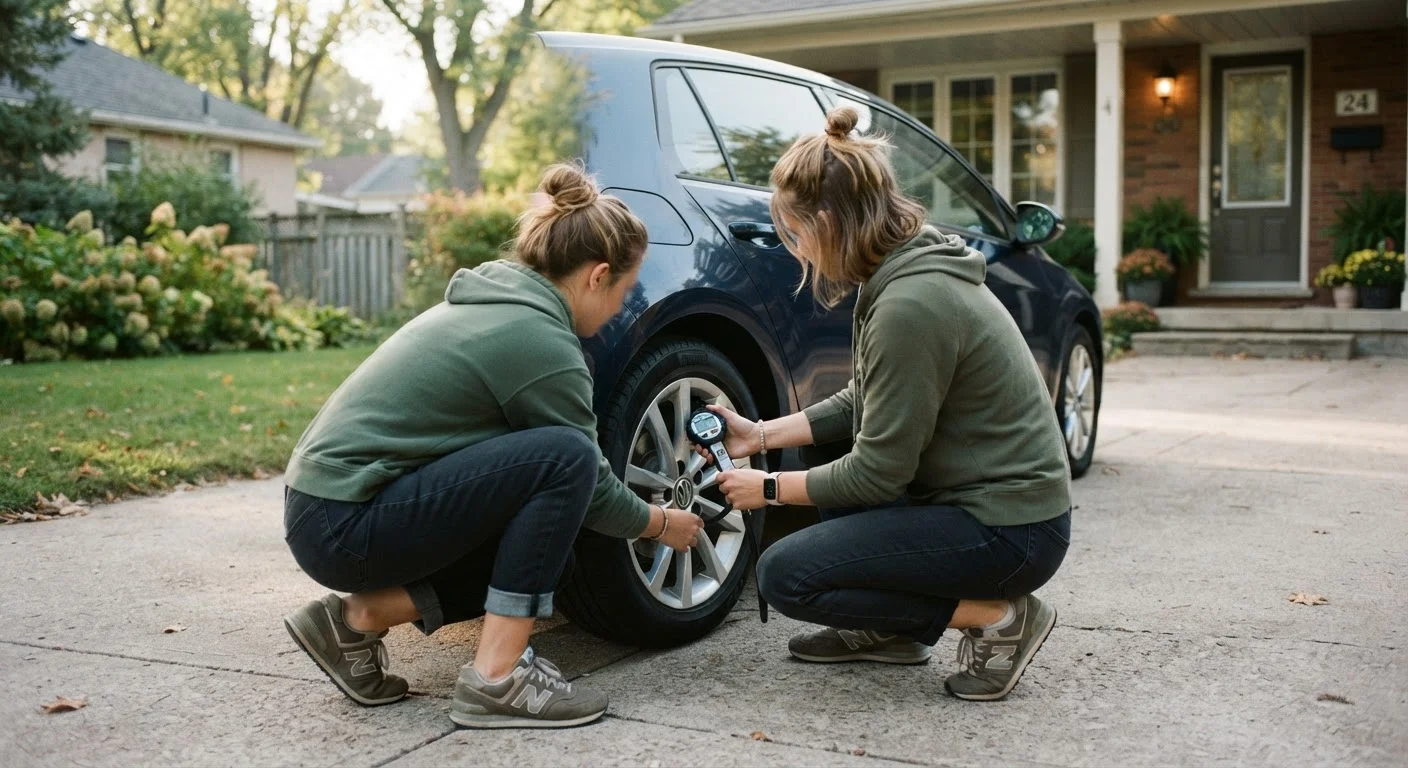
- Tire pressure: Check monthly and before any long trip. Use the pressure listed on the driver's door jamb sticker - not the number on the tire itself. Underinflated tires reduce fuel efficiency and wear unevenly.
- Engine oil: Pull the dipstick when the engine is cold. The oil should fall between the minimum and maximum marks and appear amber-brown, not black or gritty.
- Coolant level: Check the translucent overflow reservoir. Never open the radiator cap on a hot engine - it's pressurized and can cause burns.
- Windshield washer fluid: Low cost to refill, high cost to ignore when visibility is compromised.
- Lights: Walk around the car periodically to confirm all headlights, tail lights, and brake lights are functioning. A burned-out brake light is both a safety hazard and a traffic stop waiting to happen.
- Wiper blades: If they streak or chatter, they need replacing - typically every 12 months in most climates.
Setting Up a Simple Maintenance Schedule
Consistency is what separates drivers who stay ahead of problems from those who react to them. You don't need a complex system - just a reliable one.
A practical approach: tie checks to recurring events. Monthly checks can happen on the first of each month. Oil changes and tire rotations go on the calendar when you get them done, with the next date already noted. Major service milestones are logged by mileage in a notebook or app.
Keeping maintenance costs under control throughout a vehicle's life goes deeper on scheduling strategy and how to read your owner's manual's service schedule effectively. The key principle: preventive service is almost always cheaper than reactive repair.
Store receipts or take photos of them. A documented service history has real value - for your own reference, and for any future buyer.
When to Call a Mechanic Instead of Going It Alone
Knowing your limits is as important as knowing your way around the engine bay. Fluid top-offs, air filter swaps, and tire pressure checks are generally within reach for most people after a little research. The following are not:
- Brake pad replacement or rotor work
- Suspension and steering components
- Timing belt or chain service
- Electrical diagnostics beyond replacing a fuse
- Anything involving the fuel system or airbags
If a warning light comes on and you're not certain what it means, get it diagnosed promptly. Many auto parts retailers offer free code reading for check-engine lights, which can help you understand whether you're dealing with a loose gas cap or something that needs immediate attention from a qualified mechanic.
Maintenance also ties directly into safety. For families with multiple drivers, building shared safety habits across the household is worth thinking about early. A well-maintained vehicle is a safer one.
This article provides general educational information about vehicle maintenance and is not a substitute for advice from a qualified automotive professional. Always consult a licensed mechanic for repairs or when in doubt about your vehicle's condition.