

Key Takeaways
- A family driver safety plan should account for every licensed driver, from teenagers to elderly relatives.
- Consistent habits-not occasional reminders-are what actually reduce crash risk over time.
- Open, judgment-free conversations about driving behavior are essential for buy-in from all ages.
- Vehicle maintenance is part of driver safety, not separate from it.
- Knowing what to do after an incident is as important as preventing one.
Why a Family Safety Plan Matters
Motor vehicle crashes remain one of the leading causes of injury and death in the United States, according to the Centers for Disease Control and Prevention. Yet most families treat driving safety as a set-it-and-forget-it topic-covered during driver's ed and rarely revisited. That's a gap worth closing.
A family driver safety plan is simply a shared set of agreements, habits, and conversations that keep every driver in the household operating at a consistent standard of care. It's not about surveillance or mistrust. It's about making the expected behavior explicit so everyone-teens, parents, and older relatives alike-knows what the household norms are and why they exist.
Families that talk openly about driving risk are better positioned to catch problems early, whether that's a teenager picking up bad habits or an aging parent whose reflexes have slowed. The plan doesn't need to be a formal document. It needs to be a living practice.
Addressing Every Driver in the Household
A common mistake is treating driver safety as a teenager problem. In reality, risk looks different at every life stage.
Teen and New Drivers
Inexperience is the primary hazard. New drivers benefit most from graduated exposure-night driving, highway driving, and bad-weather driving introduced progressively rather than all at once. Many states use Graduated Driver Licensing (GDL) systems for exactly this reason. Our guide on car ownership basics for new drivers also covers early habits that reinforce responsible vehicle ownership alongside safe operation.
Experienced Adult Drivers
Familiarity breeds complacency. Adults who have driven for decades are more likely to underestimate risk, speed slightly, or reach for a phone. Revisiting defensive driving principles periodically is valuable even for confident, experienced drivers.
Older Drivers
Age-related changes in vision, reaction time, and medication use can affect driving ability without the driver being fully aware. The conversation is sensitive but necessary. Framing it as a wellness check-not a license revocation threat-keeps it productive.
When setting household driving rules for teens, write them down together-not as dictates, but as a signed agreement. Collaborative buy-in dramatically increases follow-through compared to top-down mandates.
Research in adolescent behavior consistently shows that teens who participate in creating expectations are more likely to internalize and follow them.
For older drivers, frame a voluntary driving evaluation as something every driver should consider periodically-not a sign of decline. Normalizing the checkup removes the stigma that makes the conversation so difficult.
Resistance to assessment often stems from fear of losing independence. Reframing it as routine maintenance rather than remediation lowers defensiveness.
Core Habits That Reduce Risk for Everyone
These aren't rules posted on a refrigerator. They're norms that should become automatic across every driver in the household.
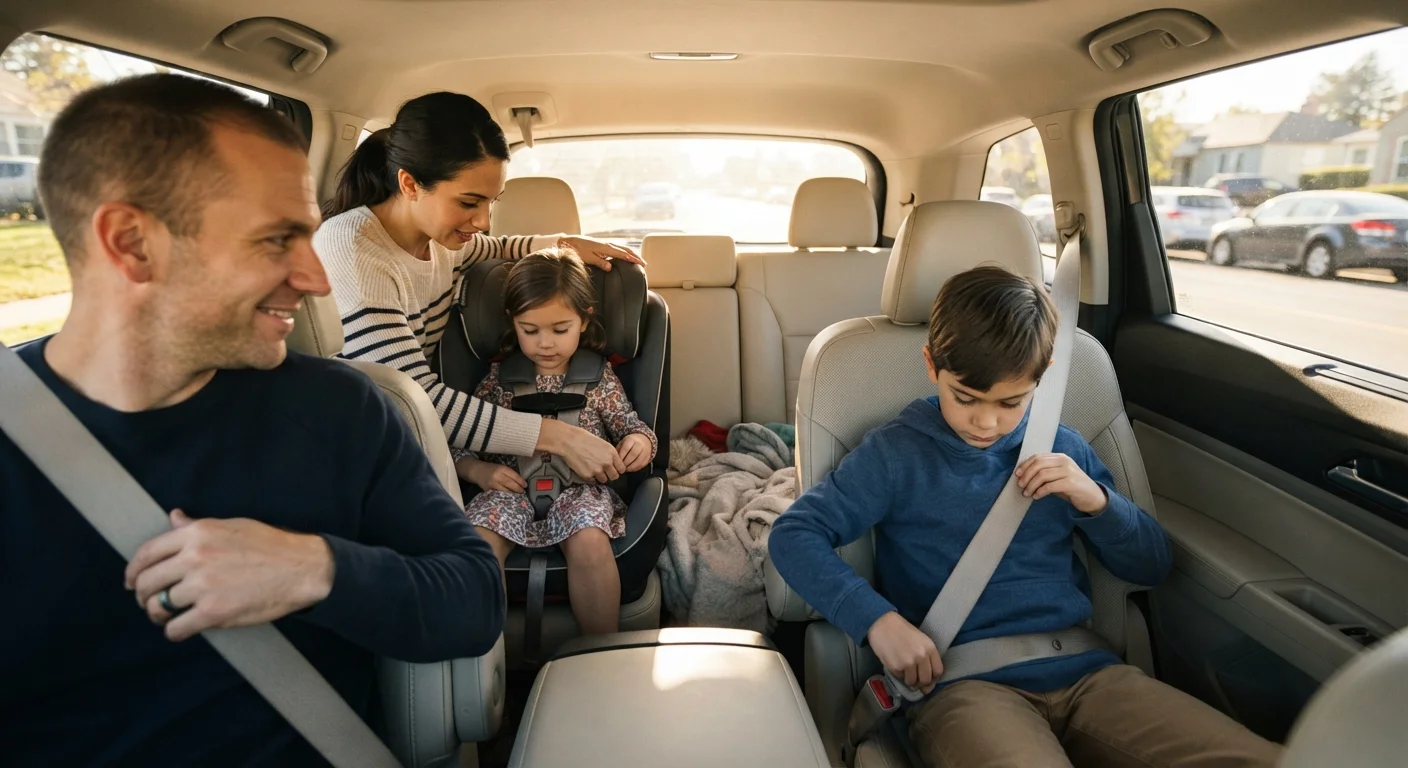
- Seatbelts, every ride, every seat. This applies to back-seat passengers too-an unbelted rear passenger in a crash becomes a projectile that can injure front-seat occupants.
- Phones stay down. Hands-free does not mean risk-free. Cognitive distraction persists even when your hands are on the wheel. For more on this, see our piece on driver safety myths that could get you into trouble.
- No driving impaired-for any reason. This includes drowsiness, which impairs judgment similarly to alcohol at significant levels of sleep deprivation.
- Know the plan for passengers. Anyone transporting children should be current on child passenger safety and car seat requirements.
~43,000
Annual US traffic fatalities
According to the National Highway Traffic Safety Administration (NHTSA), tens of thousands of people die on US roads each year, making road safety a persistent public health concern.
8x
Crash risk for distracted drivers
The NHTSA has reported that engaging in visual-manual tasks while driving-such as texting-raises crash risk significantly compared to undistracted driving.
~16%
Fatalities involving teen drivers
Teen drivers are overrepresented in fatal crashes relative to their share of licensed drivers, according to CDC data on motor vehicle safety.
Having the Hard Conversations
The most effective safety interventions aren't technology or rules-they're conversations. Research consistently shows that parental influence remains one of the strongest predictors of teen driving behavior, even after licensing.
Schedule brief, regular check-ins rather than one high-stakes lecture. Ask open questions: What felt tricky about driving this week? Was there a moment you felt unsafe? That kind of dialogue surfaces problems before they become crashes.
For older relatives, lead with care rather than criticism. Share what you've noticed specifically-I noticed you seemed startled at the intersection on Sunday-rather than making broad pronouncements about their driving. Suggest a voluntary driving evaluation, which many occupational therapists and some AAA chapters offer.
Road rage is another topic worth raising directly. Aggressive driving escalates quickly. Discussing how to recognize and de-escalate it-in yourself and others-is a practical skill. Our article on road rage and how to handle it walks through those patterns in detail.
Avoid Ultimatums in Sensitive Conversations
Threatening to take away keys as an opening move-especially with older relatives-typically produces defensiveness and secrecy rather than cooperation. Lead with concern and observation, not ultimatums. If a genuine safety concern exists, involve a medical professional or a certified driving rehabilitation specialist rather than handling it purely within the family.
Vehicle Readiness as a Safety Habit
A well-maintained vehicle is a safer vehicle. Tire pressure, brake condition, wiper blades, and headlight function are not optional upkeep items-they are direct safety factors. A blowout on a highway or failed brakes in wet conditions can turn an otherwise skilled driver into a crash statistic.
Build a simple monthly walk-around into your household routine. The Car Maintenance hub has practical guidance on what to check and how often. Modern vehicles also come equipped with systems designed to help-understanding what those do matters too. Our overview of vehicle safety technologies from ABS to automatic emergency braking explains what each system does and its limits.
Critically: technology assists the driver-it doesn't replace attentiveness. Families should talk about what active safety systems their vehicles have and what those systems cannot do.
Putting the Plan Into Practice
A family driver safety plan doesn't require a binder or a formal meeting. Start with three things: a shared list of non-negotiable habits, a commitment to periodic check-ins, and a clear protocol for what to do if something goes wrong.
On that last point-knowing how to respond after a collision is as important as preventing one. Our step-by-step guide on what to do immediately after a car accident is worth reading and sharing with every driver in your household before they ever need it.
Safety on the road is less about any single decision and more about the cumulative effect of consistent habits. Build those habits intentionally, revisit them regularly, and make space for honest conversation. That's the plan.
This article is for general informational and educational purposes only. It does not constitute legal, medical, or professional driving instruction advice. Consult a qualified professional for guidance specific to your situation.