

Key Takeaways
- Squealing brakes often signal worn brake pads contacting the wear indicator.
- Grinding sounds typically mean metal-on-metal contact - a situation requiring immediate professional inspection.
- A soft or spongy brake pedal can indicate air or moisture in the brake fluid line.
- Pulling to one side while braking may point to uneven pad wear or a stuck caliper.
- Ignoring brake symptoms rarely saves money - delayed repairs almost always cost more.
- A qualified mechanic should inspect your brakes any time you notice an unusual symptom.
Brake Warning Signs
Brake warning signs are sounds, sensations, and visual cues your vehicle produces when its braking system needs attention. These include squealing, grinding, vibration, a soft pedal, or longer stopping distances. Catching these early can prevent both accidents and expensive repairs.
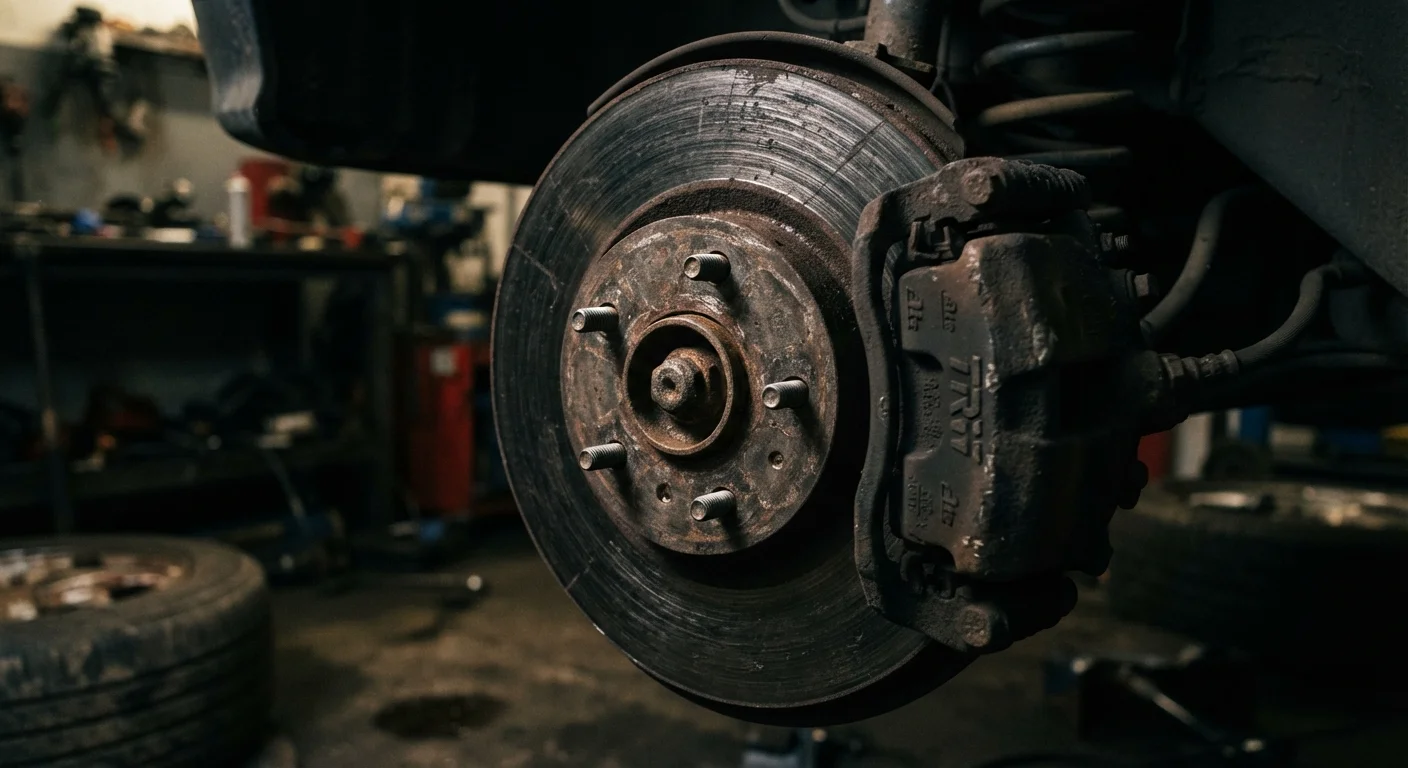
Modern disc brake systems use wear indicators - small metal tabs that contact the rotor when pads thin to roughly 2-3mm - intentionally producing a high-pitched squeal as an alert.
What Your Brakes Are Actually Saying
Brakes rarely fail without warning. Before a serious problem develops, the system almost always sends signals - sounds you can hear, sensations you can feel through the pedal or steering wheel, and sometimes smells you can't ignore. The challenge for most drivers is knowing which signals are minor and which demand immediate action.
Understanding these cues is a core part of driver safety. Brakes are a safety-critical system, and while this article will help you recognize what's happening, any symptom you can't explain should be evaluated by a qualified mechanic. This is general information, not a substitute for professional diagnosis.
Morning Squeaks Are Usually Normal
A brief squeal during the first one or two stops on a cold or damp morning is common and typically harmless. Overnight condensation on the rotors creates a light rust film that the pads clear quickly. If the noise disappears after the first stop, it's generally not a concern - but if it persists throughout your drive, that's worth investigating.
Sounds That Demand Attention
Squealing or high-pitched squeaking: This is the most common brake warning and, in most cases, it's by design. Brake pads contain metal wear indicators - small tabs that contact the rotor when pad material gets low, producing a deliberate squeal. If you hear it consistently during braking (not just the first stop of a cold, damp morning), the pads likely need replacement soon.
Grinding or growling: A deep grinding sound during braking is more urgent. It usually means the brake pad has worn through completely and metal is contacting metal - specifically, the caliper or backing plate pressing against the rotor. This damages rotors quickly and increases stopping distances. Don't wait on this one.
Clicking or rattling: Brake hardware is designed to hold components snugly. A clicking noise when you press or release the pedal can mean a pad or caliper hardware piece has come loose. It's easy to overlook but worth having checked, as loose components can shift under hard braking.
~22%
Of vehicle crashes linked to brake-related issues
According to a large-scale NHTSA crash causation study, brake problems are among the most commonly identified vehicle-related factors in crashes.
25,000-65,000 mi
Typical brake pad lifespan range
Pad longevity varies significantly by driving style, vehicle type, and pad material - city drivers often fall toward the lower end of this range.
2-3 mm
Pad thickness that triggers wear indicators
Most brake pad wear indicators are engineered to contact the rotor and squeal when pad material reaches roughly 2-3mm - signaling it's time for replacement.
Sensations Through the Pedal and Steering Wheel
Soft or spongy pedal: A healthy brake pedal has firm, consistent resistance. If yours feels soft, mushy, or travels closer to the floor before engaging, suspect air or moisture in the brake lines, low brake fluid, or a failing master cylinder. Any of these affect hydraulic pressure and braking effectiveness. Have it inspected promptly.
Vibration or pulsing: If the pedal pulses rhythmically when you apply the brakes, the rotors may be warped - often from overheating due to prolonged heavy braking or driving with worn pads. You may also feel vibration through the steering wheel. Warped rotors reduce smooth, even contact and extend stopping distances.
Pulling to one side: If the car drifts left or right during braking without steering input, the braking force isn't being applied evenly. Common causes include a seized caliper, uneven pad wear across axles, or contaminated brake fluid on one side. This can feel subtle at first but worsens over time.
The Cost of Waiting
Brake repair costs scale quickly when symptoms are ignored. A pad replacement is far less expensive than replacing rotors damaged by worn-through pads. Damaged rotors that warp further may require caliper replacement too. As with most car maintenance, the pattern of deferral compounding into larger bills applies directly here - something explored in depth in our article on the real cost of skipping routine car maintenance.
Beyond cost, there's the straightforward safety reality: brakes that can't stop your vehicle reliably put you, your passengers, and other road users at risk. A professional brake inspection - typically offered at most repair shops as a low-cost or complimentary service - takes the guesswork out of where you stand.
Make Brakes Part of Every Tire Rotation
Each time you have your tires rotated - typically every 5,000 to 7,500 miles - ask the shop to visually inspect your brake pads and rotors. This takes only a few minutes and keeps you ahead of wear without any extra cost in most cases. Catching low pads early is one of the simplest ways to avoid a larger repair bill.
When to Act - and Who Should Do the Work
Some drivers are comfortable doing a visual brake pad check through the wheel spokes, and that's a reasonable starting point. But brake system work - replacing pads, bleeding lines, resurfacing or replacing rotors - involves safety-critical components. Unless you have verified mechanical experience, brake repairs are best handled by a qualified technician.
A useful rule of thumb: if a brake symptom persists across multiple stops and driving conditions, schedule an inspection rather than waiting for a scheduled service. Most shops can inspect brakes during a routine oil change visit. For reference on what other warning signals look like across your vehicle, see why your check engine light comes on - the principle of acting early rather than late applies to every warning system in your car.