

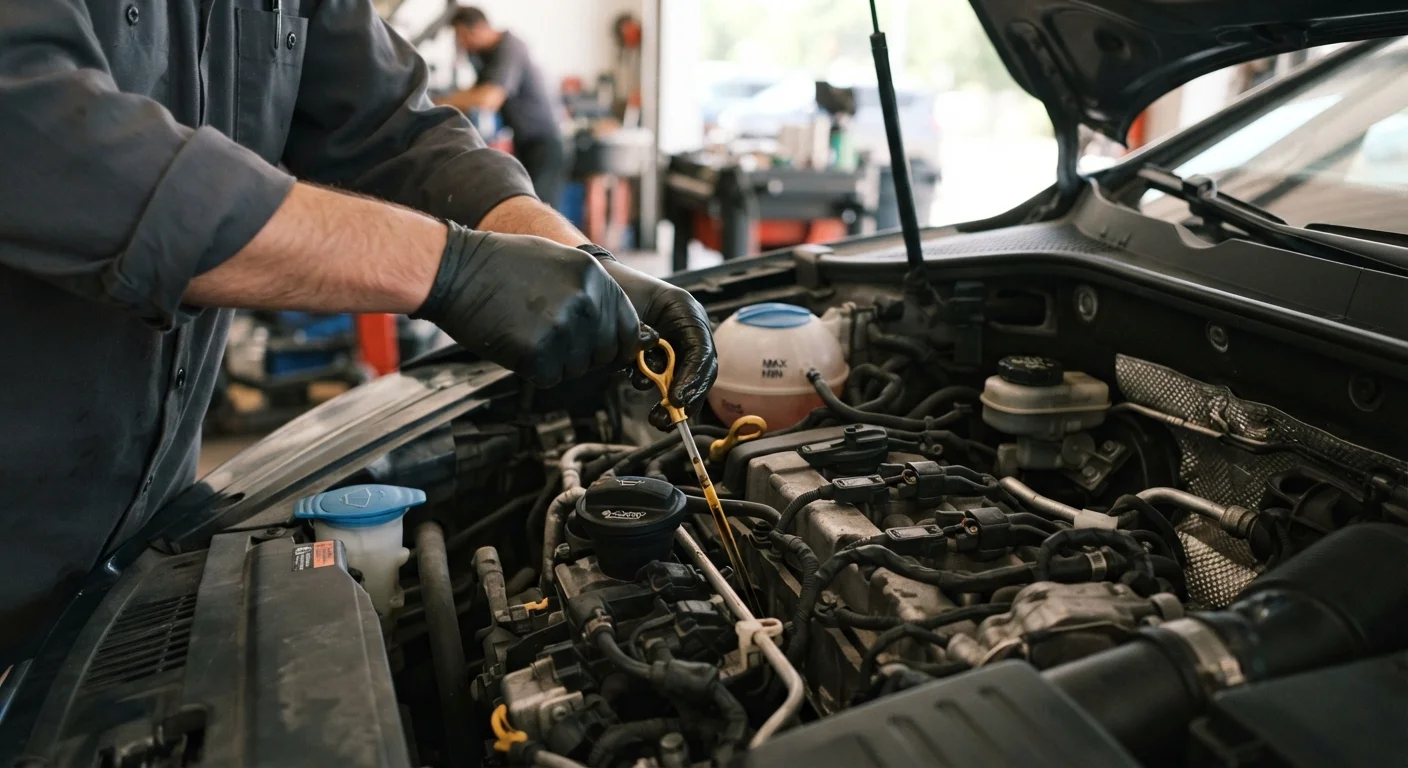
Why Vehicle Fluids Matter More Than Most Drivers Realize
A modern car relies on at least six distinct fluids to keep its systems running safely. Skip one too long and you're not just risking a repair bill - you could be compromising safety for everyone in the vehicle. The good news: most fluid checks take under five minutes and cost nothing but a few moments of attention. This reference guide breaks down each fluid, what it actually does, and the signals that tell you it needs service.
For a broader look at how fluid checks fit into your overall upkeep routine, see your car's full maintenance schedule.
The Six Fluids Every Driver Should Know
Engine Oil
What it does: Lubricates moving engine parts, reduces heat from friction, and carries away combustion byproducts. Without adequate oil, metal components grind against each other and engine damage can follow quickly.
Warning signs: Dark brown or black color on the dipstick, a burning smell from the engine bay, the oil pressure warning light, or a ticking noise at startup. Check the level monthly - a quart low can be enough to cause wear over time.
Service interval: Varies by vehicle and oil type. Conventional oil is commonly changed every 3,000-5,000 miles; full synthetic may extend to 7,500-10,000 miles or more. Always follow your owner's manual - not the sticker from the last oil change shop. Common myths about oil change frequency are addressed in vehicle maintenance myths that could be costing you money.
Engine Coolant (Antifreeze)
What it does: Regulates engine temperature, prevents overheating in summer and freeze-up in winter. It circulates through the engine and radiator in a closed loop.
Warning signs: Temperature gauge climbing toward hot, sweet smell near the engine, visible low level in the overflow reservoir, or a rusty-orange color instead of bright green or orange. Never open a hot radiator cap - steam and hot coolant can cause serious burns.
Service interval: Many manufacturers recommend a flush every 30,000-50,000 miles, though some long-life coolants last longer. Coolant needs change with the seasons - see seasonal car care guidance for temperature-specific tips.
Brake Fluid
What it does: Transfers the force from your brake pedal through hydraulic lines to the brake calipers. It is hygroscopic, meaning it absorbs moisture over time, which lowers its boiling point and reduces braking performance.
Warning signs: A soft or spongy brake pedal, the brake warning light illuminating, dark or murky fluid in the reservoir. If you notice these symptoms, have the system inspected promptly - brakes are directly tied to safety. Learn more about brake warning signals in warning signs your brakes are trying to tell you.
Service interval: Typically every 2-3 years, or per your owner's manual. A moisture content test can tell you exactly where you stand.
Transmission Fluid
What it does: Lubricates the transmission's gears and clutch packs, and in automatic transmissions also acts as a hydraulic fluid for gear changes.
Warning signs: Delayed or rough gear shifts, slipping between gears, a burning smell, or dark/gritty fluid on the dipstick (if accessible - many modern vehicles have sealed transmissions). Transmission repairs are among the most expensive in automotive maintenance, making prevention especially worthwhile.
Service interval: Automatic transmissions are commonly serviced every 30,000-60,000 miles; manual transmissions every 30,000-50,000 miles. High-mileage vehicles may need closer attention - maintenance shifts after 100,000 miles covers this in detail.
Power Steering Fluid
What it does: Provides hydraulic assist to make steering easier. Note: many newer vehicles use electric power steering and have no fluid reservoir at all.
Warning signs: Whining or groaning noise when turning the wheel, stiff or jerky steering, or a visible low level in the reservoir. Check whether your vehicle uses hydraulic or electric steering before looking for a reservoir.
Service interval: Often 50,000-100,000 miles, but check your manual. Contaminated fluid appears dark or foamy.
Windshield Washer Fluid
What it does: Cleans road grime, bugs, and salt spray from your windshield. It is the only fluid you can safely top off yourself with no mechanical knowledge required.
Warning signs: Empty reservoir indicator light, streaking when you activate the washers. Use a washer fluid rated for your climate - plain water can freeze in winter and damage the pump.
Hydraulic fluid
Any fluid used to transmit force within a closed system. In vehicles, brake fluid and power steering fluid are both hydraulic fluids - pressing or turning generates pressure that moves components at the other end of the line.
Hygroscopic
A property of brake fluid that causes it to absorb moisture from the air over time. Absorbed water lowers the fluid's boiling point, which can cause brake fade under hard use.
Dipstick
A long, narrow metal or plastic rod inserted into a fluid reservoir (commonly engine oil or transmission fluid) that lets you check fluid level and condition by reading the markings on its tip.
Viscosity
A measure of how thick or thin a fluid is and how easily it flows. Engine oil viscosity ratings (e.g., 5W-30) indicate how the oil performs at low and high temperatures.
Flush
A service procedure in which old fluid is completely drained from a system and replaced with fresh fluid, rather than simply topping off the existing supply.
Sealed transmission
A transmission designed by the manufacturer without a user-accessible dipstick. Fluid level and condition must be checked by a mechanic using specialized equipment.
Reading Your Owner's Manual for Fluid Specifications
Every fluid recommendation in this guide is a general range. Your specific vehicle may call for a particular viscosity of oil, a specific coolant formulation, or a proprietary transmission fluid - substituting the wrong type can cause real damage. The maintenance section of your owner's manual contains the exact specifications. If you've misplaced yours, most manufacturers make digital copies available through their official websites. For help navigating that document, see the maintenance sections of your owner's manual that actually matter.
Keeping an eye on your vehicle's fluids is one of the most straightforward ways to manage the true cost of car ownership and support basic driver safety at the same time. A small habit of monthly checks can head off expensive repairs before they develop.
This article provides general vehicle maintenance information for educational purposes. For guidance specific to your vehicle, consult a qualified mechanic or refer to your manufacturer's documentation.