

Key Takeaways
- Rain, fog, and snow each create different hazards that require distinct driving adjustments.
- Reducing speed and increasing following distance are essential in all three conditions.
- In fog, low-beam headlights outperform high beams by reducing glare and improving visibility.
- Snow and ice dramatically extend stopping distances - sometimes by four times or more.
- Knowing when not to drive is as important as knowing how to drive in bad weather.
Our Verdict
No single approach covers all adverse weather. Rain demands smooth inputs and reduced speed; fog calls for low beams and sharp attention to road markings; snow and ice require the most conservative adjustments of all, including dramatically extended following distances and gentle acceleration. Drivers who understand these differences - rather than applying a one-size-fits-all slowdown - are better positioned to arrive safely.
| Best for | Recommended |
|---|---|
| Drivers navigating wet roads and light rain | Rain-specific techniques |
| Drivers encountering dense fog or low-visibility conditions | Fog-specific techniques |
| Drivers in snow, ice, or freezing conditions | Winter driving techniques |
| Families building a household safety culture | Consistent defensive driving habits across all conditions |
Why Each Condition Demands a Different Response
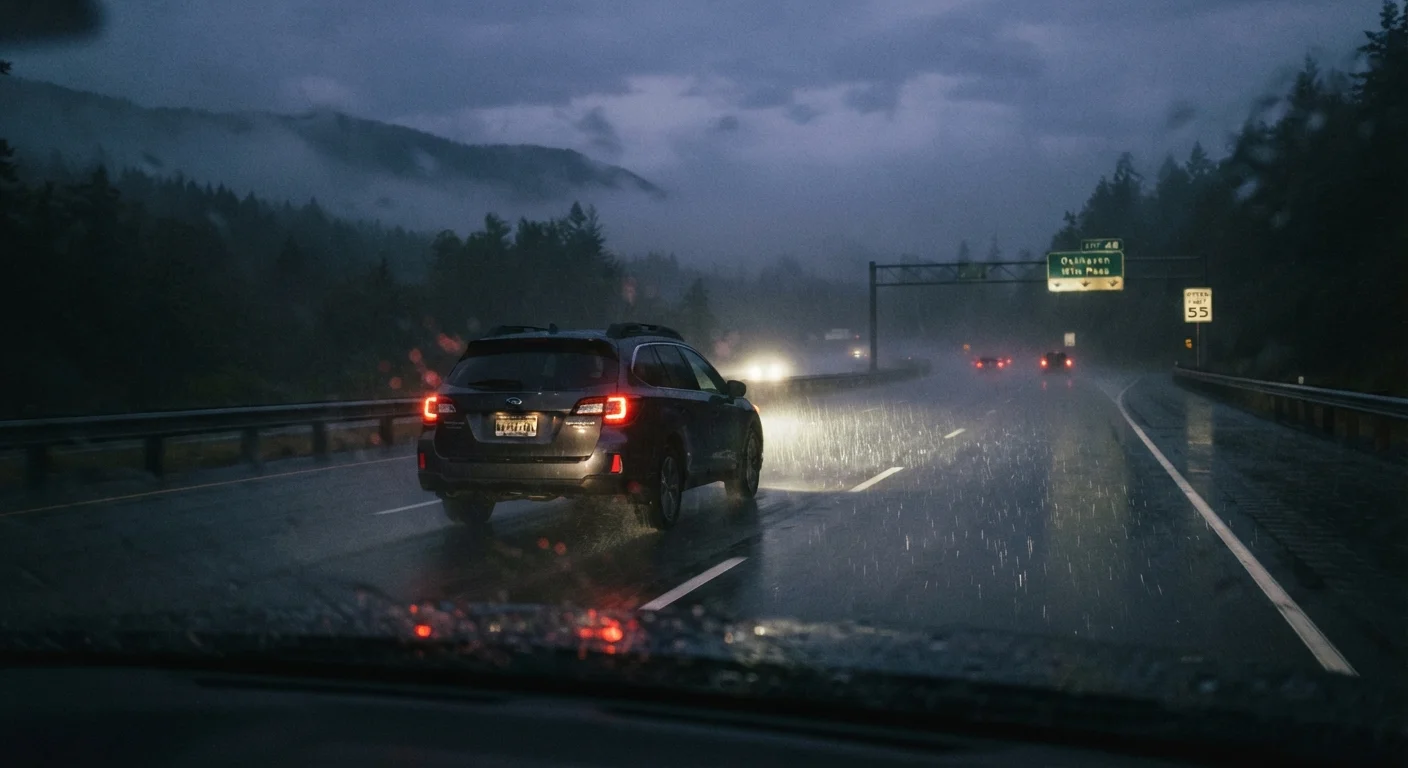
Most drivers instinctively slow down when weather turns bad - and that's a reasonable starting point. But rain, fog, and snow don't just reduce speed; they each alter your road environment in distinct ways. Rain reduces tire grip and can cause hydroplaning. Fog collapses your sight distance to a fraction of normal. Snow and ice undermine braking, steering, and acceleration simultaneously.
Treating these conditions identically leads to misjudgments. A driver who uses fog-driving habits in a snowstorm, or applies rain techniques on black ice, may still be dangerously underprepared. Understanding what's actually happening to your vehicle and your visibility in each scenario is the foundation of staying safe. For a broader framework on anticipating hazards before they become emergencies, see our guide to defensive driving.
Driving in Rain: Grip, Speed, and Hydroplaning
Rain reduces traction by creating a film of water between your tires and the road surface. The faster you drive, the less time tires have to channel that water away - which is how hydroplaning occurs. When a vehicle hydroplanes, the tires ride on water rather than pavement, and steering and braking lose effectiveness almost entirely.
- Reduce speed gradually. Even a modest reduction - dropping from 65 mph to 55 mph - meaningfully improves your tires' ability to maintain contact with the road.
- Increase following distance. Wet roads can double stopping distances. A three-second gap in dry conditions should become at least five to six seconds in rain.
- Use headlights. Many states require headlights whenever wipers are running. It improves your ability to see and be seen.
- Avoid sudden inputs. Jerky steering or hard braking can trigger a skid on wet pavement. Smooth, deliberate movements are safer.
- Watch for standing water. Even shallow puddles can cause hydroplaning at highway speeds.
If you feel the vehicle begin to hydroplane, ease off the accelerator gently - do not brake hard - and steer straight until traction returns.
Check Tire Tread Before Wet-Weather Driving
Tire tread depth directly affects how well your vehicle channels water away from the contact patch. A simple way to check: insert a quarter into a tread groove with Washington's head pointing down - if you can see the top of his head, tread depth may be insufficient for safe wet-weather driving. Worn tires significantly increase hydroplaning risk, even at moderate speeds.
Driving in Fog: Low Beams, Slow Speed, and Sight Lines
Fog is uniquely dangerous because it creates a false sense of visibility. Drivers often feel they can see well enough, when in reality their sight distance may be reduced to just a few car lengths. High-beam headlights make this worse - they reflect off water droplets in the fog and create glare that reduces visibility further.
- Use low-beam headlights or fog lights. Low beams direct light toward the road surface rather than into the fog bank, improving actual illumination.
- Slow down significantly. Your speed should match your sight distance. If you can only see 100 feet ahead, you need to be able to stop within 100 feet.
- Follow road markings, not taillights. Following another car's taillights too closely in fog can cause rear-end collisions if that car stops suddenly.
- Open your window slightly. In very dense fog, you can sometimes hear other vehicles before you can see them.
- Pull over if necessary. If visibility drops to near zero, the safest option may be pulling safely off the road and waiting.
Fog often settles in low-lying areas, underpasses, and near bodies of water - be prepared to encounter it suddenly. Managing your mirrors and blind spots becomes even more critical when fog limits how far you can see.
Driving in Snow and Ice: The Most Demanding Condition
Snow and ice present the most complex driving challenge of the three. Stopping distances on ice can be four to ten times longer than on dry pavement. Traction loss can happen without warning, and not all ice is visible - so-called black ice looks like wet pavement but offers almost no grip.
| Rain | Fog | Snow / Ice | |
|---|---|---|---|
| Primary hazard | Reduced tire grip, hydroplaning | Severely limited sight distance | Near-zero traction, long stopping distances |
| Recommended speed adjustment | Reduce by 10-15 mph or more | Match speed to visible stopping distance | Reduce significantly; go as slow as needed |
| Following distance | 5-6 seconds minimum | 6-8 seconds minimum | 8-10 seconds or more |
| Headlight setting | Low beams on | Low beams or fog lights only | Low beams on; clear all snow from lights |
| Key technique | Smooth inputs; avoid sudden braking | Use road markings, not tailights | Accelerate and brake very gently |
| When to pull over | Heavy downpour with zero visibility | Visibility drops to near zero | Ice storm or whiteout conditions |
- Accelerate and decelerate slowly. Spinning wheels don't grip; gentle throttle application helps maintain traction on snow.
- Increase following distance dramatically. Allow at least eight to ten seconds of following distance in snowy or icy conditions.
- Know your braking system. Vehicles with anti-lock brakes (ABS) respond differently than older vehicles. With ABS, apply firm, steady pressure - the system pulses automatically. Without ABS, gentle threshold braking is safer than pumping.
- Brake before curves, not during. Entering a curve too fast on snow or ice can cause the vehicle to slide wide. Slow down before the turn, then navigate it smoothly.
- Clear your entire vehicle. Snow on the roof, hood, and lights is both a visibility hazard for you and a projectile risk for other drivers.
If you begin to skid, steer in the direction you want to go and avoid overcorrecting. For families preparing their vehicles before winter arrives, our seasonal car care guide covers tire checks, battery readiness, and other maintenance steps that affect winter performance.
When the Right Call Is Not to Drive
Adapting your driving technique matters enormously - but knowing when conditions have moved beyond manageable is equally important. Extreme fog advisories, ice storms, blizzards, and flash flood warnings are circumstances where delaying a trip is often the safest decision available. No appointment or errand is worth the risk of a serious crash.
If travel is unavoidable, communicate your route to someone at home, keep your phone charged, and carry basic emergency supplies in winter months: a blanket, water, a flashlight, and a small bag of sand or kitty litter for traction. Families with new or older drivers should make these conversations part of their household routine. Our family driver safety plan guide offers a practical framework for building those habits together.
This article provides general driver education information. Always follow local traffic laws and official guidance from transportation authorities in your area.