

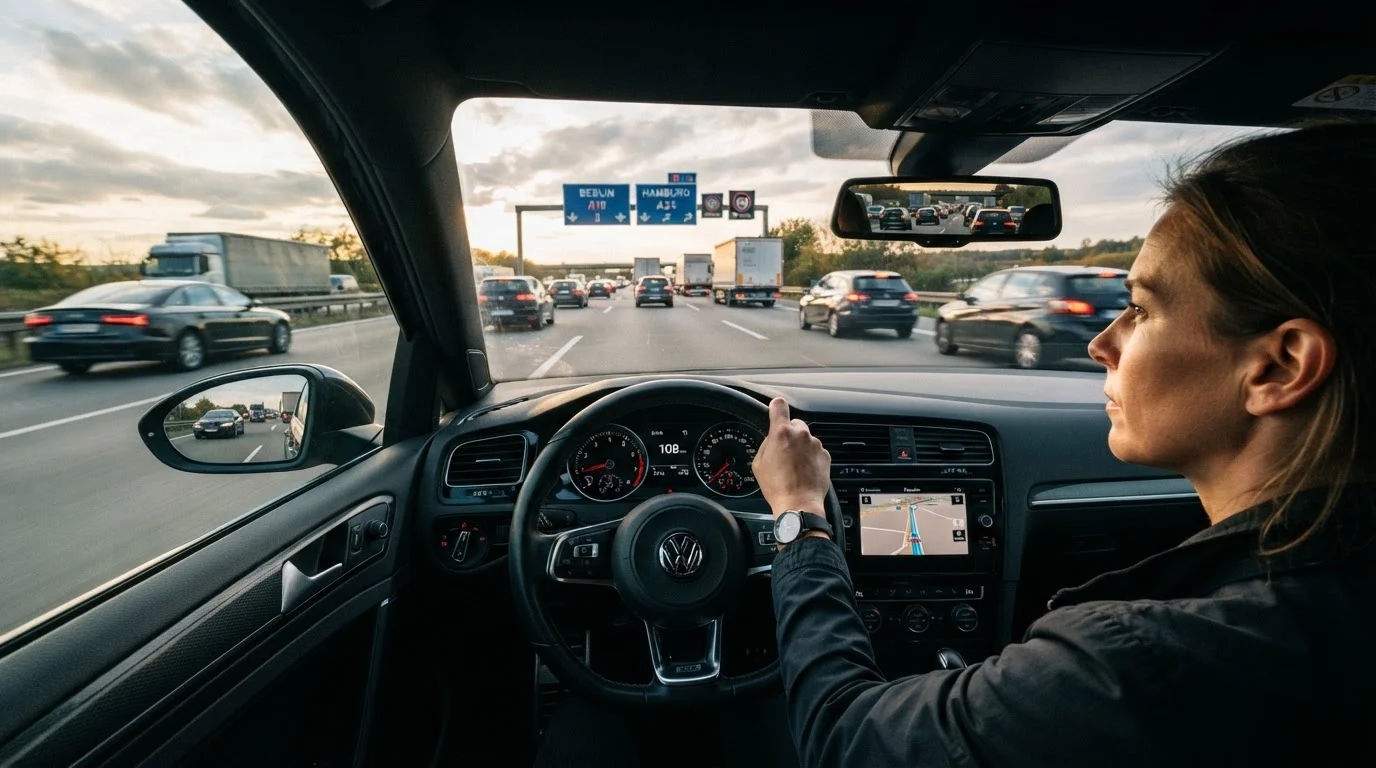
Key Takeaways
- Every vehicle has multiple blind spot zones that mirrors alone cannot eliminate.
- Proper mirror adjustment reduces blind spots but does not remove them entirely.
- A physical head-check (shoulder check) remains the most reliable way to confirm a lane is clear.
- Larger vehicles - SUVs, pickup trucks, minivans - typically have larger and more numerous blind spots.
- Technology like blind-spot monitoring assists but should not replace active checking habits.
- Consistent pre-drive mirror adjustment is a simple habit that meaningfully improves safety.
Vehicle Blind Spot
A blind spot is any area around your vehicle that falls outside what your mirrors and direct forward vision can show you. Every vehicle has them, and their size and location vary by vehicle type, seating position, and mirror adjustment. Blind spots are a factor in a significant share of lane-change and merging collisions each year.
The most commonly referenced blind spots are the rear-quarter zones on both sides of a vehicle - roughly alongside the rear doors - but additional blind spots exist at the front corners, directly behind the vehicle, and in the A-pillar (the roof support beside the windshield).
Why Mirrors Can't Do the Whole Job
Most drivers trust their mirrors more than the physics of reflection warrants. A mirror can only show what its angle captures - and vehicle geometry guarantees that some areas will always fall outside that coverage. The result is a predictable set of gaps that exist on virtually every vehicle, regardless of how carefully the mirrors are set.
The two most consequential blind spots are the rear-quarter zones on each side - the areas roughly alongside and just behind the rear doors. At highway speeds, another vehicle can sit in this zone entirely invisible to your mirrors while remaining outside your peripheral vision through the windshield. That combination is what makes lane-change collisions so common.
There are also less-discussed blind spots: the front corners obscured by the hood, the A-pillar zones that the windshield frame blocks, and the area directly behind a vehicle when reversing. Common driving safety myths include the idea that modern mirrors provide full coverage - they don't, and assuming they do is a genuine risk.
How to Adjust Mirrors Properly
Correct mirror adjustment is the first line of defense, and it's something many drivers set once and never revisit. The standard approach: sit in your normal driving position, then adjust each side mirror outward until you can just barely see the edge of your own vehicle's body - roughly 10-15% of the mirror's frame. This angles the mirror away from redundant coverage of your own car and toward the rear-quarter zone where other vehicles travel.
The rearview mirror should provide a centered, unobstructed view of the entire rear window. If passengers or cargo shift that view, readjust before driving.
Reset Your Mirrors Every Time You Drive
Mirrors shift more often than most drivers realize - from other passengers, from car washes, from vibration on rough roads. Before pulling out of a driveway or parking spot, spend 10 seconds confirming that each mirror is properly positioned for your seating height and posture. This is especially important if multiple people share a vehicle.
One habit worth building: check your mirror alignment every time you get in the vehicle. Mirrors shift - from passengers adjusting them, from car washes, from vibration. A 10-second check before you drive costs nothing and keeps your setup accurate.
Even with optimal adjustment, expect a gap. The angle that reduces your rear-quarter blind spot may slightly increase a small gap between the side mirror's coverage and your direct peripheral view. That residual gap is precisely why the shoulder check - physically turning to look - remains non-negotiable.
The Shoulder Check: Still the Most Reliable Tool
No mirror setting, and no sensor system, fully replicates what a physical head-check provides. Before any lane change or merge, the sequence should be consistent: signal early, check the rearview mirror, check the relevant side mirror, then turn your head and look through the rear side window in the direction you're moving. That final step covers the gap that mirrors leave.
The shoulder check takes roughly one second. Skipping it to save that second is a trade-off that doesn't hold up - especially in dense traffic, near cyclists, or when motorcycles are present. Motorcycles in particular are narrow enough to occupy a blind spot without triggering detection, and they are disproportionately represented in lane-change crash data.
Following distance affects blind spot risk too: when you're too close to the vehicle ahead, your effective forward visibility drops and your reaction time shrinks. Keeping appropriate spacing helps your mirrors do their job more effectively.
Blind Spots Vary by Vehicle Type
The size and location of blind spots differ significantly between vehicle types. A compact sedan generally has smaller rear-quarter blind zones than a full-size pickup or large SUV. Minivans often have wide rear blind zones due to their body height and length. If you're driving an unfamiliar or rented vehicle, take a moment before moving to assess the mirror coverage and identify where the gaps are likely to be.
Technology Assists - But Doesn't Replace Habits
Blind-spot monitoring systems have become common equipment on newer vehicles, using radar or camera sensors to alert drivers when another vehicle enters the rear-quarter zone. These systems are genuinely useful and have been shown in research to reduce certain lane-change incidents. But their limitations are real and worth understanding.
Sensor coverage varies. Some systems activate only above a minimum speed, leaving gaps in low-speed merges. Others may not reliably detect cyclists, motorcycles, or objects at the edges of sensor range. Environmental factors - heavy rain, snow, sensor obstruction - can reduce accuracy. Adverse weather conditions compound blind-spot risks in ways that sensor systems may not fully compensate for.
The practical takeaway: use available technology as a supplement to good habits, not a substitute for them. If your vehicle has blind-spot monitoring, learn what it covers and what it doesn't - that information is typically detailed in your owner's manual. Consulting your owner's manual for system-specific guidance is always a reliable starting point.
Consistent mirror adjustment combined with the shoulder-check habit provides a foundation that no technology dependency can fully replace. Building these practices is straightforward, costs nothing, and applies to every vehicle you drive.