

| Standard tire code format | Example: 215/60R16 95H |
| Section width unit | Millimeters (e.g., 215 mm) |
| Tire age threshold (general guidance) | 6-10 years from DOT manufacture date (National Highway Traffic Safety Administration (NHTSA)) |
| UTQG treadwear baseline | 100 (reference grade set by NHTSA) (NHTSA Uniform Tire Quality Grading Standards) |
| Speed rating 'H' | Up to 130 mph sustained (Tire industry standard classification) |
| Recommended pressure source | Driver's door jamb sticker or owner's manual - not the tire sidewall |
Breaking Down the Main Tire Code
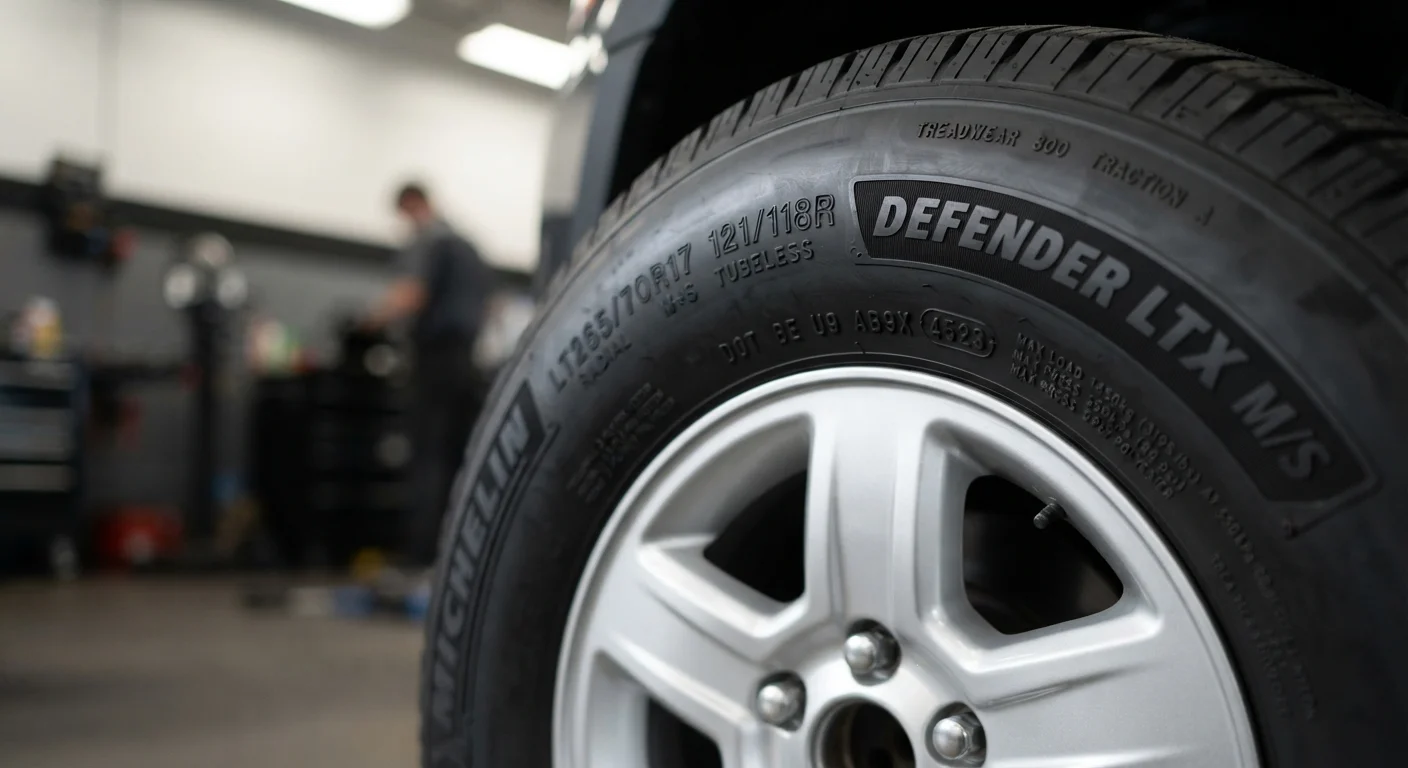
That string of characters on your tire sidewall - something like 215/60R16 95H - is a standardized size and performance code. Each segment tells you something specific about how the tire was built and what it can handle.
215 - Section width in millimeters. This is the tire's width from sidewall edge to sidewall edge when properly mounted.
60 - Aspect ratio. The sidewall height is 60% of the section width. Lower numbers (like 45 or 50) mean a shorter, stiffer sidewall.
R - Construction type. "R" stands for radial, which is by far the most common construction in passenger tires today.
16 - Wheel diameter in inches. This must match your rim size exactly.
95 - Load index. The number 95 corresponds to a maximum load of 1,521 lbs per tire. Each number in the load index table maps to a specific weight capacity.
H - Speed rating. "H" indicates the tire is rated for sustained speeds up to 130 mph. Never install tires with a lower speed rating than your vehicle specifies.
For guidance on which values are right for your specific vehicle, check your owner's manual - as explained in the maintenance sections that actually matter.
Aspect Ratio
The ratio of a tire's sidewall height to its section width, expressed as a percentage. A lower number means a shorter sidewall and typically a sportier ride.
Load Index
A numerical code indicating the maximum weight a single tire can safely support when properly inflated. Always match or exceed the value specified in your owner's manual.
Speed Rating
A letter code representing the maximum sustained speed a tire is designed to handle safely. It does not indicate a recommended driving speed.
DOT Code
A Department of Transportation serial number molded into the tire sidewall. The last four digits identify the week and year of manufacture, which helps determine tire age.
UTQG Rating
Uniform Tire Quality Grading - a US federal standard rating tires on treadwear, traction, and temperature resistance. Useful for comparisons within the same category.
Section Width
The width of the tire from sidewall to sidewall, measured in millimeters. This is the first number in the standard tire size code (e.g., 215 in 215/60R16).
The DOT Code, UTQG Rating, and What Else Is on the Sidewall
Beyond the size code, two other markings carry real safety value.
DOT Code and Tire Age
Every tire carries a DOT (Department of Transportation) serial number. The last four digits are the most useful: they show the week and year the tire was manufactured. For example, 2319 means the 23rd week of 2019. Tire rubber degrades over time regardless of tread depth - NHTSA recommends consumers pay attention to manufacturer guidance on tire aging, which often falls between 6 and 10 years from the manufacture date.
UTQG Ratings
The Uniform Tire Quality Grading system gives each tire three grades:
- Treadwear - A number relative to a baseline of 100. A tire rated 400 is expected to last roughly four times longer than the baseline in NHTSA's standardized test conditions. Real-world results vary.
- Traction - Rated AA, A, B, or C. Reflects wet-road stopping performance. AA is highest.
- Temperature - Rated A, B, or C. Indicates how well the tire resists heat buildup at speed. All tires sold in the US must meet at least grade C.
Don't Use the Sidewall PSI as Your Target
The maximum PSI number molded onto the tire sidewall is not your recommended inflation pressure - it's the maximum the tire can hold. Your correct target pressure is printed on a sticker inside the driver's door jamb or in your owner's manual. Using the wrong number can affect handling, fuel economy, and safety.
Staying on top of these details fits naturally into a broader vehicle maintenance schedule that includes regular tire inspections and rotations. See also our guide on tire care habits that extend tread life for practical next steps.
11,000+
Annual US crashes linked to tire failure
According to NHTSA estimates, tire-related crashes result in thousands of fatalities and injuries each year in the United States.
~25%
Passenger vehicles with at least one significantly underinflated tire
NHTSA data has consistently shown a substantial share of vehicles on US roads operate with underinflated tires, increasing blowout risk.